Chapter 3 — Systemic Actualization
Calendars and Clocks
So much of our daily lives are dictated by calendars and clocks. Humanity’s growing understanding of the changing nature of time creates conflicts with the design of the tools we use to track the passage of moments. Various calendar technologies presently operate in the world today, most calculating the relationships between stellar bodies, some signifying moments of great significance for specific groups. Global commerce abides by the Gregorian Calendar , introduced in 1582 by Pope Gregory XIII. Like the Julian calendar before it, it relied on tracking Earth’s rotation around the sun. The change shortened the calendar year by 0.0075 days to ensure that the equinox occurred on March 21 for the church to be able to consistently calculate the day of Easter. This alignment of Earth’s equinox with the fixed stars is not and never has been an accurate representation of the passage of time or the immediate present. So long as we cheat every four years and add a day during leap year, it’s a perfectly consistent system that transcends location and culture. But it is a false representation of the passage of moments, one that strengthens the grasp of outmoded philosophies of meaning and value in our everyday lives.
Changing our calendar may seem arbitrary: why fix what isn’t broken? Despite the knowledge of our present measurements being inaccurate and out of sync with the passage of moments, is there any real harm caused by maintaining the system in accordance with the scope of the universe? Yes, there is. Self-actualization in the age of crisis is the process of freeing ourselves from the influence of a past we had no say in crafting. We undertake this journey to align individual and collective with the single truth and the relational universe. The solar calendars of the present are not accurate representations of the progress of moments and therefore perpetuate falsehood into individual time experience. Humanity cannot transcend our circumstances if we cling to past habits and rituals that we know to be false. Consider also the absurdity of embracing one spiritual calendar technology as primary while rejecting all others, the hypocrisy in arguing that history decides the winner when history is always written in the immediate present. Changing our calendar format removes long histories of military-religious conquest from our present moment. Our rotation catalog no longer represents a winner. Rather, it highlights our collective oneness with the universe and the other.
Economist Steve Hankey proposes the Hanke-Henry Permanent Calendar
(HHPC). “The HHPC adheres to the most basic tenet of a fixed calendar: each year, each date falls on the same day of the week; in our case, every year begins on Monday, January 1.” 80 The first two months of each quarter are made up of 30 days, and the third is made up of 31 days. Each quarter has exactly 91 days, resulting in a 364-day year making up 52 seven-day weeks. Given that the Earth’s actual rotation around the Sun takes about 365.24 days, Hankey’s model proposes an addition of a new week every five to six years. He proposes the name “Xtr” and suggests inserting it after December in the relevant years—2026, 2032, 2037, 2043, 2048, and so on. By his own admission, Hankey’s calendar is arranged around seven days in a week to follow the Judeo-Christian fourth commandment, claiming that any attempt to break from this model “is completely unacceptable to humankind, and that will never happen.”
Hankey’s model is a great option because it adds a significant convenience to organizing our days and years not available in the present model. Its primary value is that it is a more efficient and consistent calendar for most commercial and personal uses. Unfortunately, Hankey’s adoption of proactive defeatism ultimately reduces its viability as a replacement for our present systems. Our recognition that these spiritual philosophies, technologies, and institutions center themselves around core beliefs about the universe that we now know to be inaccurate disqualifies them from having the final word in our collective organization. This doesn’t mean that we must create a calendar outside of the seven-day moon cycle, only that we must be open to the idea. The Hanke-Henry Permanent Calendar
is a viable alternative to the present arrangements but is far from ideal given its reliance on time experiences past. Creating a new calendar is an effort to free our understanding of time from the spiritual priorities of past time experience. We will struggle to systemically actualize under the present time catalog.
Our rejection of the past sheds light on present alternatives. Another option is to adopt a new, simplified calendar structure that abandons the Earth’s rotation around the sun and the lunar cycles as primary reference points. This would be a new form of temporal record that aligns with the accurate tracking moments rather than the traditional agricultural roots of our present systems. As we continue to advance toward space travel and exploration, a more unified form of record-keeping will be necessary. What use will Monday and Sunday be to the individual traveling beyond the confines of Earth? We can accomplish this by replacing our present system with a language of numbers and symbols that expresses our current position in perpetual progression within the universe. New temporal record keeping can improve our present designs by delivering a format that is concise, flexible, and more accurate than anything presently available. Our infinite supply of numbers, letters, and emojis ensures our creation will bring with it a longevity that will last until our collective knowledge discovers a better alternative.
Any new calendar design must also abandon yearly dating centering around religious figures and institutions. The prevalence of “before common era” (BCE) and “common era” (CE) year catalog began in the sixth century 81 and spread throughout the world as a result of the dominion practices of Christian religious institutions. There was no year zero; this record-keeping began in the 500s, most likely to give the illusion of legitimacy to the mythos at the time. The present year system perplexingly faces few challenges given how inaccurately it describes human prevalence throughout the millennia.
A more appropriate yearly calendar was suggested in 1993 by the geologist Cesare Emiliani, titled the Holocene or Human era calendar. It pegs human history to a shift in consciousness more universally relevant than any religious mythos, the transition of our species from nomadic hunter-gatherers to fixed agricultural lifestyles. As initially suggested, Human era dates are determined by adding 10,000 to the present year. Our present understanding suggests our agricultural transition occurred somewhere between 9602 and 9800 BCE. 82 Ten thousand is easy math, but there’s no point in aligning ourselves with specific accomplishments if we’re not being accurate. If we use the exact middle of the estimation, we can derive an exact date. For example, 9701 + 2022 = 11723. Welcome to the year 11723. Here you are.
To embrace the Human era calendar is an act of collective celebration. We tie our moments to the long road behind us and the many miles ahead. It celebrates all of our ancestors, threading a shared history throughout our species presently unavailable. Most importantly, it is a significant step toward alignment with the single truth and our oneness with the relational universe. We cast aside the false necessities of hierarchical spiritual philosophies to lay the foundation for universal commonality, a choice to embrace our collective achievements beyond the barrier of a single faith of state.
Realigning ourselves with nature also involves eliminating practices relevant to former time experiences such as time zones and daylight savings. Time zones were an effort to solve an industrial era problem, the confusion that came with mass transportation and regional time zones that set clocks according to the sun. At one point, the United States had over three hundred time zones, making rail travel confusing for passengers and crew. In 1884, the International Meridian Conference in Washington DC, USA, adopted a proposal establishing the Greenwich Meridian as the prime meridian and Greenwich Mean Time (GMT) as the world’s time standard.
Sixty-two countries presently practice daylight savings. The international 24-hour time-zone system grew from this, in which all zones referred back to GMT on the prime meridian. In 1972, Coordinated Universal Time (UTC) replaced GMT as the standard for universal time, creating a shared standard for time not impacted by daylight savings. Implementing UTC as the standard format for tracking Earth’s rotation would create a single shared time for all people of Earth. No matter where you were, how dark or light it might be, every person operates within the same designation. No more checking time zones when scheduling meetings, jumping clocks backward or forward. We unify our shared measurement of the moment. The first year or two might be confusing, similar to how we often write down the previous years immediately after a new year occurs. But it will become embraced quickly. Ideally, we adapt the 24-hour time format commonly referred to as military time, further simplifying our measurement systems.
Adaption of Coordinated Universal Time is a big step toward aligning humanity around a more accurate representation of our time experiences. Like the exploration of new calendar technologies, changing time systems is an active choice to align collective human experience. Implementing new temporal record-keeping systems embraces our oneness with the relational universe and recognizes the single truth as an active influencer on the nature of our realities. Compared to many of the changes necessary to transcend the age of crisis, calendars and clocks provide a straightforward area of improvement that draw from existing solutions. We standardize human temporal record-keeping to better align the individual and collective with the single truth.
Communication
Communication is the exchange of information within the moment. Much of our individual humanity is intertwined with others through communication; such is the nature of being in a relational universe. Our ability to communicate with one another is innate and natural, so we recognize access to and agency within communication as an individual birthright and dignity. The establishment of a communications DAO will serve to facilitate our transition toward publicly owned global communications networks. This can occur through direct capture of existing infrastructure or the development of alternatives. Our communication networks and devices must be expanded and made available to all. We invest in the perpetual progress of these systems, and every individual is a stakeholder in our progress. Communication as a human dignity is in direct alignment with the single truth. We seek to proactively develop and expand our shared capacity to change.
A communication DAO might serve to organize our collective advancements and dissemination of communication technologies. Currently, most global communications infrastructure exists in long-entrenched private and state monopolies. These organizations provide services that are necessary and widespread but slow to innovate. In many circumstances, they are rent extractors that prioritize the provision of sub-par services over experimental innovation. The provision of services such as phones and the internet should be a public works project, and some states already provide municipal broadband under the control of local communities. Internet access is especially necessary for the development of the individual actualizer capable of engaging in a lifelong education process. It should therefore be provided at no direct cost so as to reflect our core value of equity. The DAO might consider transitioning the forms of access distribution into public control. This includes older technologies such as phones and cable internet as well as emerging advances such as satellite internet networks. By equipping all with reliable and fast communications technologies, we encourage individual access and group agency.
Consider also the monopolization of device manufacturing, which rests in the hands of a few multinational conglomerates. These organizations have successfully proliferated the spread of devices but do so through methods that create unnecessary waste—the “upgrade” of devices yearly and discarding that which still works. Much of the journey toward self-actualization in the age of crisis is the evaluation of which forms of progress are ideal and which contribute to driving us further toward crisis. A public works organization might develop and implement corporate modules that expand corporate responsibility for device manufacturing and progress milestones. The communications DAO might serve as an advocate to balance the tradeoffs between progress and waste generation. It may also serve to develop public alternatives to popular virtual communications technologies.
The communications DAO can also serve to develop and distribute secure communications channels and devices outside of state control. Today, the majority inhabit countries where the ruling oligarchy will not hesitate to cut communications in times of dissent. That one group may deny access to communication for the many so that they might preserve personal power is unjust and immoral. It is an act of futility through the lens of the single truth and demonstrates an ego-driven lack of respect toward individual responsibilities to the other as governed by the relational universe. Our ability to communicate with one another is a sacred human dignity and should be removed from the influence and control of the state. The same can be said for the corporation, which often, through the influence of the state, may be pressured to remove information. Any private platform possesses the right to censor its community as they see fit; nothing about our legal notion of free speech denies this. Through this same lens, the DAO may choose to evolve to support advocacy against punitive measures such as solitary confinement, a cruel and torturous practice that serves no purpose other than traumatizing the individual.
Communication as one of the eight dignities conflicts with the beliefs and actions of the fundamentalist groups that support hierarchical religions. By its very nature, communication encourages the development of ideas conflicting with the established norms of the moment, which creates a conflict with static visions of the world. When individuals and groups leverage piety in their efforts to ban knowledge, burn books, and isolate themselves and their youth from ideas of the universe challenging their specific beliefs, they act in extreme cowardice. This is especially accurate when considering the youth of these communities and highlights the prioritization of dominance of the individual over the curation of their powers. The communication DAO might choose to actively combat the spread of anti-communication movements through methods such as infiltration, legislative campaigns focusing on the denial of human rights, or others.
The intention of the eight dignities and their governing organizations is to promote and preserve the dignities of an individual. No group possesses the right to deny another of these dignities. Global public works DAOs serve to maintain, expand, and evolve the collective human time experience. Sometimes this will include fighting against those seeking to maintain their power structures by denying others access and agency. The global communications network should seek to preserve the freedom of dialogue to the highest degree possible with the exception of those seeking to promote and expand the subjugation of others. As we explored in the crisis of information, truth, and trust, those who would leverage the persecution of another for their own personal gain act in extreme misalignment with the single truth and the relational universe. We cannot tolerate groups and cultures that bind their success to the diminishment of others.
As our communications technologies enter the next era of exponential progress, ensuring their rapid spread is necessary. The more effectively we can reduce the friction between individual and group communication, the more we empower ourselves to transform the world. With the crisis on the horizon, embracing communication as a sacred human dignity is a commitment to ensuring our ability to cooperate and collaborate toward transcendence.
Continuing Education
Education in a systemically actualized society extends far beyond the early childhood and early adulthood models we presently follow. Youths today are entering a world of productivity and participation where the most promising opportunities lie within the knowledge economy. Those born today will come of age in an era of automation and artificial intelligence beyond anything we can presently imagine. We can’t predict what the next paradigm-shifting innovations and organizations will be, but we can understand the type of knowledge and skills required to thrive within these circumstances, given our present trajectories. To this end, we develop the systems necessary to support continuing education throughout the individual’s lifetime.
The single truth tells us that change is inevitable. Our knowledge of inhabiting an exponentially expanding relational universe hints at the intensity and degree of change yet to occur. We will undoubtedly continue to automate our work, which translates to the disruption of individual productivity and participation. Therefore, the most logical course would be to develop public networks of systems supporting continuing education in a wide variety of directions. This type of access to personal development creates an individual agency that reflects our core values of flexibility, awareness, and enthusiasm. We know that nothing we build will ever be enough, so our commitment to developing broad networks of continuing education is in many ways a promise to ourselves, others, and the many not yet with us. It is a commitment to the development of imagination so that we might always be equipped to meet the needs of the moment.
The key to developing more expansive continuing education systems is to spread the responsibility throughout society. We explored the idea of how the best DAOs will become the best schools, but education is not limited to DAOs. Advanced organizations existing within private economic sectors can be compelled to support this educational infrastructure through corporate modules, making them responsible for the financing, planning, and disseminating of the content in coordination with state education systems and the public education DAO. Any organization possessing a virtual monopoly within a vertical through its niche expertise, process, and technology bears the responsibility of training others who are interested in learning more. Organizations may choose to implement competency requirements for their more advanced methods and practice but would be required to provide access to robust training infrastructures to support such specialization of knowledge. In some ways, this is already happening. Multinational corporations offer direct certifications on their specific platforms.
The expansion of educational responsibility to the corporation and DAO provides the individual with opportunities to learn about the most advanced practices and technologies available, knowledge and experience that would be otherwise inaccessible through traditional education models and corporate secrecy in favor of protecting competitive advantages. Our present approach of information isolation ensures that organizations and groups are working on problems that have already been solved but are inaccessible to them. Continuing education addresses the crisis of productivity and participation and the crisis of information, truth, and trust. One of the often-unmentioned benefits of the continuous development of the individual in several directions is the unique ability to connect the dots between subjects that may seem unrelated on the surface. Simple to the child, we develop the adult to practice greater degrees of cooperative collaboration in their efforts. Continuing education is the tool that deepens our expertise and passions but may also be used to change the direction of our lives toward something new. A systemically actualized society empowers the individual to explore productive focus and energy in as many directions as they choose, freeing them from the limitations of hierarchical work and the visions of a career meant to enslave.
The expansion of continuing education is one of the most direct pathways toward the individual and collective transformation we seek. It creates pathways to access and agency for the disenfranchised and builds a greater mental resistance to manipulative propaganda. In many respects, the crisis draws from our failure to develop educational verticals to mitigate the side effects of our technological ascendency. Deny people the opportunity to improve or redirect the trajectory of their life and they become angry and resentful, aspects of being that pose significant threats to individual and systemic actualization. Reforming education into a lifelong component of every individual journey fuels systemic actualization with the imagination and creativity it requires to grow exponentially. It is a power source of potential that continuously resupplies itself, progressing us with each incremental improvement.
Cooperation, Collaboration, and Analysis
Education in a systemically actualized society is flexible enough to raise the individual’s consciousness in nearly any direction they choose. Its purpose is to create global citizens; individuals with the agency to act within the present arrangements, the ability to see beyond them, and the means to change them when the moment demands it. Education is a system that develops the future, recognizing and nurturing the divinity inherent in all. No method or system of learning exists independent of the event chains forming individual perspectives. We focus on the general philosophy of evolving education, using customizable examples to illustrate the practice. Afterward, we explore examples of how we breathe life into our vision.
The next era of learning is all about the ability to cooperate effectively. This claim is supported by the fact that all of the most advanced sectors of work today exist in highly cooperative settings. This trend will continue at greater degrees of intensity. Collaboration is most effective when all participants possess the skills necessary to think critically about ideas and contribute. These two skills pair well together, both in learning and in life. More importantly, this type of learning reflects the everyday experience that many youths enjoy today. Gaming, communication, and self-learning via the internet all encourage connection and dialogue with others. Developing an educational environment that fosters cooperation and collaboration is vital to systemic actualization. Single directional learning also squanders opportunities to incorporate self-directed learning into the process. We reshape the youth educational experience into a matrix style of learning. This transition is already happening to some degree in the United States but lacks a formal and focused effort.
Figure 8 illustrates the difference between our present learning models and an approach better suited to meet the needs of the moment. Most education in the United States subscribes to a hierarchical style of learning. Information flows from the instructor to the students, who are responsible for absorbing and processing it for recollection at a later date. It’s a style of learning akin to regurgitation, recalling facts and figures on command. We are taught knowledge that we can recall instantly through devices much of the planet keeps near them twenty-four hours a day.

Matrix learning breaks traditional lesson plans into multidirectional approaches. Teachers become less of a source of information and more facilitators of frameworks for learning and discussion. Hierarchy learning supports a broad, surface-level approach to understanding the world. Matrix learning allows for choice in topic depth, empowering students to explore their interests and develop ideas through critical analysis. We make teaching akin to a choose-your-own-adventure book, prioritizing a form of education that instills more knowledge about fewer topics but equips students to evaluate their present understandings, identify gaps, and proactively address them.
Teachers break down their subjects into various verticals. At the beginning of a lesson cycle, students choose the topic(s) they want to explore. Within each possible vertical are additional subsets of focus that continue to branch out as far as necessary. Students receive research and topic frameworks after making topic choices. These research and topic frameworks are broad enough to allow for critical thinking within limits to ensure knowledge stays relevant to the subject matter.
Students can research independently, connect virtually with classmates, or spend class time collaborating about their specific interest verticals. Educators frame informational requests as open-ended questions whenever possible to encourage critical thinking and reduce the reward for identical answers. Segments can end in several directions. Group presentations combining students in similar verticals are one option, as are individual speakers. Teachers may also conduct classes where students drive the lesson through their research. As students share their research and perspective, teachers ask probing questions. We develop the individual capacity to direct focus and energy toward connecting the dots between a variety of information sources. Each day ends with more questions asked than answered, setting the stage for the next level of deep learning. Learning is a form of soulcraft in the direction of our choosing. The creator creates to fulfill their underlying desire to give imagination form. The cultivation of self-direction is necessary for individual actualization and high alignment with the single truth.
We can illustrate this concept using a history lesson on the American Revolution. Traditional education crams this multifaceted event chain into surface-level understanding, often whitewashing the historical context. Our matrix approach reorganizes the subject, starting with relevant parties. An initial lesson plan might be to explore population groups of the time: American revolutionaries, British imperialists, Indigenous Americans, and enslaved Africans. Who were these groups? What were their driving beliefs? What were their available options during the war? What were the possible outcomes for the group becoming involved? How might our world today be different if (insert scenario) happened? How, if at all, is this similar to our immediate present? As the lessons progress, research and discussion can continue about the relationships between these groups, how those relationships still impact the way we live today, and moral and ethical evaluations of the decisions made during the time. The possibilities are endless, limited only by the time and imagination of the teacher and students.
We can customize this example to any degree for any age group. First graders can begin with researching their favorite dinosaur. They might discuss how those dinosaurs interacted with each other based on their food preferences, imagine what colors dinosaurs might have been, and explore the sounds of their favorite dinosaur descendants, birds! Third graders can explore rudimentary software development, building virtual solutions to solve problems they imagine themselves. Biology could begin with understanding parts of the cells, their individual and collective roles, and how these separate parts fit into a more contextual basis of our understanding of life. Each educator must decide the topics that require specific knowledge and which can benefit from a more exploratory approach. As early as ninth grade, students are given more agency in their class schedule, allowing them to develop selective depth earlier by customizing their learning. The matrix style of education results in high school seniors exploring and analyzing topics significantly more advanced than what is presently occurring, redirecting focus and energy that they would have otherwise spent on topics of low interest and retention. An education DAO could facilitate the perpetual expansion and sharing of lesson formats with educators across the globe.
All of the examples follow the same flow of information and structure: guided student research and thought, group discussion and debate to further develop the ideas, and participatory instruction during cap courses. Each step reinforces critical thinking, dialogue, and cooperation. This method challenges traditional performance measurements but must progress alongside our educational systems. Today, a teacher’s role in society is to empower future generations to navigate a rapidly changing world. What better way to do that than demonstrating the value of experimentation in education?
One significant difference in this approach to education compared to traditional directional teaching is the ability to view subjects from multiple perspectives. This is more relevant in subjects like history and social sciences than math and chemistry, but the skills transcend individual disciplines. Learning through a process that considers multiple perspectives changes how the realized individual approaches their personal and social life. It prepares them to navigate the changing nature of time. We infuse cooperation, collaboration, and analysis into the foundation of our learning, empowering our youth to better challenge and change the past they inherit and breaking their reliance on obedience toward a specific process and method.
Decentralized Autonomous Organizations
Decentralized autonomous organizations (DAOs) are digital, global, distributed organizations that enable like-minded individuals to achieve common goals through shared funding. DAOs are typically based around the use of digital tokens*, which verify identity through ownership and regulate access and agency within the ecosystem. These organizations are stakeholder-driven, meaning that participants at all levels possess voting rights to democratically direct the organization’s mission and progress. It is a method of organization that facilitates self-change, empowering those doing the work to prioritize the benefit of the communities they serve instead of the profits of a small group of shareholders.
Decentralized autonomous organizations provide an organizational structure that mitigates and eliminates traditional power dynamics from governance by prioritizing inputs of focus and energy over capital. They can be organized as one person, one vote, or weighted voting based on contribution and expertise. They facilitate cooperation through collective ownership, which is why they are ideal for global public works like the eight dignities. DAOs exist on the blockchain, providing transparency in nearly all aspects of their operation—a vital component when considering the development of global public works. Much of their operational rules are facilitated by smart contracts, allowing for higher degrees of automation of the permissions and processes within an organization. Ethereum creator Vitalik Buterin describes a DAO as an “entity that lives on the internet and exists autonomously, but also heavily relies on hiring individuals to perform certain tasks that the automaton itself cannot do.”
Compared to traditional systems developers like the corporation or the state, DAOs reject centralized leadership structures in favor of ground-up decision-making. As opposed to the invite-only approach to corporations and the state, DAOs have low barriers to entry that provide pathways toward participation for those wanting to become involved. This allows for the easy attraction of new members while removing opportunities for nepotism, favoritism, and corruption common in hierarchical organizations. DAOs generate surpluses through transactions of goods and services but redistribute those into continuous exploration, experimentation, and the shared benefit of those working to support them. In this way, they perpetually improve, free from the burdens of profitable quarters and market manipulation. Ultimately, DAOs are communities. People of like-minded interests come together to solve problems for their collective benefit. Through the lens of self-actualization in the age of crisis, DAOs provide a vehicle to build collectively owned systems of utility and self-empowerment. Whereas technical innovation typically automates the peripherals of a process, DAOs automate much of the center. The DAO dares to address a challenge that social democracies around the world have failed to solve: how to experiment with fundamental systems governing economic centralization. They provide a pathway to the decentralized access to productive resources and opportunities necessary to develop economies in support of systemic actualization.
Our struggle to overcome the crisis is rooted in the fact that the presently available options for legally organizing groups are all hierarchical, reinforcing that which we seek to transcend. DAOs provide humanity alternatives that may be applied to systems ranging from local to global, each empowering the individuals inhabiting them in various directions presently unavailable. Systemic actualization is the process of leveraging our creations to elevate individual and collective human consciousness. We undertake this journey knowing that there will be a moment in our not-too-distant future where a threshold is crossed, and humanity inhabits a state where it can most fully unleash its collective imagination upon the universe; a world where each possesses access to the systems necessary to develop and harness their agency. Where every individual is born a stakeholder rather than a cog in a crumbling machine. With the appropriate amount of focus, energy, and resources, it could be complete within a generation. What matters most is our choice to change the direction of our focus and energy in alignment with the single truth. Step by step, we build a more expansive expression of divinity within the moment.
Another hurdle DAOs overcome is the traditional interview process typical in hierarchical organizations. Interviews test your personality, skills, and knowledge, culminating in a handful of people deciding whether you meet their definitions of a good fit. The DAO primarily rewards time and effort. If you are interested in contributing, you join the community, review their bounty (task) boards, and find a problem to solve. If no requested tasks fit your specific skill set, options exist to either petition for an alternative direction that may be better aligned with personal knowledge or connect with the community to better understand shared needs and direct focus and energy toward learning. In exchange for this proactive engagement, the individual receives some form of stakeholdership.
What form these rewards take may vary, but present examples include interorganizational currency or tokens representing effort and accomplishment within a specific vertical. This shift in accreditation and demonstration of contribution rapidly accelerates more people into the knowledge economy. Advanced education will also be represented by tokens, and the average degree will matter significantly less for most undertakings than dedicating the time and focus on learning and understanding something new. Through this process, the best DAOs become the best schools. We can imagine that future position applications will eliminate the use of résumés as a recruitment tool, instead relying solely on the tokenized credentials an individual accrues throughout their journey. This also solves a significant challenge in creating a global reputation system. Present social credit models are inadequate and often used as a means of punishment. A systemically actualized society requires that we be able to accurately identify an individual and their competencies, especially in a world of anonymous identities. There is no greater test of reputation than how you have served others and no more verifiable way to assign personal and professional accolades than non-fungible tokens.
The directions of development a DAO may take are limitless. Each leverage the collective imagination of all active participants, embracing a system of leadership that prioritizes those who know what to do next over individuals with specific titles. Depending on the organization’s mission, there are various methods as to how to ideally structure their directional determination. That all are stakeholders means that each has a vote but does not necessarily mean that all votes are equal. The value of the individual vote can be organization-dependent. Consider first that voting within a DAO is not voting for a president in a corporate-sponsored election. No one is stuck powerless in a circumstance they do not want. If a significant number of members are unhappy with the outcome of a vote, they are free to independently organize toward their preferred direction without repercussion. Organizations will have central missions and charters that shape frameworks of action, so the degrees that one can deviate from the objectives may vary. However, the beauty of a DAO is that it presents opportunities to spin off in entirely different directions and rules toward a shared vision of the good. With that said, building a DAO from the ground up is challenging from the onset, given the amount of coordination necessary. One observable alternative is a hybrid model of a central team governed by stakeholder direction. A formally organized central unit allows for speed, efficiencies, and more effective stakeholder communications, all while retaining community control in the direction of the organization’s focus and energy. The objective is to be fully decentralized once the community evolves the capacity to operate without a central team.
Consider the DAO through the lens of global public infrastructure. They will each produce, manage, and distribute several resources and benefits, providing streams of education, productivity, and participation for individuals across the world. Each will require varying degrees of expertise and perspective. Specific DAO charters will determine the types of voting schemes that best fulfill their missions. My perspective is that the ideal arrangement for most organizations lies in weighted voting that prioritizes contribution and expertise. Consider transportation. Pilots, aircraft engineers, airport/airplane staff, and the many other stakeholders involved with the daily and long-term operations of managing air travel would earn a higher degree of authority than others without a vested interest in the vertical. This doesn’t exclude noncontributors from engaging with the progression of these verticals through suggestion, debate, and voting, but it does reward those dedicating focus and energy to the public good. We can imagine systems where a small weight is added to a vote; for example, votes ranging from 1.1–1.5. This way, the individual has no personal power to dominate a decision, but when the directors of progress reach consensus, it holds weight beyond those without vested interest. There is no limit to how votes might be weighted, allowing for circumstances requiring or organizations preferring strict chains of command. Another, more complex option is holographic consensus voting. It ties voting to a prediction model where people essentially stake funds for or against proposals according to what they believe the outcomes will be. Correct predictions produce financial rewards; incorrect predictions result in losses. This helps prevent ill-intentioned proposals because it becomes “expensive” to lose often. After a certain threshold is passed within the prediction models, the vote switches to a relative majority process focusing on “for” and “against” votes. Alternatively, there is always the option for stakeholders to delegate votes, which is popular in existing DAOs today. In these scenarios, one token equals one vote, but you can delegate the voting rights of your tokens to an individual or group who the individual believes represents their best interests. While defining stakeholdership is an important example, there is no limit to how we might organize ourselves within DAOs. Fortunately, there are many great examples to learn from.
Note that DAOs that incorporate today are limited to the available corporation types, despite operating in very different ways. The distributed organization of an agenda should be able to leverage legal structures designed for its operation, just as the hierarchical design of present-day corporations benefits from their specific classification. Considering the scope of global public works DAOs, new legal classifications provide more efficient and transparent models of operation. To this end, we identify the opportunity for developing new legal syndicates to better support DAO development in all directions. Presently, Wyoming and Tennessee have begun experimenting with alternative legal structures, and we should expect more states to follow.
Given their relatively recent invention, DAOs will be works of perpetual progress. As self-changing systems, they allow for alterations in the fundamental fabric of their operation. Through this, they empower their stakeholders to meet the needs of the moment without the arbitrary restrictions of what is stifling what will be. There will be many ups and downs during our journey in building these vehicles of progress, but that should not deter us. We direct ourselves to a moment where the birthright of dignity leaves the realm of spiritual philosophy and embodies the reality of systemic outputs. Within the context of global public works, the DAO offers such a path where profiteering off of basic human dignities loses priority over collective well-being. In this work, our spiritual journey is active, and within it our best alternative to avoiding the crisis is made available. The organization of global public works within DAOs also expresses our core values of relation, equity, flexibility, enthusiasm, and courage. System and individual align to create a whole self, capable and unafraid of transforming the world.
Deep Freedom
Self-actualizing in the age of crisis serves two primary purposes for humanity. First and foremost, it is a shared journey toward transcending the age of crisis. If we cannot overcome the crisis, an even greater majority will be cast into circumstances that make individual actualization extremely difficult, if not impossible. Second, our efforts serve to free humanity from the limitations the past projects onto the present. Deep freedom is the alignment of the individual and system within the moment of symbiotic evolution. In this global society, individuals and groups have an unimpeded and unalienable opportunity to change our systems of organization as our definitions of being free evolve. We must develop a vision of progress in alignment with the single truth and the relational universe so that we might glimpse our latent power that wants to break free. Like everything else in a universe guided by the single truth, deep freedom is choice within the moment.
There is no single element or action that provides humanity a deep freedom. Instead, it is the culmination of a wide range of efforts in diverse directions. What matters most is embedding new systems of value and meaning inspired by the single truth into the constructs we surround ourselves with. This empowers a more widespread and rapid individual actualization and is rooted in flexibility so as not to resist the future revisions that will most certainly come. Our struggle with being free will always exist in relation to our circumstances; what is freedom in one moment may seem suffocating in another. We also recognize that within the immediate present, each of us inhabits varying stages of freedom that are extensions of our birth lottery.
The poet Emma Lazarus is credited as saying, “Until we are all free, we are none of us free.” This is especially true in relation to self-actualization in the age of crisis. To embrace deep freedom for any single individual is to apply it for all, so it must be in a relational universe. For the individual, this requires recognizing that while each of us inhabits struggles brought on by the systems surrounding us, some have a long history of disadvantages that must be addressed first. Contrary to popular belief and propaganda, this doesn’t require the vast majority of people to lose anything except the belief that there should be a favored group in society or nature. Deep freedom isn’t about swapping one form of government for another slightly better one in the hopes that it works. Today’s institutions are rigid in design and resistant to change. Deep freedom is the alignment of the internal and external infinities, a global society where imagination possesses absolute power over our creations, as opposed to our present moment where our creations dominate us.
Deep freedom is not freedom from struggle nor freedom from consequence. These two experiences are completely unavoidable in a universe governed by the single truth and the relational universe. The individual should not waste focus and energy on desiring their elimination; it is an unobtainable objective. Struggle and consequence are expressed in many degrees throughout our time experience, many of which are out of our control and interwoven into the fabric of being. There is no progress without struggle, no learning without the consequence of choice in a specific direction. While every individual has a right to define freedom for themselves, we cannot tolerate definitions that threaten others’ access and agency within the world. Freedom is equality of opportunity and dignity, which can only be realized within an inclusive idea of it. Consider the eight dignities. They provide humanity a foundation for expansive individual freedom while expressing the spiritual values of the self-actualizer. The values and meaning we project onto the universe are the seeds from which all our systems grow. Our alignment with the single truth and the relational universe will do more good for humanity than redistributing all of Earth’s wealth. Transcendent humanity is our chance for a greater life and the standard for how we judge what is and is not an acceptable form of inequality. Therefore, deep freedom is not a one-time change to a vertical of society we deem unacceptable but rather the perpetual practice of systemic reformation in alignment with the single truth.
Our vision of deep freedom conflicts with our present apathetic embrace of the shallow freedom and equality available to us within our present arrangements. The individual who prioritizes equality over freedom unknowingly embraces what is instead of what can be. They will be drawn to the allure of incremental reforms of a broken system designed to appease rather than address the root causes of our descent into crisis. Consider how frequently we celebrate minor progressions in the recognition of humanity within the other. Women, children, LGBTQ+ community members, Black, Indigenous, and people of color are locked in an eternal struggle to be recognized for their full humanity, as if their lack of freedoms were some sort of natural or necessary arrangement instead of a direct result of our present arrangements and the hierarchical systems of meaning and value that guide them. Any form of progress in enhancing equity seems like a major victory, but only because our vision of what is possible is constrained by the systems surrounding us within the immediate present. Our spiritual journey toward systemic actualization lifts the veil of ignorance of the possible from our eyes, enabling us to envision a deep freedom available to all that could never take form within the institutions we presently inhabit.
Economy, Labor, and Property
The reimagination of our economic, labor, and property arrangements in alignment with the single truth seeks to answer a specific question. What type of person can exist and thrive within the systems we are subject to within the immediate present? Today the answer is “a very specific kind of person.” Systemic actualization shifts that response to “an ever-increasing variety of people.” Our journey toward self-actualization is rooted in a fundamental idea about what makes us human, our ability to become more than the circumstances and worlds we inhabit. Economy, labor, and property play an outsized role in defining our individual relationships with the other. As far-reaching as they are, these systems are finite in relation to the latent infinity within us. Our struggle with being at home in this world is always in relation to the degree to which we are both insiders and outsiders. No other combination of systems defines this struggle as significantly as economy, labor, and property.
The word “economy” is often used in popular media to explain various unrelated systems and circumstances, typically in an effort to confuse or misguide the population. For our exploration, we will define economies as systems of transactions that often repeat themselves. The word “market” is used to describe specific verticals of exchange, such as an agricultural market or a housing market. If we reference “the economy,” we refer to the sum of exchange occurring within all verticals of specific local, national, or global markets.
There are many interpretations of what matters in an economy and what doesn’t, but the predominant focus is the measurement of productivity and debt. Both may be organized in specific ways to create specific outputs, such as favoring one group over another. One of the dogmas we must overcome in order to systematically actualize is the singular narrative of what economy, labor, and property must be. The idea that all forms of transaction should be limited to static rules is self-limiting and out of alignment with the single truth. The economic project of systemic actualization is to more deeply intertwine the relationship between finance and the real economy, prioritize free labor as the dominant form of contribution, and develop more experimental property classifications to serve the former two objectives.
Prioritizing economic, labor, and property systems to favor cooperation over competition rejects the dogmas of present systems. All of these technologies are rooted in the moment of their creation, and no number of incremental improvements can ever change their core design function. Our reliance on markets as a measure of the wealth and health of a nation is inadequate for transcending the age of crisis. The idea that collective society benefits from the dissemination of power into localized oligarchies is demonstrably false, as the majority of people alive today exist in a persistent state of struggle. We must leverage our spiritual connection to systemic actualization to overcome decades of propaganda that have severed our individual concepts of class consciousness. Lifetimes of propaganda have people identifying with and defending the very arrangements that condemn them to permanent cycles of struggle. We acknowledge that the present laws supporting economy, labor, and property are embedded with inequities by design.
National systems of governance are designed to subjugate many for the benefit of the few. We also reject the dogmas shared by many current activists, the wholesale substitution of one system for another. No available -ism is going to save humanity; all are rooted in a past we can no longer access. The idea of eliminating one form of living to support another sits in stark contrast to our understanding of the single truth and the relational universe. Additionally, these fantasies are always tied to the revolution that is right around the corner but persistently fails to materialize. Cooperative systems cannot operate under restrictions that confine relationships and interactions to only minor variations of what already exists. Therefore, any rigid arrangement of law and contract will always be inadequate for a self-actualizing society.
Reshaping the systems defining economy, labor, and property to better align with the single truth and the relational universe begins with understanding why we seek to do so. All social and spiritual philosophies exist in contention with economic orders not rooted in similar value and meaning systems. As we explored in depth in the Age of Crisis chapter, our present arrangements conflict with the core values we seek to embody in our journeys toward self-actualization. Even the most staunchly held spiritual beliefs will erode when subject to a lifetime of interactions with others rooted in contrasting principles and values; such is the nature of a relational universe. The present arrangements have long encouraged behaviors that have compounded into the crisis. They offer no alternatives outside of our present march to oblivion. Our reimagining of these systems of transaction and ownership within human society is fundamental to our journey of systemic actualization.
Education
Education is the cornerstone of systemic actualization and the engine of expansion for the eight dignities. There is no higher form of soulcraft than perpetual learning; it empowers us to create change in our individual and shared circumstances. Without education, individual actualization is difficult, if not out of reach entirely, and systemic actualization is not possible. Reimagining education for a global society is a process of understanding the changing nature of the universe and developing systems that support our alignment with it. In doing so, we create pathways for each individual to recognize their divinity within the moment. We begin our exploration with the understanding that it is in the collective best interest of every society to maximize the educational opportunities for all members at all stages of life. Unfortunately, our current education frameworks fall far short of this goal, further complicated by the crisis of information, truth, and trust that plagues our population.
Embracing education as one of the eight dignities reinforces all eight of our core values within the individual. We develop awareness of our relation to others through the framing of dialectic education, which supports the development of flexibility, enthusiasm, and courage in the discovery and debate of ideas, fostering a learning environment where individuals develop the awareness necessary to approach others through the lens of relation, restraint, and equity. We reimagine education so that it deeply roots the individual within frameworks of meaning and value in alignment with the single truth and the relational universe, understanding that through access to and agency within our educational systems, the individual is empowered to redirect their lives in the directions of their choice.
Energy
Energy as a global public good and human dignity is fundamental to progressing the eight dignities. It is the resource through which all of our creations take shape, a facet of our lives in the immediate present for which demand only grows. Presently, the privatization of resource extraction and energy conversion plays an outsized role in furthering the crisis of extinction. Energy is a human dignity because both our individual and collective progress is tied to our access to it. Without it we are extremely limited in our ability to access what the world offers. Energy is part of everything we do and an integral part of what our future contains. This inseparability from the human time experience is why we include energy in our spiritual journey toward systemic actualization.
Energy as a global public good centers around harnessing renewable energy sources to exceed humanity’s total energy needs within a given moment. Despite the propaganda encouraging us to believe otherwise, the sun provides more energy than we could possibly use here on Earth. What we lack is the political will to utilize this resource for the collective benefit. Limitations of solar energy capture through solar panels caused by cloud cover and the rotation of the Earth can be addressed by harvesting sunlight through space-based solar energy capture, which will consistently collect and transmit power back to Earth. Additional technologies such as wind- and water-powered energy generation also provide pathways for energy surpluses beyond need. Many might also argue for the adoption of nuclear power, which has come a long way in terms of safety and longevity but still produces waste and will always contain a level of risk not found in renewable technologies. When reimagining our approach to energy infrastructure and access, the question is more about direction than available opportunities. Nuclear plants present significant challenges in their construction times and centralization, whereas renewable energy capture technologies are modular in their design and can be installed in more locations.
We must also consider the length of construction time. If a nuclear plant takes ten years to construct, we must take into consideration the exponential progress renewable energy capture will make during that time period. It’s not as if a nuclear plant design can be switched midway through to better accommodate the most advanced technologies. Some might consider that the best method to transcend our energy needs and the crisis of extinction is a “do everything” approach, where we invest in both nuclear and renewable solutions. This approach is a trap, as it divides our collective focus and energy instead of concentrating it on higher degrees of incremental progress. Given the trajectory of their progress and the natural reactor that Earth orbits, an intense focus on renewables is the ideal solution.
For decades, global humanity has been intentionally misled about the crisis of extinction brought on by our use and extraction of fossil fuels. The privatization of energy has repeatedly proven to be an immoral and illogical structure in the face of the crisis. Embracing the global public ownership of energy is a part of the spiritual journey of the self-actualizer because it is in alignment with our core values of relation, equity, and restraint. Energy as a human dignity recognizes our immediate present for what it is, understanding that without access to energy and the agency to use it, the modern human is powerless to create change. It is also a commitment to generations of observers not yet born: they will know the capacity of love and kinship our present arrangements do not allow. If the public support and ownership of energy verticals concern you, consider that fossil fuel companies presently receive billions in government subsidies. 50 We are supporting the very institutions that intentionally accelerate the crisis to profit more. The collective public funding of a global energy network would be little more than a redirection of what we already spend. The crisis of extinction cannot be solved without a complete and total redirection of our collective energy strategies. As it is often said, the first step in getting out of a hole is to stop digging.
An energy DAO might begin by pooling resources to purchase land and building large solar farms. The sale of this energy could cover costs and generate surpluses used to expand. Every individual who contributes to the DAO or purchases energy from the DAO is a stakeholder, deserving of a vote in the organization’s direction. We can imagine the most common decision points will revolve around expanding energy collection and distribution infrastructure, lowering fees for individuals and groups, and expanding the DAO’s efforts and community members worldwide. The initial purpose of the energy DAO will be to bring energy collection and distribution under the exclusive control and governance of the global public. Groups and organizations will initially be a source of revenue and surplus, fueling member benefits and the perpetual research, development, and expansion of the DAO’s technologies and reach. We can also imagine the energy DAO being a vital source of innovation and access where private individuals and groups may leverage public technologies to experiment and innovate, following similar flexible patent laws and supported smart contracts. Long-term, it should serve as our vehicle toward advancing energy technologies and delivering free energy to all. Energy as a public work will eventually cross a threshold where the costs for maintenance and infrastructure improvements are dwarfed by the collective wealth of society. In this moment, humanity is free from one of the greatest burdens we have struggled to overcome.
Given the crisis at our doorstep, the energy DAO should be one of the highest priorities of our journey toward systemic actualization. It supports the other seven dignities and will continue to support the next generation of dignities developed by the self-actualizing individuals yet to come. To be born into the universe at this moment ensures the individual’s dependence on energy. Our embrace of energy as a human dignity is an effort to maximize each person’s ability to express their divinity within the moment. Energy is a dignity in alignment with the single truth and the relational universe, one that has consistently contributed to a more expansive humanity.
Finance and the Real Economy
Managing the relationship between finance and the real economy is one of the greatest challenges of a class-based society where the wealthy are both the architects and primary beneficiaries of the present arrangements. What inevitably happens over time within this arrangement is that greed overtakes logic, and new financial schemes abuse laws and markets until they crash. Most of those who suffer from these crashes are those who cannot afford to invest and small-scale retail investors whose life savings are wiped out instantly. Every market crash brings significant political theater and outrage but no efforts to make meaningful systemic change. Instead, we see minor penalties for the architects of disaster and the creation of petty legislation that will be lobbied out of existence a few years after the event. Markets play a vital role in a systemically actualized society, but it’s clear that our present systems supporting them are both undesirable and inadequate to serve our efforts of systemic actualization. To imagine more, we begin with a question. How can we organize society in such a way where finance exists to serve the real economy instead of itself?
The “real economy” refers to the productive projects happening in nearly all directions at all times—people participating in work that supports the interest of collective society through the development of new tools and techniques to solve problems. This definition encompasses almost anything, including the vast majority of work performed by individuals within societies. It specifically excludes high-frequency speculative finance, like algorithmic day trading and the manipulation of order routing; the creation of laws and instruments that allow for the manipulation of markets and organizations to create capital from nothing.
Groups of systems and people who generate enormous profits but contribute nothing to society beyond increasing their individual wealth cause havoc among the general populace when they follow their predictable trajectories toward ruin. Whether these organizations manipulate energy resources, housing mortgages, or brick-and-mortar retail chains, there is no concern for the calamity they cause when the castles of sand collapse upon themselves. Their very existence stands in conflict with the idea of market investing as a reliable path to economic freedom because at any point your individual security may be ripped from your hands so some billionaire can make hundreds of millions. Global markets are systems manipulated by the very organizations charged with their leadership. So long as the individual and societies root themselves in hierarchical values and meaning, fairly functioning markets will never exist. Note that this is not an argument against the abolition of all speculation. The private and group investment in promising ideas and people is by and large a force for good, especially when considered through the lens of supporting creative imagination in directions that conflict with the popular narratives of the moment. We can imagine a time experience of a mature humanity where the reliance on private investment has given way to public pools of capital and resources available to individuals and groups seeking to innovate. Until then, we must close the gap between finance and the real economy to drive more resources toward productive activities and eliminate the wasteful and harmful practices of a wealthy few.
Past efforts have failed to deeply connect finance to the real economy due to a lack of political will and imagination. This is unsurprising given that a significant portion of elected representatives benefit directly and indirectly from these schemes. Our presently available alternatives have typically come in the form of redistributive taxation as a way to compensate for the inequalities generated by the systems governing markets. This approach only addresses the secondary distribution of advantage, avoiding the root cause of these inequitable designs. Redistributive taxation acts as a bandage instead of addressing the source of harm, only serving to minimize the harm after the fact. Systemic actualization is a process of reinventing the market by experimenting with the foundational laws governing economic transactions. We reject the idea that class is necessary within society and challenge popular understandings about the division of labor. We establish new frameworks for stakeholdership, endowments, opportunity, and access under the umbrella of reimagining core values and understanding the relational universe as dictated by the single truth.
We reframe our division of labor around the understanding that all labor requires skills, and while all skills are not of equal complexity, they all play a vital role toward progress within the moment. There are varying degrees of difficulty involved in tasks, each of which requires a variety of training. Hierarchies of competency are established through the prolonged direction of focus and energy within the moment. Solving complex problems is necessary for both our individual and collective progress. The same may be said for rudimentary work that keeps our social systems flowing. Some will always be better suited than others to create change in specific directions. My father would struggle with some of the most basic academics, but if you needed an air conditioner fixed there were few more qualified than he. Our needs are always in relation to the moment, and each one who contributes supports collective progress. This is why all labor is valued equally in a systemically actualizing society. All productivity is an investment of focus and energy in a specific direction. No economic technology can ever accurately capture the value of moments. Therefore, any individual directing focus and energy toward supporting people or projects is deserving of fundamental material security. Through this foundational approach to labor, we break down class divisions and encourage a broader celebration of individual divinity in alignment with the single truth.
Our embrace of all labor as a source of value doesn’t free us from the responsibility of adapting to change. For example, human-centric mass production is never coming back, and the skills developed to fit these roles will continue to decrease in their usefulness to others. Future technological disruption will continue to transform the type of individual access and agency necessary to meet the needs of the moment. Even the most forward-thinking political projects of the moment approach the economy by focusing too heavily on security and not enough on flexibility. These efforts are substitutions, not solutions. Security is a necessary component of individual actualization but is unrelated to our market order within a systemically actualized society. Instead, our market experimentation explores how alternative arrangements might provide a foundation from which all are free to experiment within the universe without fear.
Reshaping finance also requires a reimagination of money and what constitutes value. Consider our present arrangements dictating monetary supply. In the United States and other financialized nations, credit is created at the point of contract. 1 When you go into a bank to take a loan, the money you receive in the form of credit did not exist prior to you signing that contract. Banks create money to give you at that moment, increasing the total supply of money within a specific currency. These arrangements empower private organizations, whose primary motive is profit generation, to control the money supplies of nations. History also teaches that they are ripe for exploitation. Banks are some of the most active perpetrators of structural racism because they have repeatedly been caught discriminating based on race in the forms of higher interest rates, 2 predatory lending, 3 and denial of services. 4
Having money supplies and credit issuance beholden to private interests directly contributes to accelerating the crisis. That our money has nothing backing it beyond entries on a spreadsheet is what makes it a fiat currency, necessary to rapidly expand growth but imaginary in its nature and legitimacy. Cryptocurrencies offer new asset classes, which are necessary to solve some of the world’s biggest problems. Currencies designed to fund and govern new experimentation ecosystems focus on imagining decentralized solutions and experiences. For example, it is predicted that global economies would need to increase about five-fold to address global poverty. 5 With that said, some of the most popular cryptocurrencies are heavily influenced by institutional investors and serve no productive purpose.
Consider Bitcoin, which is intended to serve as a blockchain-based fixed supply currency free of government influence and interference. The theory behind Bitcoin is sound; inter-community mediums of exchange are prevalent in a systemically actualized society. In reality, Bitcoin ownership is heavily skewed in the hands of a few. Global adoption would create a more extreme wealth concentration than we already struggle with. 6 At this point, new entries into Bitcoin primarily benefit the relatively few top holders. Sound familiar? The decentralization of finance—removing the bank middlemen from our transactions—is a vital component of systemic actualization. Modern banking is highly extractive in relation to its value and penalizes the poor through additional fees and ever-rising minimums. The private control of public monies will always be at odds with the best interest of the collective stakeholders.
Enacting our vision of reformation to support systemic actualization also requires a revised approach to collective investment through governments. To do that, we must dispel the confusion surrounding government spending and debt. The standard propaganda used to drive fear and uncertainty around public spending roots itself in a philosophy of money not applicable to currency-issuing governments. For the majority of individuals, household spending consists of balancing our expenses against our income so that we’re generating surpluses. Much of the fear, uncertainty, and doubt so common in political discourse is rooted in the idea that government spending operates identically to household spending—that we are somehow at risk of insolvency if we leverage debt beyond revenues from taxation.
Modern monetary theory teaches us that this is not accurate to the extent it is implied. Currency-issuing governments like the United States do not rely on taxation to support spending on subsidies or programs. Like banks, governments create capital to spend with the stroke of a pen. Taxation exists as a way to create demand for capital by reducing the overall supply but lacks effectiveness because elected representatives lack the political will to appropriately manage and experiment with them. Consider that unemployment results from fiscal policy, not a byproduct of market prices or demand. Modern monetary theory suggests organizing ourselves around a full employment fiscal policy, where governments can scale public jobs in accordance with private sector demands, thus creating an inverse relationship between the demand for labor in private enterprise and opportunities for employment in public programs. 7 This flexible approach is vital to supporting a high-energy democracy and a sense of stakeholdership for each individual.
To ensure that finance supports the real economy, we should also reconsider our approach to governmental involvement with productive verticals of society. Today we struggle to overcome dogmas relating to the degree of freedom of markets in relation to state regulation. These philosophies position our pathways to progress in binary terms, supporting a pendulum-like approach to managing our economic laws over time. Instead, we embrace deeper strategic coordination between governments and organizations. Decentralized and experimental, we empower local, state, and national governments to tinker with policies and laws impacting specific productive verticals. For example, we might introduce new sets of legal bindings and classifications into existing organizations through corporate modules that “plug in” to existing corporations in order to alter their legal operational structures and obligations. This type of micro-transformation empowers a deeper level of cooperative competition and experimentalism while empowering communities to combat financial abuses. Corporate modules also support the development of public works DAOs, which exist separate from governments while remaining in close partnership with them.
Here we identify how deeply misaligned our policies and systems are with the core values of self-actualization. There are alternative economic arrangements to our present strategy of allowing people to remain jobless for years while receiving the bare minimum of material support from the government. Elected leadership chooses not to implement them, instead continuing to promote systems that deny productivity and participation so that a small minority might continue their economic dominion through the present arrangements. Modern monetary theory also helps stabilize inflation through price and wage stability but does not eliminate it entirely. 8 What is most relevant to understand and embrace in our journey toward systemic actualization is that all of the institutions so dogmatically defended by the ruling class are in fact just economic technologies that favor their power maintenance. There is nothing natural or necessary about them, and like any artifact humanity designs, there comes a moment when they are inadequate to support the necessary progress. The relationship between finance and the real economy helps shed light on how deeply defective our present arrangements are while also providing insight into how alternatives might take shape.
Food and Water
We inhabit a world of abundance where people are starving. This is a problem shared by well-resourced and underdeveloped nations alike. Starvation and hunger are not supply issues; the world produces enough food to feed everyone. 19 Local and global hunger is a crisis of politics and logistics. The same may be said for clean drinking water. Politicos empower corporations to drain reservoirs while the communities they support go dry. These challenges of our own making are compounded by the crisis of extinction, which will rapidly reshape what foods can be grown where and our access to available fresh water. Ensuring every human being has secure and consistent access to food and water is perhaps the most obvious of the eight dignities. Without them, the individual is trapped in a perpetual struggle with no hope of individual actualization.
The Food and Agriculture Organization of the United Nations defines four dimensions of food security, all of which must be fulfilled simultaneously in order for food security to exist. The four dimensions are the physical availability of food, economic and physical access to food, food utilization, and the stability of these three dimensions over time. Collectively we produce enough food and could produce more if we wanted to. Industrial farming leverages scientific precision agriculture to significantly increase yields and reduce waste. At this moment, many smaller independent farms lack access to the technology. This isolation of the most advanced technologies and practices to a handful of producers is enabled by our present frameworks of property and contract. In a systemically actualized society, collaborative frameworks of law and property ensure that all individuals and groups directing their focus and energy toward a specific vertical have access to the most advanced forms of production. Our present arrangements intentionally deny this knowledge spread, but a global food DAO would be a primary facilitator of access and agency for farmers. Improving utilization requires prioritizing the elimination of food waste, which can be addressed through the streamlining of logistics and transportation systems as well as the mandating of food producers and preparers to donate excess food instead of destroying it. An individual’s ability to access food may be limited by their lack of capital, geography, or the political regime they inhabit, each of which must be addressed independently. Most of our foodstuffs fall under the control of large, for-profit corporations with a long history of causing public health problems while simultaneously doing everything in their power to avoid the responsibility of addressing them. 20 Our present arrangements only serve to increase instabilities surrounding production, access, and utilization.
Water is a consumable that many enjoy with blissful ignorance of the struggles ahead. Today, about one in nine individuals lack access to safe drinking water 21 , and many more lack access to water for sanitary purposes such as a toilet. Present strategies for addressing the climate crisis will leave populated areas throughout Earth uninhabitable because of heat and lack of water. It will force people to migrate and place greater strains on the remaining but ever diminishing water resources. Water, like food, suffers from the burden of private control. Corporations with massive economic and political power openly work against the classification of water as a human right, despite understanding water as an absolute necessity for the survival of any individual.
Binding access to water to wealth—an economic technology of our own creation—is in direct conflict with our core values of relation, equity, and awareness. It binds survival to birth lottery and directly opposes our vision of systemic actualization. To embrace the relational universe is to extend a great empathy and genuine concern toward the well-being of others. Beyond access, the privatization of water is also extremely inequitable in its extraction methods. Lawsuits of past and present by tribes, states, and nations have fought to prevent and seek compensation from private water conglomerates for over-extraction, theft, and pollution. Our embrace of equity as a core value guiding the human experience is incompatible with profiteering off an absolute need we all share. Whereas the diversity of food offers multiple directions in developing the global food DAO, the limitations of available freshwater provide only one—the acquisition or seizure of water assets. While securing the public global ownership of water is perhaps the most important of the eight dignities, it may prove to be one of the most difficult to secure.
Ensuring that food and water are protected and sacred rights for the individual extends beyond the organization and management of a DAO. Each individual must choose to resist the crisis to the fullest extent of their power and knowledge. This includes shifting our diets away from the consumption of meat. This is easier said than done, as many consider their dietary choices an extension of ego and identity. This dogmatic approach to food is a self-imposed ignorance encouraged by the present arrangements we inhabit. Meat is the second-largest source of pollution in the world and is the primary contributor to the destruction of our rainforests. Consider beef, whose production causes about one-fifth of global greenhouse gas emissions and is the principal land user and source of water pollution. Beef also requires significantly more land and irrigation water than the average of the other livestock categories, 22 all of which require more water than vegetables. Speaking from personal experience, transitioning to a vegetarian diet is a lot easier than it sounds. Plenty of free recipes exist to ensure that you’re always eating something new. Almost every restaurant has vegetarian options, and meal planning and prepping can make the process incredibly easy.
My partner and I have saved money by switching, and I’ve lost a few pounds. Not every person will have the ability or means to do what we did, but those of us that do bear the responsibility to change our dietary habits. We cannot genuinely resist the crisis of extinction without recognizing the need for personal sacrifices beyond our comfort zones. Putting aside our individual egos and wants for the betterment of our species shouldn’t be so difficult, but for many it will be. Personal choice begins with recognizing the fact that our consumption of meat is a major component of the actions driving us toward our crisis of extinction.
Consider also the inherent cruelty in our methods of meat production. It is easy to go to the grocery store and purchase neatly packaged steak, bacon, or chicken breasts. Wrapped in Styrofoam and plastic, these lumps of muscle and fat appear far removed from their origin in our minds. They are what they appear to be: food for consumption at our leisure. The individual seeking self-actualization in alignment with the single truth and the relational universe must ask, can we ever genuinely express relation with the external infinity when our systems of survival are built upon the misery of other species? There is no separating the brutality these creatures endure, often from birth onward, and the food systems prevalent throughout the world. It is also scientifically understood that cows, pigs, chickens, and even fish are intelligent, sentient, and emotional animals.* We cannot claim ignorance that the organization of humanity’s food supply chains is an immense source of pain and anguish.
As a collective, we actively participate in great dishonesty with ourselves, pretending that our wants justify the cruelty we impose on the world. This isn’t a critique of our history, as the mass production of meat played a vital role in ending an era of rampant starvation. However, when considered from our immediate present and through the lens of the crisis and our relative abundance, we must reevaluate our approach. Consider also that this critique is not an attempt to group the small family farmer that maintains a small cadre of livestock with the industrial meat industries plaguing our societies. Our focus on alignment with the single truth places the need for dietary change away from meat as an opposition to our industrialization of the process. Meat can and should be considered a rarity in the human diet, accessible through local family farms with significant regulations guiding the life cycle of animals prior to their slaughter. Industrial farming of animals, as it presently stands, is a major contributor to the crisis of extinction and calls into question our core values of relation and minimalism.
Beyond the bulk raising of mammals and birds for consumption, we must also confront our approach to decimating our ocean life. Like an all-consuming horror, ships around the globe scrape the ocean, snaring up everything that crosses their path. They keep the life they can sell, killing that which can be used for bait and discarding the rest, which is likely to die in the process. It is unsurprising that a global society, whose systems are rooted in mythologies prioritizing death over life, would be so callous in its approach toward harvesting ocean life, but when food is a source of profit, what else would we expect? The construction of systems, in contrast to the values we choose for ourselves, squanders any claims to divinity within the moment, diminishing us to maintain our subservience to our own creations. Industrial animal farming and fishing are immoral and extremely harmful practices. They are two of the most direct contributors to our crisis of extinction. If we are genuine about our efforts toward transcendence, we must be willing to open our eyes to the information available to us and make decisions that look beyond our personal convenience and pleasure.
Our transition from meat to plant-based diets must also consider the rural farmer and fisherperson whose livelihood depends on livestock. For example, the majority of rainforest burning in the Amazon is done by poor cattle ranchers because it’s easier and cheaper to get permits for slash and burn farming to graze than it is to maintain the land sustainably. For these individuals, it’s a means to an end, survival. Our core values of relation and equity require us to recognize those who might suffer from our collective transition away from meat as a diet staple and include them as stakeholders benefiting from the transition. Fortunately, crops such as soy, rice, corn, and fruit all make more money per hectare than cattle farming.
Relatively small investments in individuals and communities could rapidly redirect our trajectory away from the crisis of extinction, if only there was a demand to support them. In a universe governed by the single truth, the choice to reimagine access and agency to the most fundamental aspects of survival begins with the individual. Only when we embrace the responsibility of personal choice within our individual preferences and our willingness to support others in transitioning away from these livelihoods do we stand a chance of establishing food and water as a cornerstone of the eight dignities.
The global DAO supporting access to food might begin its focus on developing independent production networks focusing on certain raw plant foodstuffs, through which members slowly but consistently support exclusively. Surplus is continuously funneled into developing new resources, ensuring that set percentages are dedicated to developing inclusionary programs for those unable to contribute directly. Our objective is not to remove all opportunities for innovation and creativity within food production and distribution, but to ensure that the raw materials grown from the Earth belong to all of its inhabitants. For example, the group that takes the vegetables and chemicals necessary to create a meat-alternative burger would still be able to privatize their ventures if desired but would ultimately end up supporting the public food DAO as a source for raw materials. Eventually, and in combination with the dignity of transportation, public food networks are established to further expand the reach of the DAO members and participants. Partnership networks may be formed to create seamless dining experiences for those working to realize food and water as a human dignity. The power of the eight dignities as global public works resides in our collective economic power. We must support only those organizations participating in and engaging with the collective ownership alternatives.
Our approach to developing a global water DAO to control and manage our collective water resources differs from that of food. Whereas with food the organization has several options to pursue to lay the initial frameworks of production and distribution, freshwater access only provides one—acquiring springs. Purchasing them will prove increasingly difficult as the impending climate crisis makes water a survival asset. Political lobbying against corporate water interests will prove difficult in the face of near limitless capital possessed by these multinational corporations.
The DAO might focus on advancing and disseminating filtration and desalination technologies. We can imagine a subcommittee forming to partner with successful local organizers focusing on combating water privatization at the community level. Another might support research and development of passive water collection technologies. A global water DAO would disrupt the present order by nature of its very existence. One thing is certain, the collective ownership of water depends on a movement larger and more persistently sustained than anything we are familiar with. For that reason, water is central to the first of the eight dignities.
Earlier we spoke about the misalignment of transcendence with violence and violent tactics. However, ignoring the writing on the wall regarding water resources would be foolish. Our environmental crisis continues to worsen each moment. If private interests are unwilling to part with their ownership rights and our political leadership is unwilling to seize the assets, violence is likely to occur. The hoarding of humanity’s most vital resource for profit in times of extreme need is unacceptable and should be overcome by whatever means necessary. No group has the right to deny others fundamental resources of survival. There are plentiful alternatives to violence, but unlike the imagination of new systems and processes, the individual cannot simply opt out of their need for water. A global water DAO would serve to facilitate and represent collective humanity’s best interests over those of the private individual and group. The eight dignities serve as a set of systems to free humanity from a past we had no say in choosing. Information networks encourage the individual’s development in alignment with the single truth and the relational universe. Violence is not inevitable, but we must choose to redirect our individual and shared trajectory if we are to avoid it.
Food and water are dignities we choose to embrace as rights because they are foundational to our survival. Without a consistent and reliable source of either, the individual is stuck in a perpetual cycle of survival, trapped in a state of consciousness that cannot free itself from the most basic instincts. Systemic actualization is nothing if it cannot address the most fundamental shared needs, which is why collective ownership of food and water is central to its realization. All of us have inherited the Earth, and no one possesses a more rightful or just claim to its bounties than another. Through the lens of the single truth and the relational universe, we claim access to food and water as a dignity inherited by each as a birthright. Such access is part of a larger suite of social inheritance empowering the sharing of our collective progress.
Free Labor
Things have changed a lot for our species since humanity first started working. For all of our existence, work has been tied to survival. Now we inhabit a moment where this no longer applies to the few and is intentionally maintained for the many. The internet overflows with documentation of bad bosses, poor working conditions, and a strong desire to do and be something more. For many, the cost of living is slowly dying. Our choice of an alternative economic order is rooted in our understanding that our notions of work draw from inherited values that we are no longer bound to. For most of our history, the individual mimicked the machine. Rudimentary and repetitive tasks took up much of our focus and energy. Today, many engage in imaginative work, something our present machines cannot do. But our creations are rapidly evolving beyond our conventional definitions of machines. They are becoming self-learning problem solvers. Human and machine differ in our powers of imagination—the ability to distance ourselves from all we understand and create something new.
Our crisis of productivity and participation is rooted in an economic philosophy that has yet to evolve to meet the needs of the moment. Consider our understanding of labor markets, where the worker commands or lacks power in relation to the skills they possess within the moment. Organizations frame the individual’s productive power through the lens of commodity, something to be bought and discarded for profit. If history has taught us anything about labor markets, it is that their participants inhabit a perpetual state of diminishment. Hierarchical organizations focused on profit value nothing beyond the numbers, and no amount of perks will ever change this core principle within their operation. Sometimes the individual finds themselves in a position of great advantage, like the present-day advanced technologist. Other times, they find themselves replaced to a degree where their professional expertise is no longer a reliable source of security, as is the case for those whose occupations have been taken over by automation and robotics. Here we identify a fundamental flaw of the hierarchical organization of labor in the present. Circumstances now exist where entire careers’ worth of expertise can be nullified in a moment. This in itself is not a negative occurrence, but combined with a lack of pathways of transformation, the individual finds themselves stranded.
Automation and machines entering the workforce and threatening jobs is nothing new. In the 1800s, the Luddites famously destroyed textile machinery to protest against the displacement of their skilled labor. Today, the threat exists in significantly higher degrees. In the past, new machines required human labor to operate. They were also large in size and took considerable time and materials to produce. Today, automation is highly virtual, instantly transferrable to anyone who wants it, and deploys rapidly. Automation also consolidates power into the hands of the few. Those with means deploy automation technologies and maintain unimpeded ownership of their productive powers. Technology reforms old threats but also presents new opportunities. To best understand how we can leverage our technological ascendency toward collective advantage, we must first examine the presently available forms of labor.
In the United States, more than half of the population works for hourly wages, 12 otherwise known as wage labor. Wage labor is rooted in the ethos of competition and, to a more substantial degree, slavery. The individual is locked into a race to the bottom, where employers often deny them access to consistency and benefits. The pandemic of 2020 highlighted the fragility of exploitative wage labor. Under enough duress, people will simply opt out of these occupations. But many of these positions are the foundation upon which society stands—those maintaining the mechanisms of convenience we have come to depend on. Wage labor is the lowest form of free labor because it is a choice people often make within the framework of no alternative. It is a choice that denies access to the dignities required for individual actualization within the immediate present.
In the United States, salaried positions benefit from a more stable income and typically provide access to vital social protections such as health care. Additionally, the ability to take personal time off doesn’t negate income, which is the sad reality for the majority. Unfortunately, these fringe benefits are often coupled with unhealthy work environments, a persistent pressure to overextend oneself, and no more actual security than wage labor. The concept of wage labor was developed during a time of human consciousness that was immersed in slavery and serfdom. Where today the system may seem natural, it was never intended to be permanent. Abraham Lincoln understood that wage labor is a flawed system of work. In his 1859 address to the Wisconsin State Agricultural Society , Lincoln spoke about how wage labor is intended to be a precursor to free labor, 13 a system designed to bring humanity to a point where our collective progress could free us from hierarchical systems of labor rooted in subjugation.
Consider also the various forms of self-employment. Self-employment means many things to many people; however, our laws support and provide an advantage to a very specific category of property-owning small businesses. Many self-employed people do not fall into this classification, such as the gig economy worker, freelancers or independent consultants, and the small business owner without property. For many perpetual gig economy laborers, work is a form of involuntary self-employment. It is unstable, unrewarding, and at constant risk of insolvency. Freelancers and independent consultants may be able to command high wages and fees and even enjoy freedoms like choice in scheduling. However, their lack of systemic support ensures that many will enter the profession at significant personal risk. Many small business owners do not own property, existing in permanent states of survival. It is not an exaggeration to say that within our present systems there are times when self-employment should be considered worse than wage labor. At the same time, self-employment provides a pathway to pursuing a passion. Unfortunately, within our present arrangements, many pass on opportunities to experiment and innovate for the risk of destitution. Now, why would a society whose propaganda focuses so heavily on the individual manifestation of success make it so difficult to take risks? Because the idea of American exceptionalism has only ever been about a very specific class of people, the rest are simply commoditized labor. As the comedian George Carlin once said, “That’s why they call it the American Dream, because you have to be asleep to believe it.”
Free labor is a circumstance where individual security and dignity are unbound to employment. It is a time experience where people are free to direct their productivity and participation toward furthering efforts aligned with their personal interests. In a free labor society, formal degrees matter less than selective depth. It is predicated by education systems encouraging exploration, imagination, and dialogue. Work becomes a combination of short- and long-term projects at the discretion of the individual. Individuals can freely join and exit existing efforts or access the resources necessary to go off in their own direction. This type of labor is empowered through existing and future technologies; the ability to collaborate is seamless and transcends geography. The organization of society around the premise of free labor is a major step toward reinforcing our core values of equity, flexibility, enthusiasm, and courage.
Free labor is superior to wage labor for several reasons. First, it intertwines productivity, education, and innovation into daily life more deeply than what is possible within our existing arrangements. Exploring, learning, and doing become a continuous process. When we possess the opportunity to contribute toward something we’re passionate about, we inhabit a timelessness within the moment—a creative effort that is extremely fulfilling, difficult yet effortless. Some experience this reality today. For others, it remains a fantasy. Our prioritizing of free labor in a systemically actualized society is a commitment to an expansive humanity. Second, free labor encourages individual alignment with the single truth on a daily basis. Considering impact, free labor is the most direct path toward unleashing humanity’s boundless imaginative and innovative capacity to scale. Only an economic arrangement prioritizing free labor can support this shared bigness. All others actively oppress it.
Third, free labor frees the individual from the inheritance of the past but requires specific dignities to be met. We cannot inhabit time experiences encouraging maximum creativity when the majority are locked into a struggle for basic survival. By developing the foundation to empower people to solve more problems, we retain the incentivization of imagination as a pathway to productivity while rejecting hierarchical competition as the only available form of labor. Central to the crisis are our dogmas surrounding specific economic technologies. Self-actualization in the age of crisis is a journey of decoupling identity and system. We are not our creations, but they are us. They influence us and continually reinforce specific modes of being and must be discarded when those visions of humanity no longer meet the needs of the moment. Our awareness of the single truth and the relational universe places the responsibility upon us to reshape the ethos guiding global society in the present. Cooperative competition fuels free labor. Free labor produces markets that are significantly more competitive than the present, enabling more pure forms of competition. Free from the fear of destitution, individuals and groups no longer sacrifice their visions of the good for the security of a slow death. Collectively we benefit from leveraging exponential growth and imagination at scale, realizing free labor will bring a golden age of productivity and progress.
Individuals benefit from a broad scope of choice. But what of those who might leverage free labor arrangements to not contribute? They are free to do so. In an era of collective abundance, no one should be forced to participate in productive efforts. Access and agency to the resources necessary to live in moderate comfort and security are provided to all as a birthright of inhabiting the immediate present. So long as the individual does not actively deny access and agency to others within their community or group, they should be free to prioritize the direction of their focus and energy as they see fit. Those denying access and agency to others, such as the fundamentalist religious sect providing no escape or alternative for the child, should also be denied access to society’s collective progress.
Everyone is free to choose to opt out. No one possesses the power to deny another—doing so is a forfeit of right. While it is accurate to claim that we are most fully human when expressing our divinity in the moment, not all will subscribe to this philosophy. Imagine a scenario in which the individual is purely extractive, benefiting from the collective public works enabling a free labor society but adding nothing in return. Systemic actualization guarantees them security and the resources to survive, but not luxury, connection, mastery, or other incentives that encourage creators to imagine more.
The unfounded narrative that, given the option, the majority will choose to do nothing is pure propaganda. There has never been a circumstance in human history like the one systemic actualization promises, and therefore any claims of its failure to execute are unfounded. For the sake of exploration, we can look at this risk from the perspective of its most probable opportunity for a negative outcome, the early stages of transformation. Those who have spent most of their lives as human commodities within an exploitative labor system come to realize they are no longer bound to it. We can imagine that this might trigger a wave of temporary opting out, allowing individuals to reconnect with themselves and others. Over time, however, the significant majority will choose to rise to the occasion of collective transcendence, as humanity has demonstrated throughout history. Shared visions of the good are a powerful motivator for the individual. Individual and systemic actualization is a spiritual journey for us, a quest for a more expansive being that is presently in our sights but out of reach. Individuals inhabiting a systemically actualized society will come of age in an era of meaning and values that reinforce entirely different perspectives of the world and others. It will only take a single generation to radically redirect the course of human history toward transcendent being. Overcoming the crisis requires a prolonged reimagination of the human experience. We embrace free labor as a rightful and ideal arrangement of human productivity and participation for the perpetual progress of the individual and collective alike.
Free Will
Does the individual inhabiting a universe governed by the single truth and the relational universe have free will? Does it matter? The question has long been a subject of debate between philosopher and scientist alike. It is a conversation that continues to evolve as our knowledge of the universe expands, one that may never be answered to the level of satisfaction we may desire. To understand free will within the context of the single truth, we begin by exploring the existing arguments of historic spiritual technologies and modern science, contrasting these arguments to one rooted in our journey toward self-actualization in the age of crisis.
Hierarchical spiritual philosophies of meaning and value would argue yes, individuals have free will. As per their texts, humans acquired awareness of the world through consuming the forbidden fruit. God had intended them to stay blissfully ignorant, and our consumption of the fruit brought our first feelings of shame and disgrace. That a god would allow its subjects to choose between eating the forbidden fruit or not suggests that his creations were in fact capable of free will. This is reinforced by the notions of death and salvation central to these meaning philosophies. Judgment prior to salvation is based on our actions in relation to the rules set forth by this god and would be meaningless in a universe without free will. The individual must have free will to be accountable for their actions and therefore judged appropriately. Thus, the salvation religions root themselves in the belief that genuine free will is available to all. Without it, the fundamentals of their spiritual philosophy and visions of transcendence would lack coherence.
The Buddhist would not be as certain as the followers of hierarchical meaning philosophies. It is a philosophy of value and meaning rooted in the relational universe that subscribes to karma, an experience of being conditioned by event chains of cause and effect. At the same time, it places responsibility onto the individual for their actions within the immediate present. 53 Self-actualization is a spiritual philosophy similar to Buddhism in that it prioritizes a form of pristine awareness as the objective of transcendent humanity. Buddha rejected the idea that the individual could exist in a state of total freedom of will because to do so would require being removed from the physical and psychological influences on our information inputs. Our inheritance of the immediate present brings a long series of moments we had no say in, much of which is out of our control. In addition, our biological sensory organs skew our information inputs and therefore limit us to fractional understandings of what is. Perpetually influenced by the world around us, our existence within the relational universe is one of fractional freedom. We bear accountability for our choices but possess no power over the vast majority of factors influencing the circumstances that shape these decisions.
Some present-day scientists will argue that evidence suggests there is no such thing as free will. Neuroscience presently demonstrates that our brains trigger signals before our personal awareness of decisions. 54 In other words, before we even think to pick up the cup and drink the liquid, the synapses in our brains have fired commands to do so. If consciousness is a purely physical phenomenon, as some scientists believe, then awareness and choice must be a result of brain function. If our brain’s electrochemical happenings occur before our awareness of them, then free will cannot exist. Life is no more than a biological function that we carry out, unaware of the mechanisms that drive us. If we are to embrace the purely biological definition of consciousness, our present understanding of the brain would suggest that free will is a complete illusion. With that said, theories of consciousness still vary greatly, and there is no absolute consent.
Another theory gaining popularity among scientific circles is panpsychism, the idea that everything contains consciousness to a specific degree and frequency, and intelligence is the root element of the universe. The idea is supported by our observations of other animals exhibiting behaviors that are clearly conscious in their nature, such as love, communication, and sadness. Humanity continuously expands our definitions of the intellectual capacity of animals as they prove to be more capable than we have given them credit for. These observations beg the inevitable question: when does it end, if ever? Hindus and Buddhists might refer to panpsychism as the Brahman, the universal godhead of which we are all a part—the totality of collective intelligence within the moment. Similar to the self-actualizers returning to nature in spirit and philosophy, our science also seems to expand support for ancient knowledge derived from the use of sacred plants in high ritual.
If we had to pick an existing philosophy of free will to align with the single truth and the relational universe, it would be panpsychism. There is deep interconnectivity within the entire universe in any given moment, with seemingly infinite event chains happening in all directions coalescing into a single happening. As individuals, we possess a fractional awareness, understanding that many others share but cannot ever truly know. Through the lens of the single truth and the relational universe, we develop an alternative answer from the existing binary options. Whether the individual possesses genuine free will is not at all relevant. In both scenarios, the individual can only ever act in accordance with the circumstances of the immediate present. Therefore, their options and choices always remain the same.
The individual is always subject to a universe of information streams and happenings far beyond their control. Therefore, the potential possibilities of action are always limited to the context of the moment. To this end, we share the Buddhist conclusion that there is no free will because we never inhabit a state of absolute freedom. We cannot manipulate the totality of our existence with our will alone. At the same time, we must have free will. When we draw from our infinite imaginations, we create concepts and constructs into the universe that never existed. This expression of divinity with the moment is a rebellion against the context of circumstance and the highest form of alignment we may embody with the single truth. Every individual possesses the power to see what is yet to be and, through the direction of focus and energy, may give it form. Perhaps creation is an act of the universe itself, expressed through an individual. In either case, the creator is indistinguishable from the vessel. Thus, aligning our internal infinities with the external is both absolute freedom and highly constrained by our inheritance of the moment.
Funding and Administration
A significant challenge in reimagining education is the generational disadvantage baked into the present arrangements. Municipality taxes ensure that schools in wealthier neighborhoods consistently outperform those in areas of poverty. Access to the necessary resources to have small, well-equipped classrooms create an environment more conducive to learning. Impoverished areas suffer in the opposite direction, with overcrowded and underfunded schools failing to prepare students to compete in a world with their better-educated peers, perpetuating poverty and the social ills that come alongside it. Our journey to align humanity with the single truth through the unification of individual and system is rooted in our core values. To embrace equity is to understand that no child deserves a suboptimal education because of birth lottery.
Systemic actualization requires the federalization and eventual globalization of education systems. This is not a call for conformity in learning methods or experimentation but rather a deepening of cooperative efforts and resources. We remove municipality taxes from the school funding equation entirely, classifying education as a public work and providing the necessary public investment to reflect that. One immediate alternative would be to shift existing property taxes into a federal fund and direct other revenue sources and federal capital creation into it. Under no circumstance does a community pay more into the program than their community receives. In the majority of cases, more funds will be received. Eventually, financing takes form through an international and then global model where education becomes part of a planetary social contract. An education DAO could provide an alternative source of funding capture and management, independent of local and national governments, to resist the influence of powerful interests and politicians seeking capture of the funds. Our embrace of education as one of the eight dignities brings the responsibility to classify the resources necessary as beyond the reach of those who might sell the child’s future for their own immediate gain.
Determining funding priorities might begin by evaluating our highest performing schools, starting nationally with the long-term intent of global cooperation to determine best practices. By understanding the programs, educators, and lessons that contribute to successful institutions, we can build ideal frameworks to share and implement. Different geographic locations will have different needs and circumstances, so any program we develop should allow for aspects of customization. What matters most is the core framework of transitioning education to support deep learning through the cooperative matrix approach toward learning. Whenever necessary, local specialists customize lesson strategies to meet the needs of local students.
Our transition toward a new direction should begin immediately, but we should also consider the potential obstacles ahead. Given their present conditioning, students may lack the will and interest to participate in the degrees necessary for the most significant educational impact. There is also a great disparity among youth concerning developing their powers of self-direction, so we’ll need to account for the various starting points for youths further along in their primary school journeys. Educators may also struggle with this new style of teaching; some may even resist the transition for their personal convenience or preference. Educators unwilling to change their approaches toward education should be removed from the teaching pool immediately, as the development of the individual takes priority over their opinions. Systemic actualization is a process that presents challenges and opposition at every step. We remain unfazed, as the creation of the eight dignities is guided by our spiritual alignment with the single truth
Education becomes a cooperative effort between federal, state, and local governments. The intention is to ensure the ability to maintain standards, disseminate best practices, and consistently explore areas for improvement. When a school fails to meet federal quality standards, professionals are brought in to reform the school, bring it up to speed, and hand it back to community control. These experts can consist of term-limited positions that are democratically selected by the professional education community. We stop making educational failures regional, cultural, and economic issues and instead collectively accept responsibility for future generations in perpetuity. Our goal is to bring education under public control, removing the influence of political actors from the equation. An education DAO might serve to facilitate the maintenance of quality standards and best practices, as well as the elections of individuals tasked with reformation in alignment with our new vision of learning.
Transforming education from a local to a national scope is an effort to enshrine the development of individual agency within the world. The changing nature of time, our universe of exponential growth, and the single truth and the relational universe highlight the inadequacy of our present frameworks. Self-actualization in the age of crisis is a multigenerational project, one that must begin now but will continue well beyond our personal expirations. It ensures that the child has access to the most advanced educational methodologies and resources as a direct path toward developing individuals capable of embodying a more transcendent human time experience—those able to resist the crisis with all of their might. To deny an individual the best possible quality education because of their parent’s economic status is unjust and immoral. Those who resist education as a human dignity deny their responsibility to the other, in direct conflict with the single truth and the relational universe. Systemic actualization is rooted in a perpetual campaign to challenge and change youth education to meet the needs of the moment.
Health care
Health care as a global public good translates into every person having access to the highest quality medical treatment at all times in all places. The importance of the health and well-being of the individual takes priority over any system of government, economy, law, or spirituality presently available. All currently fail to recognize and respect the divinity of the individual. The choice by the political leadership in the United States to limit our ability to receive care when we are in need creates significant barriers to individual actualization at all stages of life. Whether through the long-term consequences of an illness, the crippling debt many absorb in emergencies, or death from denial of care, our present systems of meaning and value fail to address one of the most basic and common struggles of being human—illness and injury. Of all the eight dignities, a global health-care system is perhaps closest to our grasp.
Anthropologist Margaret Mead spoke of the first evidence of civilization as being a fifteen-thousand-year-old human thigh bone with a healed fracture. “Such signs of healing are never found among the remains of the earliest, fiercest societies. In their skeletons we find clues of violence: a rib pierced by an arrow; a skull crushed by a club. But this healed bone shows that someone must have cared for the injured person—hunted on his behalf, brought him food, served him at personal sacrifice.” 29 Many nomadic warrior tribes would not devote the necessary focus, energy, and resources to mending such a serious injury. That the healing of the injured could signify the dawn of human cooperation is a moment in our time experience worth remembering. Empathy for the other is a defining characteristic of what makes us human. Most historical religions developed some form of the golden rule: to treat others the way you would desire to be treated. 30 So why does a country so loudly devoted to spirituality like the United States reject translating this spiritual belief into a system? We reject the frameworks and ideas supporting the dictation of individual well-being by private interests in their entirety. Health care is a human dignity, an undeniable right for inhabiting the immediate present. This is a glimpse of the exponential progress of our shared intelligence. What the birth of civilization and the rebirth have in common is that both are determined by our choice to be healers. Humanity made that decision in the past. Now we must make it again, this time with the added resistance of a well-financed network of organizations.
Many organizations throughout the US work to demonstrate the data, need, and public demand surrounding transitioning the US to a public health-care model. Every other industrialized nation on the planet provides universal access. These programs differ in application, but all believe health care is a human right and dignity. The health care system in the United States fails patients and doctors alike. Patients pay on average twice as much for their care compared to other industrialized nations in the Organization for Economic Cooperation and Development (OECD). Despite this, US rates of chronic disease are double the OECD average, and the country ranks number one in avoidable deaths and people entering our hospitals for preventable causes. 32 A separate study estimates a national health-care system in the United States would save about 13 percent of total costs (about $450 billion annually) and could be funded for less money than is currently being spent by employers and households paying for existing premiums. It concludes that approximately 68,000 lives would be saved per year under a nationalized health-care system. 33
Our health-care organization fails medical professionals by burdening them with processes and procedures supporting the for-profit insurance industry. Doctors in the United States spend about four times more than doctors in Canada dealing with insurance providers. Nursing staff, including medical assistants, spent 20.6 hours per physician per week interacting with health plans—nearly ten times that of their Ontario counterparts. If US physicians had administrative costs similar to those of Ontario physicians, the total savings would be approximately 27.6 billion dollars per year. 34 Medical practitioners are also frequently unable to provide patients the most technology advanced and low-risk procedures due to insurance regulations. In ophthalmology, laser eye surgery is recognized by surgeons as the ideal choice for both patient safety and procedural outcomes. However, many insurances only cover the outmoded physical surgeries that use hand-held scalpels to operate on the eye. In this example, for-profit insurance companies dictate a less effective and higher-risk procedure so they profit more. This type of greed is unacceptable and a foolish squandering of our shared progress. It also illustrates how profit incentives corrupt the nature of health-care practice. It is unethical and immoral to dictate the dignity of care one receives in relation to their capital holdings.
Arguments supporting the continued privatization of health care often focus on performance, but there is no relationship between the extra costs of private health care and patient outcomes. 35 A study of Medicare data on 4.8 million patients and 4,571 hospitals, 237 of which converted to a for-profit model, showed no discernable difference in the quality or frequency of care offered to individuals. 36 A separate study found that for-profit health-care institutions changed the type of services they provided, focusing on the most profitable services such as surgery while neglecting to advance less profitable avenues such as home health care. 37 Hospitals operating under profit-driven models also have higher rates of repeat patient visits, calling into question the patient benefit of these additional appointments. 38 Debunking the argument that a for-profit model is necessary for efficiency, a 2006 study by the Congressional Budget Office demonstrated that operating expenses in for-profit hospitals were only 0.5 percent lower than nonprofit hospitals. 39
The origin of coupling employment and health care in the United States began during World War II. Tight labor markets forced employers to improve their incentives to attract workers to their factories. 40 Thus began the practice of tying employment to health care. In 1945, President Harry Truman introduced an opt-in public health-care system but ultimately failed due to strong resistance from lobbyist groups and corporate interests. 41 Similar to the propaganda tactics of the present, Truman’s efforts to nationalize health care were decried as “socialism” in an effort to reduce their popularity. The intertwining of health care and employment has always prioritized the interests of the corporation over the individual. Our journey toward enshrining health care as one of the eight dignities in many ways frees us from the decisions made by men long dead.
When it comes to health care as a human dignity, the foundational question we must ask ourselves is, how expansive can we imagine? We want to build a society of healers because it is an area of focus that will always be in demand and will benefit humanity in the imaginable future. To do this, we must think beyond health insurance, reimagining several aspects of how we organize medicine and care. How can we accelerate the ability of medical professionals and organizations to experiment and innovate in their respective fields? What do the pathways toward mastery look like within medical verticals, and how can we best encourage access to them? What are superior alternatives for advancing and distributing medical technologies?
These questions go beyond access, moving us toward deeper agency for all participants within health and medical verticals. We understand that even our baseline examples of national health-care programs exist in perpetual conflict with for-profit models of care facilitation, experimentation, and innovation. Our goal is to shift health care toward a direction of endless innovation and progress, self-sustaining and ever-evolving, without concern for shareholder profits. Systemic actualization offers an alternative: a system of health care where people are prioritized and projects are shared between organizations to accelerate progress and access for the people they serve. Global health-care DAOs will seek to address these questions and more through the development of a global cooperative of medical innovation and implementation.
If a medical global cooperative seems complex on the surface, it’s because it is. Every specialty vertical leverages unique tools and equipment to perform its best, but there are commonalities among all medical practices that provide a good starting point. Consider the material needs of any medical organization, such as disposable sanitary items, including masks, gloves, and needles. We begin by requiring all hospitals to perform audits detailing the flow of sanitary goods into and out of their operations, focusing on quantities in relation to geography, time of year, and other relevant data points.
After sufficient information is collected, we can use algorithms to identify common trends between the independent organizations and begin the work of consolidating purchases and distribution to maximize efficiencies in the manufacturing and logistics of said goods. Complete public ownership of hospitals empowers us to reorganize the purchasing of these goods, leveraging the total buying power of all firms to reduce material costs and sync deliveries to be as fuel and time efficient as possible. The purchasing process becomes a collaborative effort, where each organization contributes their purchasing needs for a specified time frame and the total material bill is presented to the manufacturers with a specified price point. Sanitary disposables make a good use case for several reasons. There is little to no innovation in the sector; a latex glove serves its purpose independent of the organization using it. Production costs are relatively stable, allowing the global cooperative to set purchasing points that reduce costs while avoiding instabilities in availability. They are also necessary to the operation of these organizations, an unavoidable cost of performing health care that is not going away anytime soon.
How do we ensure manufacturer adaption and cooperation within this new operational framework? Sticking to our example framework, most organizations making disposable sanitary products do so as part of a much larger product line. There are several legal innovations we can create to help facilitate this process. We can create a process where the disposable manufacturers enter cooperative sales agreements depending on individual capacity. For example, the total order of the hospital cooperative might exist as three separate agreements broken down into a 50 percent, 30 percent, and 20 percent split among manufacturers—all three manufacturers taking on both shared and independent responsibilities within the contract. The global hospital network is not subject to standard market operations; instead of soliciting bids, it puts forth a project and designates which manufacturers will produce the goods at what price. One possible pitfall is that smaller organizations are unlikely to produce the products at the same cost as the larger organizations, creating potential conflicts with the price points set by the hospital co-op. However, an organization would rarely attempt to enter such a saturated market vertical without already possessing the scale of clients to serve. These goods are not innovation or competitive centers for the organizations producing them.
As with the other global public DAOs, our objective is to create an entirely new set of laws to govern our relationships with the world. Sticking with the sanitary disposables example, we might leverage corporate modules to create new goods classifications to spin off these specific production verticals to a public ownership classification within the existing organization. This allows greater degrees of cost and price control as well as operational efficiencies. We support this objective by customizing the incentives for the spin-off modules. In our current example, we might embed incentives into modules such as public assistance in material purchasing, reducing tax costs associated with labor during the production process, access to publicly owned logistic and transportation networks at no cost, and more. In keeping the benefits directly aligned with the module’s operation, we ensure that the benefits apply to certain standardized items and the raw materials necessary to produce them. This solution of breaking apart the independent aspects also offers a smooth transition for the worker, as operations continue as usual within the independent organization—only the bookkeeping changes. This streamlining of material goods at scale reinforces a deeper cooperation within humanity and our medical verticals beyond the borders of the corporation and the nation-state. Corporate modules are only limited by our imagination and allow us to radically reshape organizational operations within globally integrated economic verticals.
Consider also medical research. Today, basic discovery research for new medicines is funded primarily by governments through university grants and philanthropic organizations. Late-stage development is funded mainly by pharmaceutical companies or venture capitalists. Transitioning from the initial discovery to a drug that functions as intended is capital intensive and subject to high failure rates, with cost estimates exceeding $1 billion. 42 Organizations and people with the resources to fund these projects do so with the intent of recouping their investments through the profits. For-profit companies now handle much of the innovation in medical devices, technologies, and medicine development.
As we might expect, having verticals of medical advancement dependent on profit seekers creates a system that overlooks and ignores aspects of our health that are less lucrative, such as rare diseases. It also creates unnecessary inefficiencies such as redundant research, where companies focus on problems that another organization has already resolved. Operationally, these companies waste hundreds of millions of dollars advertising new drugs to sell more. The United States has developed health-care systems that prioritize maximizing drug distribution to benefit the bottom line. A public global health-care network will serve to make medical research more efficient, expansive, and progressive.
Reimagining medical research and development is necessary because it is a path to progress for all of humanity. Global health-care systems owned by the global public reject the idea that collective medical progress should be bound to the profit interests of a small minority of shareholders. We challenge the notion of competition as the ideal form of advancing medicine, instead opting for a form of organization where medicine development and distribution falls under the global public domain. This is accomplished by developing public institutions and laws binding medical research, testing, and development into transparent public access, making past and present progress accessible to all. It’s a form of organization ensuring the most efficient use of time and resources during all development phases, allowing experimental individuals and groups to explore processes in different directions. It removes the opportunity for organizations to profit by denying others access to information. It is at its core a removal of financialization from human health care in all verticals. Most importantly, the transition of medical development to the public sphere ensures that everyone possesses the access necessary to receive the care they need. It represents a major step toward eliminating birth lottery as the primary determining factor in individual access and agency.
To illustrate this concept, we can use the most direct comparison: open-source software. Individuals and teams work together on projects by improving the original source code or integrating additions. Everyone involved in the project begins with all available knowledge at their fingertips, allowing them to leverage the totality of collective progress toward problem solving and iteration with the moment. Completed improvements are submitted to be incorporated into the main product line or remain as independent additions to serve a specific purpose. In the case of disagreements on direction, groups can split into separate productivity paths. It is a system that encourages collective progress to the highest degree, allowing anyone with the knowledge and time to contribute. Contrast that to private medicine development, which occurs behind closed doors to closely protect information to generate profits, and we can see why the public domain model is ideal for a systemically actualizing society.
So how do we address the costs of developing new medicines under a system of open access information? Can organizations remain solvent when they spend billions of dollars and hundreds of hours developing medicine while simultaneously sharing that information and research process with the world? The answer is yes, if we’re willing to continue pushing the limits of our structural imagination.
Currently, profits from medicine development are typically concentrated in the first company to successfully pass governmental regulations and patent the development process. This model encourages the price gouging we currently experience in nearly every medical vertical. Medicines necessary for survival are marked up as much as 5,000 percent above cost to satiate the greed of a small minority. Companies leverage the pain and suffering of some for profit while outright denying others access to care because they lack capital. When we align the production of medicine with profit incentives, we create a health-care ecosystem that perpetually gets more expensive and more exclusive each year.
Consider how a health-care system that cannibalizes the people it serves for the benefit of a few might function as the crisis continues to spread. More death and misery. If our vision of medical development is limited to a model where making money off the pills is the primary focus, it’s only a matter of time before an even more significant portion of our population will not have access to the best our species can offer. Our present disregard for the other lacks alignment with the single truth and the relational universe. Transitioning health care into a global public vertical helps align these systems with our reimagined core values.
When all medical development projects are public-facing, research becomes less about ownership and more about participation. A global health-care DAO empowers the tracking of organizations’ involvement in a project by both hours and milestones by using software to record labor investment. Organizations register to participate in projects by committing teams and resources to aspects of the development. Material costs incurred are reimbursed through collective fund pools so long as they are project-relevant and within the established scope of the research being conducted. Medicine, as an aspect of health care, takes root in the idea that quality care and progress belong to all of us as a birthright, so we have to make sure we align our incentives with our values, imagining a scenario similar to our medical disposables example. Research and development firms would be paid for their contributions in relation to the total project.
It’s important to note that under our public model, researchers receive compensation for both their successes and (genuine) failures. We cannot frame medical development as a public service while only rewarding the winners. This defeats the purpose of a more inclusive structural approach and ensures that only the most prominent firms will benefit. Teams completing project milestones will receive additional rewards beyond the standard compensation. These bonuses flow directly to those participating in the various work verticals, not to organizations or owners. Similar to standard practice, all processes and progress must be well documented and replicable by independent third parties in order to finalize completion.
New initiatives spring to life through public needs and in coordination with experimental research firms and academics. Global standards for medical research and development expand the amount of potential research and experimentation occurring at any given time. The health-care DAO would ideally facilitate this connectivity while also empowering professionals to become involved with projects of interest, creating pathways for deeper connections between medical professionals and researchers to collaborate.
Rewards and compensation for projects can be determined based on demand, difficulty, and potential for success. Checks and balances such as projects requiring a certain number of participants before launching, random peer review audits, and democratic feedback can be embedded into our process to diminish fraudulent activities. We can imagine a steady stream of projects that make persistent, incremental progress over a broad scope of medical verticals, as well as bolder attempts to solve big problems that may be out of reach in the present moment. Organizing the advancement of medicine in this format breaks the stranglehold large corporate monoliths presently hold over us. Through this open and democratized approach, we reimagine the progress of medicine beyond profit motives, giving way to a new era of research and development.
Because our objective is to create a cooperative global health-care network, it is essential to develop alternative pathways of learning and certification for medical professionals. Most doctors leave medical school saddled with debt. The median medical student owes 232,800 dollars at the time of graduation. 42 Assuming a thirty-year loan at 6 percent interest, that financial burden increases to a lifetime total of 502,471.30 dollars. This debt combines with the established frameworks of operation to encourage profit-seeking behavior by doctors. Health care as a human dignity embraces our core values of relation and equity in recognizing the individual divinity each possesses. We cannot inhabit such a system when those taking on the responsibility of our care and well-being are forced into circumstances of extreme debt. We should seek to develop medical professionals with a passion for healing and the capacity necessary for the prolonged direction of focus and energy toward deep learning. Finances before or after the long and arduous training should be a nonfactor. Doctors and other medical professionals should be incentivized with a standard of compensation beyond the eight dignities, but not through the commodification of the patient. The health-care DAO would be the ideal organization to facilitate medical education and training and is in alignment with the larger theme of the best DAOs becoming the best schools. We can imagine that over time this direction of focus and energy will intertwine with a permanent research institution. The health-care DAO might also serve to support the research, development, and proliferation of medical devices and automation technologies. When we frame our collective well-being as the intention of health care, a publicly owned global system is the most logical and effective method of realization.
Earlier, I mentioned how the establishment of health care as an inalienable human right is perhaps the most closely realized of any of the eight dignities. Should the United States choose to transition into a public health-care model, it could easily marshal the rest of the world to join a collaborative project. Health care is the path of least resistance toward the first major global public works project. It would reinforce unity in moments of increasing uncertainty, laying the foundation for our collective cooperative powers to flourish in the development of an alternative framework of humanity. That our political class lacks the courage necessary to join the rest of humanity in classifying health care as a human dignity is pitiful and unlikely to change because our representatives partner with private interests in resisting public health care. There have been prolonged efforts by organizers and activists to bring a public health-care option into the political dialogue, but all have failed to do more than accomplish some minor political theater. Their error was not in their intent or effort but rather in believing that those representing a hierarchical system of law and politics would ever serve as a vehicle toward broad public works. To this end, the health-care DAO may serve as an alternative, incrementally progressing through specific physical locations in the US while organizing morally advanced societies toward the global cooperative model.
Systemic actualization is an effort toward the empowerment of a more expansive human time experience, one where the individual is unburdened by the birth lottery they inherit. Good health and access to care are fundamental to individual actualization; without it we lack the security to pursue our productive activities in the directions of our choice. We choose to embrace health care as one of the eight dignities because it is profoundly freeing, ensuring that our productivity and participation are not limited to the scope of organizations that provide health care. It is one of the most fundamental projects we can undertake in our journey toward systemic actualization, one that is within our grasp. A global public health DAO will have profound impacts on how we view ourselves and others within society. It is a direct expression of our core values of relation, equity, and enthusiasm for life. Only when all have access to the collective knowledge and resources of humanity’s medical capabilities can we truly claim to prioritize the divinity of life within the moment.
Housing
Housing as a human right is a contentious subject in a world where property rights are held as sacred as any god or ideal that has ever been worshiped. Therefore, we must begin by clarifying that guaranteeing every individual the right to secure and stable housing is not a vigorous quest to demolish all forms of private residential property. Instead, we examine the original philosophy of property rights as a cornerstone of a free society and how it has evolved into the very thing it was designed to resist, the dominion of an extremely small minority over the majority. Housing as one of the eight dignities is the recognition that without access to a stable and secure home, the individual is stuck in a cycle of survival. We embrace it as a spiritual project of systemic actualization, knowing that alleviating this burden from the individual rapidly accelerates their progress toward individual actualization.
Presently, dogmas preventing a more equitable approach to housing are rooted in the idea that housing should be a commodity to be profited from. This takes several forms, but each serves to deny the have-nots in favor of the haves. One of the most common is municipality regulations, the rules and laws set by the local community surrounding the construction and permitting of new homes. Urban migration is increasing steadily worldwide, and trends show no sign of slowing down. 23 These population shifts strain communities near urban centers, who often resist accommodation and new housing development through local municipal zoning laws. In theory, municipal zoning laws are a good idea. The ability of communities to protect themselves from well-funded private interests is a vital component of a thriving society.
Today, zoning laws are weaponized against the poor and the young in order to preserve property values. The fear is that rezoning areas beyond single-family homes will devalue the existing owner’s property. However, research suggests that these fears are largely unfounded, as home prices in middle-class neighborhoods that were very close to the new development declined by only about 2.5 percent over ten years. 24 There was no decrease for houses a half mile or more away from the affordable housing locations.
Despite the data, the fear remains reinforced by decades of propaganda promoting homeownership as a primary investment strategy. It is a predatory and extractive practice that does not link financial activity to the real economy. Further, it actively reinforces class and caste. Half of renters in the United States spend 30 percent of their incomes on housing, with the poorest spending more than half. 25 That we would condemn an underclass to a system of housing that extracts so much of their annual wealth generation reinforces the inherent injustice and inequity of our present arrangements. Consider also how classifying housing as a commodity instead of a right strengthens the dominion of birth lottery upon the individual. The dynastic transfer of property serves to further solidify entrenched class interests and encourages new generations to deny an expansive approach toward housing development and distribution in favor of their personal financial gains. It’s a form of economic asset organization that denies our responsibility to the other, lacking alignment with the single truth and the relational universe.
In addressing the need to transition housing into a public good, we cannot ignore the history of racism embedded in our present systems of housing access. The struggle with reforming housing is that the beliefs of men long dead bind our hands. In the United States, the laws of property and contract were established in our founding documents. The founders were clear that the right to self-determination was reserved exclusively for White male landowners. The intertwining of voting rights and property ownership laid the foundation for centuries of oppression that would take root in the form of racism, economic disadvantage, and unequal application of criminal justice. Property was and is power.
In the United States, race-based zoning was declared unconstitutional in the 1917 Supreme Court case of Buchanan v. Warley . 26
The response was cities relocating segregated schools to more undesirable living areas. It forced Black families to move, creating zoning segregation outside of the law’s reach. During the Great Depression, the Home Owners’ Loan Corporation (HOLC) worked to disenfranchise Black households by creating maps classifying who was and was not at high risk for a loan default based on race. 27 At the same time, the US Federal Housing Administration (FHA) cooperated with HOLC in promoting racial segregation by restricting investments in communities of color. Only 2 percent of the $120 billion in FHA loans were given to non-White families. 28
America’s love of soldiers and the military wasn’t a grace extended to Black soldiers, as evidenced by the Servicemen’s Readjustment Act of 1944 (G.I. Bill), which offered no protections for soldiers from the frequent denial of home loans issued by banks. Compound the persistent lack of financial support and investment with an education system tied to municipality taxes and we begin to glimpse just how deep systemic racism runs. The discrimination of people of color through their access to housing is one of the most well-documented examples of generational disenfranchisement. It is also wholly incompatible with the core values we embrace in our journey toward alignment with the single truth.
The idealization of housing as a wealth-building asset encourages individuals to prioritize personal fortune over the basic needs of others. Here we identify the inherent contradiction between considering housing an investment and attempting to address the need for more affordable housing. If housing is an investment, it exists to generate capital in excess of initial inputs. Expanding housing deflates the value of existing units and is therefore resisted by owners and wealth holders. Housing can either be affordable through a consistent focus on supply increase and state regulation, or a private asset that increases its worth over time. It cannot be both within a single framework of laws governing property and contracts. In considering housing through the lens of our core values, we recognize the inequity of empowering one group to exclude another from access to stable and affordable living. We therefore are compelled to reshape it into a new type of flexible asset to meet the needs of the moment.
The central philosophical conflict with reimagining housing as a public social vertical is a contest between empathy and economics. Systemic exclusion as a form of self-determination for the few directly conflicts with the ideals of plurality and cooperation we embrace in alignment with the single truth and the relational universe. To this end, the creation of a housing DAO serves to create a permanent source of public dwellings owned and maintained by the global collective. These homes serve the dual purpose of encouraging exploration and experimentation in different communities by allowing individuals and families to be secure in their housing without the need to overleverage themselves by purchasing a home off the private market. There are a variety of schemes for how we might formally organize participation within the DAO, each of which may vary by location. The ideal organization may be different types of housing offers and formats to meet the different needs of the single individual and the family. Each unit is contracted out for a set time frame, where present occupants have the first right of refusal to renew their occupation.
There is no penalty for leaving units early, and occupants are responsible for maintenance and upkeep during their tenure. Moving to a new location is as simple as applying for another open unit, which, if managed through smart contracts, would automatically open up the existing dwelling after a specific date. We can imagine that the ideal format of these dwellings would be high-density residential with communal spaces intertwined throughout their design but may also include independent homes available only temporarily. Initially, a housing DAO might only support those who do not own private property but may expand these criteria after primary demand is satisfied. If an individual chooses to spend their life in a DAO home, the unit is brought back into public availability upon their death. There is no hereditary transfer of property, no preferential distribution within the global public housing model.
This can be managed by digitally tokenizing access to the homes, ensuring unique occupancy while adding a significant layer of protection against fraud. Without profit incentives, the calculation of rents is straightforward in relation to savings and investment, similar to the proposed tax alternatives we explored earlier. Proactive maintenance, improvement, and disaster costs are calculated to determine a base price. From there, we add a small additional fee to generate a surplus for a community wallet to expand the DAO’s efforts. This method allows access to housing well below market rates while protecting the DAO and its properties and persistently fueling a resource pool for expansion.
Further financing alternatives include partnerships with states seeking to support housing as a dignity and collecting tax monies to facilitate the development and maintenance of these projects. Additionally, the DAO will act as a membership organization as all DAOs do, offering suites of optional services to enhance member benefits and generate a surplus. To reinforce our core values of relation, equity, and awareness, we ensure that every expansion of the DAO housing units sets aside a certain number of homes for those who could not afford the rents under any circumstance. The primary objective of the global public housing DAO will be to ensure that every individual possesses access to a stable and personal dwelling space.
Initially, the global housing DAO will begin in a single place, branching outward as surpluses are generated and processes are iterated. One significant advantage of a public housing DAO is that each renter is a stakeholder, choosing to participate in a grander vision of human housing beyond making a landlord wealthy. It reinforces our core value of minimalism by providing the individual the option to never own a private dwelling and still be completely secure in their housing. We can imagine that demand for DAO houses will eventually cross a threshold that negatively impacts the prices of private dwellings, providing excellent opportunities for acquisition and integration into the DAO. Beyond just building and purchasing homes under the public ownership model, we can imagine the DAO augmenting and leading efforts for more sustainable building practices such as advanced modular homes or 3-D printing technologies. As it builds momentum and capital, the global public housing DAO would facilitate the creation of new property laws and contracts surrounding public and private housing, including unique tax classifications for private and public homes, and further encourage the public embrace of housing as a human dignity. We might also consider separate classes of public housing developments such as housing with more limited occupancy requirements and community or industry-centric developments, among others. The possibilities are only limited by our imaginations.
Housing as one of the eight dignities is one of the most direct methods of infusing foundational security into the individual. We empower ourselves and others to expansively experiment throughout life, unburdened and unafraid of losing the dignity of a secure dwelling. It also breaks the consumption dogmas programmed into us, rejecting the idea that taking on large amounts of debt within increasingly unstable economic arrangements is somehow a noble or viable path.
Housing as a human dignity frees the individual from systems where others possess the power to determine whether they can afford access to security. The landlord serves no productive value; they exist to extract and constrict supply. In combination with food, water, and health care, housing completes the secure individual. We encourage a flexible vision of housing and home, centered around individuals and groups instead of physical places. Housing as a human dignity is a fundamental component of our journey toward systemic actualization, a raising of the floor from which we all stand. It frees the majority from having to dedicate focus and energy to basic survival so they can express their divinity within the moment.
Information
As observers within an informational universe, the inputs we receive shape our understanding of the world and others. When the individual perceives information, it changes them, altering perceptions in various directions and to different degrees. Better information leads to better decision-making for individuals and groups alike. Although we can never comprehend all possible alternative futures within a moment, information allows us to connect the dots between what is and what is yet to be. Information as one of the eight dignities focuses on expanding and protecting individual and group access to the world’s collective knowledge. It is a pathway to overcoming our crisis of information, truth, and trust while empowering the individual to fully express their being.
Information is one of the eight dignities because even the most capable individual is powerless to act according to their vision within inaccurate frameworks of information. Therefore, it is a call to expand access to and clarity within the information sources available to us. The merging of individual and system into a single self requires thinking critically about information to utilize what is necessary and discard the rest. Therefore, we seek to form a global cooperative of well-organized and easily accessible information, where anyone seeking knowledge can find the most advanced documentation available at any time in a unified and easy-to-digest format, free from cost or restriction. Wikipedia is perhaps one of the best examples of a global public work and fulfills the vital function of encyclopedic information. However, many forms of information are presently unavailable to the majority. By establishing the curation and proliferation of information as a component of human dignity, we commit to aligning ourselves with the single truth and the relational universe.
Throughout history, exclusive access to information has been a source of power and advantage. In a world of global systems prioritizing hierarchy and competition, information is a weapon, something to be used to create advantages over another. This is accurate through the lens of the corporation, government, university, religious organization, and the individual. Self-actualization in the age of crisis demands more of us than directing our imaginative powers toward the generation of competitive advantage. Information is the fundamental element of the universe. Our intentional direction of its flow is a cornerstone of systemic actualization and is in high alignment with the single truth. Moving toward a collaborative approach to information access and dissemination reduces its power over us. It provides a foundation for imagination to develop, for divinity to turn into creativity. It is another effort to free humanity from the stranglehold of our own creations.
Consider some of the real-world applications of economized and weaponized information. Today, most of our academic research requires payment for access. Both individuals and universities must pay to access publicly funded research. For added inequity, the fee remains identical for researchers outside of the United States despite differences in currency exchange rates—an unacceptable arrangement in a universe governed by the single truth. To actively deny those seeking knowledge based on economic status conflicts with our core values of relation and equity. Before his persecution, the activist Aaron Schwartz said, “It’s time to come into the light and, in the grand tradition of civil disobedience, declare our opposition to this private theft of public culture.” There is a growing resistance within the academic community and by universities against the privatization of knowledge. Systemic actualization expands the sanctity of information access much further, of these efforts even further. Knowledge is a global public good, and all must be able to access it in all available formats.
The human time experience is assaulted by for-profit propaganda systems daily. Fake news of all categories proliferates our media. Depending on our individual political ideologies, the phrase likely conjures up some specific examples, but it comes in a wide variety of equally terrible shapes and sizes. The business model of all private media is manufactured consent. In theory, this isn’t necessarily a bad thing. A journalist seeking to shed light on corruption or highlight public inequities seeks to drive change by shifting public opinion. In practice, a small but extremely wealthy number of “news” conglomerates have forsaken analysis and commentary on factual happenings, shifting their efforts toward loose interpretations of events and unrelated conclusions designed to incite fear and anger. Sensationalism as a revenue source requires a consistent push toward more extreme rhetoric. It is a process that progressively desensitizes the individual and drives them toward fringe beliefs. It also encourages fierce tribalism, demonizing and dehumanizing fellow citizens because they dare imagine more.
Decades of deliberately misleading and misinforming people has compounded into a disturbing impact on the general populace. People are angry about things they don’t understand, which only upsets them more. These propaganda systems turn individuals against one another. Manufacturing division is an easy way to divide a population against itself, drawing their focus away from the root cause of the crisis. The primary purpose of weaponized propaganda systems is to distract individuals from the hierarchical division of meaning and value embedded into legal, economic, and social systems. As the revolutionary has said for centuries, if the majority understood the depths of depravity exercised by those in power, there would be no alternative to violent revolution.
The most impactful action any individual may take to proactively prune the information influencing their time experience is to avoid reading or listening to large for-profit media conglomerates. Engaging with them in any form is like smoking a cigarette; it may provide some temporary euphoria but in the end, you’re poisoning yourself little by little. Alternatives exist. Many local news sources and niche content creators are available. Plenty of podcasts offer academic approaches to evaluating and understanding the world. Applying stricter standards of information sourcing and commentary to large media corporations is one potential solution, but unlikely given their direct partnership with global political leadership. Consider also that censorship will be met with resistance, and rightfully so. Our objective in incorporating information into the eight dignities is not to develop some sort of ministry of truth; there is only a single truth. It’s also not an attempt to legitimize the cancellation of dissenting voices. Our commitment to the core values of flexibility and courage forces any individual actualizer to seriously consider and evaluate the merit of arguments out of alignment with their own, the exception being arguments in favor of the subjection of others, which shall not be tolerated. However, this doesn’t discount the need for more clarity in information sources and the rejection of those who sow discord for profit.
The information DAO presents an alternative. There are a variety of directions it may evolve into over time. If journalists believe there is a need, the information DAO might serve as the global public news standard, where participants opt into a strict set of professional standards with a focus on non-bias reporting of happenings. Another avenue might be the development of media literacy resources and collaboration with the education DAO to help proliferate the ability to identify and evaluate information sources. The information DAO may serve to primarily reinforce public efforts, such as the aforementioned Wikipedia and other information libraries independent of state control. It might also serve to legally support efforts toward a more cooperative competition, cataloging and disseminating technological progress. We seek a world of open technology, where every individual has access to the most advanced technologies of the moment to explore and tinker with their design. Presently, many of our greatest advancements are trapped within single organizations, hindering our shared progress and only serving to stagnate innovation and creativity. Our present arrangements create roadblocks to the free flow of experimentation and creativity. We can imagine a scenario where new technology is developed, patented, and brought to market. Patents now take the form of smart contracts, each customized with rights regarding the specific creation.
As the product or process enters a market, the patent spins off allowances for information DAO participants to begin work toward a public version. We can incorporate a variety of variables such as minimum guaranteed exclusivity time lengths, compensation structures, temporary access rights for outsiders, and many others into the design of the specific patents. With smart contracts, the release and dissemination of this information can be automated. These information access frameworks incentivize innovation while accelerating collective progress toward the public domain. Eventually, systemic actualization will cross a threshold where the majority will seek to create and innovate for no other reason than to express their divinity within the moment. Everything will immediately enter the public domain, and all will be better for it.
Whatever shape the DAO takes, we must cultivate systems of information that are free, open, and unbiased so that the individual can express a greater agency in their informational experience. Available technology and the collective pursuit of greatness empower rapid pathways to self-actualization in the age of crisis, breaking down hierarchies and barriers to access to information so that all may benefit from humanity’s collective progress. Embracing information as one of the eight dignities reflects our core values of equity, flexibility, awareness, enthusiasm, and courage. It is a pathway to ensuring that all possess access to the knowledge resources necessary to effectively direct their focus and energy. Providing access for all is vital to protect the individual who might struggle to escape their birth lottery. Information is a dignity all must possess so that we may most expansively unleash ourselves upon the universe.
Liberty and Democracy
Our struggle to conceptualize and develop a society where individuals and collective alike share a deep freedom exists in relation to our concepts of liberty and democracy, liberty being individual agency and democracy being a political technology intended to provide collective agency. It’s easy to connect the dots between the inequities of the immediate present and the systems governing our relationships, but our struggle with these concepts extends into the past. The founding of the United States was an experiment in alternative ways of living that lessened the relevance of birth lottery. Although its present form more closely represents the monarchies it was trying to escape, in the time experience of its founding it placed a much higher priority on the expansion of individual liberty than the monarchies of the day permitted. Today we find ourselves confronted with the same struggle of past revolutionaries. We know a more expansive humanity is possible and are compelled by that knowledge to create change, but all of the systems surrounding us resist. To develop alternatives, we explore how liberty and democracy take new forms within the immediate present in alignment with the single truth.
To better understand our present moment, we can begin by exploring the history of this debate from the perspective of the founders of the United States. They believed that the government’s objective was to protect individuals’ rights, and that the greatest threat to individual liberty was government. 51 Democracy and democratic governance are forms of collective consensus that threaten individual liberty. The founders were specifically concerned with the threat a more expansive democracy posed to their visions of a free market economy, which was an extension of their views on liberty. 51 The founders intended for those in charge of the direction of government to be selected by the democratic process but wanted to insulate government employees from public influence. The belief was that this approach would allow the government to better adhere to its constitutionally mandated limits. 51
To this end, they designed a constitutionally limited government with separate branches of power to slow the pace of change. Although the Constitution leveraged the democratic process for collective decision-making, the founders did not intend to design a government to support the majority. Citizens alive within the time experience of the creation of the founding documents had no direct input into the creation or ratification of the Constitution. 52 Consider also the Electoral College, an intentionally undemocratic institution that was designed to solve a problem we have since overcome. During the time experience in which the Constitution was written, the speed of communication was very slow. They feared that presidential candidates would continually fail to reach a majority consensus because people would vote along state lines. 53 It’s an irrelevant fear in the context of our present communications networks but valid within the time experience of its origin. Today we can observe the evolution of this mechanism, which has awarded presidencies to candidates who lost the majority public vote on several occasions. 54 Our understanding that the systems we inhabit were never intended to provide the majority with a voice in our collective direction is a mandate for change, especially within the context of individual liberty. The founders could never have predicted the scale and scope of our technological ascendency within the immediate present, but that does not absolve us of the responsibility to address the shortcomings of their vision. Individual liberty is in perpetual threat within political and economic systems that empower the billionaire god-king and their purchased politicos to direct the trajectory of society.
When we compare these past perceptions with our immediate present, we can identify several divergences in philosophy and circumstance. The prioritizing of individual liberty over collective well-being has proven to be an extremely inequitable framework of society. When individuals and groups cross a threshold of wealth, they command too much power over others. They dictate wages, access, law, and information by leveraging capital and networks to leave the majority powerless to shape the systems defining their relationships with others. If we are to maintain the dogma of the founders that individual liberty is the ultimate priority, how do we address the structural inequities that these values have created over time? Should the majority embrace their disenfranchisement so that a small minority can fully express their will in whatever direction they choose? No, embracing this philosophy would favor inequity and birth lottery as the primary determinant of access and agency. In today’s world, extreme liberty for the few directly correlates to the absence of liberty for the majority.
Here we identify why limitations to individual liberty are not the ultimate evil they are prescribed to be. Core values focusing on alignment with the single truth and the relational universe reject the subjugation of one for the benefit of another. At the same time, our efforts recognize that equality of outcomes is an undesirable vision; individuals will always contribute in various directions and degrees. In exploring limitations to liberty in favor of collective progress, we must always be mindful not to let our frustrations with inequity cloud our understanding of what is just. Incentives are valuable, and those who dedicate their focus and energy toward contributing to collective progress should be rewarded for their efforts. Wealth caps are one example of an equitable limitation to liberty. Once an individual’s net worth in both liquid capital and assets reaches a certain threshold, we could explore several alternatives to prevent extreme concentration.
Earlier we explored how implementing Kaldor’s consumption tax addresses extreme inequity without destabilizing productive networks. Another alternative is to cap the total savings and investment an individual may hold within a given moment. A third option is to limit the power of capital, barring individual or group investment in elections of any form in favor of a publicly financed campaigning process. These examples highlight equitable solutions because they only target extreme wealth in such a way that produces no material difference in the life of the individual being limited. Systemic actualization requires reorganizing systems developed with the prioritization of individual liberty above all else. It is not unjust nor a slippery slope to consider alternatives to forms of organization that diminish the majority. On the contrary, the only slippery slope we inhabit is our rapid descent into crisis.
We should also consider how the founders overlooked the inevitably of an expanding state and social services in response to large populations and technological innovations providing efficiencies at scale. A nation-state can support and distribute many services more effectively than individuals or private groups can. To their credit, the founders were correct to be suspicious of government officials and their capacity to lead justly within systems supporting the dominion of capital. Politics in the United States may be our most corrupt institution, legalized bribery ensuring the voice of the people is rarely represented. However, public works and collective ownership need not fall under the umbrella of archaic political technologies. As explored earlier, DAOs provide a pathway toward transparent public works and stakeholdership independent of any single nation-state. They are, in many ways, the extension and diversification of representative democracy.
Democracy does not limit liberty through the lens of society, only through the individual’s personal perspective. The relational universe ensures that no single individual operates as an independent observer of the whole. No one has the right to claim a liberty that is demonstrably harmful to the collective, even if the institutions surrounding them encourage it. No amount of denial will change the inherent responsibility the individual possesses toward the other. Because all of the liberties that presently exist stem from the systems governing our relationships, they are flexible and subject to change. But old dogmas die hard, and any present conversation about the democratic expansion of collective systems is often met with regurgitated propaganda about the erosion of liberties. In reality, the most direct path to a more radical individual freedom is through the expansion of democracy and public works such as the eight dignities. Much of the concerns of a threat to liberty draw from fears of unjust redistribution, which is perceived as ominous to the wealthy elites benefiting from inequitable arrangements. In a systemically actualized society, the individual inhabits a time experience where the rudimentary struggles of survival are greatly reduced if not removed entirely, and access to collective progress is freely available. Unlike our immediate present, the systems surrounding them empower them to create greatness in their own vision. In this moment, the highly secure and capable individual embodies liberty unthreatened by democracy. One who embraces his relation to the other as genuine embraces the responsibilities of living in a society and is willing to restrain his unlimited personal wants in favor of shared equity and bigness.
Military Industry
The engine of our war machine is powered by the military industrial complex, the for-profit weapons manufacturers who rely on war and destruction to keep capital flowing. Agents supporting these industries infiltrate elected and private governmental agencies alike, always attempting to sway perspectives toward the want of more devastation, more death. When the military hits a capacity of equipment, they are directed to sell the excess to municipal and state police departments so that they might free up inventory to purchase more.
The United States perpetually generates propaganda framing our need for the military industrial complex in the context of safety, both for ourselves and our international allies. Yet it is apparent that it is the rest of the world that requires safety from the US. The US controls approximately 750 military bases in at least eighty countries worldwide and spends more on its military than the next ten countries combined. 61 Immediately after exiting a twenty-year war founded on a lie, the US Congress voted to approve a 768-billion-dollar pentagon budget—the largest in the nation’s history. Consider also the corporation that benefits from resources claimed or “opened” to trade.
Entire military branches are used to secure resources for private companies whose lobbying efforts pushed for the wars to begin in the first place. The manufacturer seeking access to rubber trees, an energy company seeking to control oil fields in a foreign land, or a weapons manufacturer needing to sell billions of new missiles to meet annual projections all prioritize dollars over human life. There is also the fact that the weapons we sell to our allies often end up in the hands of our “enemies” through corruption, theft, and abandonment. 62,63 We should also consider private mercenary corporations, who are unbound to established laws of engagement and more akin to well-armed pirates than soldiers.
One potential barrier to transitioning the legal classification of weapons manufacturers is their deep integration with the military. There is also the revolving door of employment between the military and weapons manufacturers, 64 as many inhabiting high-ranking military positions end their service in order to leverage their connections within the military and government to sell weapons. The military industrial complex is a vast and nebulous network of people willing to bring about death and destruction for their personal profits, empowered by our laws and lack of coherent value systems. It is an institution incompatible with our journey toward self-actualization in the age of crisis. Corporate interests have played active roles in influencing military conquests throughout history. We must sever this connection to transcend the age of crisis.
The most direct path toward reshaping the military industry is to reclassify these products as public goods. It is a shared issue for individuals everywhere, but especially for citizens of the United States, as we are the most significant culprits. The suggestion to socialize American weapons manufacturers is supported by the US Constitution. It is both within our rights and our collective best interest to recognize the civilian power over this decision moving forward. Article 1 Section 8 of the Constitution lays the foundation for the argument to enforce public control over our national production of weapons of war. It states that Congress shall have power “to regulate Commerce with foreign Nations, and among the several States, and with the Indian Tribes.” In addition, one of the primary purposes of the US government is to defend our people.
Although it’s easy to forget within the crisis of elected misrepresentation, Congress is supposed to act on behalf of the people, not their corporate donors. Further regulating the manufacture and sale of weapons of war, such as missiles, fighter jets, tanks, assault weapons, robotic soldiers, and others, is within our present legal power. Removing the profit motive from these industry verticals is a form of regulation that can be imposed on transactions occurring internally here in the United States and internationally. Congress is already involved with national action relating to the sale and export of weapons. It’s required by law that the president notify Congress when they desire to sell arms to another country. The House and Senate then decide whether to approve the measure. If Congress rejects the request, the president can veto the rejection, which would then require a two-thirds majority in the Senate to override the veto.
In exploring alternatives, we recognize the existing powers we are granted by law in controlling military manufacturers and sales. At the same time, we cannot overlook that the entirety of Congress is captured, consistently voting for and supporting the ever-expanding military budget despite knowledge of bloat, misuse, and mismanagement of funds. Even the most “progressive” representatives are quick to vote yes or abstain from voting on military expansion. Whether they succumb to cowardice to improve reelection chances or are ignorant of the depravity of expansive war in the age of crisis, it is unlikely that we can count on elected officials within the US government to ever stop our imperialism.
Similar to the DAOs and corporate modules we explored earlier, our process of establishing weapons as a public good would be the enactment of a new set of laws of property and contract pertaining specifically to weapons. The laws we develop might begin by identifying specific objects and organizations that would face an immediate transition to this new model. Any laws we create would be designed to allow updates and expansion with low resistance as weapons technologies advance in the future. Implementing this shifting classification could take the form of a series of bills, each addressing aspects of laws that would have to change to create a spin-off vertical. For example, we could define a new class of corporate structure for weapons manufacturers in one bill and then pass another requiring reclassification for existing companies through corporate modules. As public goods, we could also incorporate public input on the manufacturer, sale, and development of weapons. Weapons technologies serve the public by pushing the boundaries of technological progress in several verticals, but this is not a justification for their use or mass production.
Incorporating public consensus mechanisms would serve as perpetual deterrents for those seeking to approve and acquire weapons for conquest. We can imagine the weapons industry existing primarily as experimental research and development vertical, testing and cataloging for the sake of exploration, and never mass-manufacturing or exchanging goods for profit. They would operate under strict production protocols, transparent and belonging to the global public. This vertical of research spawns innovation in various directions, all of which will fall under public domain. It could exist under the umbrella of the larger civic core. The use of weapons of war and military action should be hard-coded to require democratic consensus among the citizens. Given that the United States has established global military supremacy, it must lead the charge in global disarmament. This is an impossible task within a system defined and directed by for-profit weapons manufacturers.
There are moral and temporal arguments for the abolishment of weapons in their entirety. Morally we understand weapons to be instruments of harm. Our embrace of relation as a core value is a rejection of self and community harm. There is also always the opportunity for misuse, even within our reshaping of the relationship between weapons manufacturing and human progress. Our inhabiting a time experience with weapons attracts us to their use; they are part of us. Still, there is no alternative. We can’t uninvent weapons, and the US public shares a general disinterest in voluntary disarmament. Moral arguments against weapons are useful thought exercises to shape ideals but are meaningless in the context of our available options. Weapons exist and are not going anywhere. People will continue to experiment and innovate with their designs and functions. Restructuring the vertical to eliminate profiteering, maximize transparency, and remove the power of a select few to dictate death and destruction is the ideal option within the immediate present.
Consider the US global military order. Transcending the crisis requires that we question the vision and motives leading to its ultimate end, but that would be in vain—there is no end game. It’s all about perpetual war. The United States military pollutes more than most countries. 65 It is the cancer that drives us toward the crisis of extinction while our people starve and lack access to basic dignities. Some might claim that if the US were to stop manufacturing weapons, other nations would. However, this argument exists within a context that makes it invalid through its root assumption. All other nations presently operate within the military dominion of the United States. Removing the grasp of profiteering weapons manufacturers from the neck of global humanity is a project that would be well-accepted by present and future leadership around the globe. The majority have much to win from global disarmament, to free themselves from the fear of devastation for choosing an alternative way of life from that offered by the American Empire. Consider also cyber-espionage, technological theft, and other forms of non-militarized attacks that the US and other nations face. These acts of aggression should also be considered within the context of the established global empire. Until the United States is willing to reimagine its role, there is no hope of convincing others. Fortunately, the reorganization of the military industry brings opportunities for empowering global cooperation and collaboration.
Self-actualization in the age of crisis is our individual and collective choice to inhabit a more transcendent human time experience. This is incompatible with a profit-driven military industry, a form of organization not able to align with the single truth and the relational universe. Self-actualizers therefore refuse participation within these organizations and commit to their deconstruction. We seek to develop a global movement toward a bigger humanity. In doing so, we must reject some of our most deeply held dogmas regarding the purpose and intention of the US military.
Points of Reflection Chapter 3
At the core of systemic actualization is the self-changing system. The present arrangements leading us to the crisis resist change by design.
There is no single “-ism” that will adequately meet our needs. Instead, we develop various systems of economy, labor, and property that each operate under their own sets of laws and exist simultaneously. The ideal is nothing short of a free labor society.
The eight dignities represent the social inheritances all are owed for being alive within this moment of collective progress. Each represents a fundamental component of the access and agency necessary to fully develop the individual actualizer. Through the eight dignities, we create a humanity capable of reaching its potential.
Our institutions surrounding security and our soldiers are captured by corporations who profit from violence and aggressive resistance to change. We must redefine local and global security to better align with the single truth and the relational universe.
The typical standard of dating and time-keeping is based on spiritual reference that is actively detrimental to our spiritual progress. We should seek to embrace numerical dating systems that more accurately represent the moment.
Points of Reflection Eight Dignities
Our embrace of self-changing systems serves to break humanity free from the idea that any of its creations are in any way natural or necessary.
We do not reject the idea of private enterprise or the ability to go off independently in your own direction.
We reject the dogmatic adherence to a single form of economic arrangements, instead demanding alternative economic models that better bind finance to the real economy.
The eight dignities represent sacred individual rights in alignment with collective human progress. They are a deserved inheritance for every individual born into this world.
Systemic actualization is the spiritual task of every self-actualizer, a journey to surround ourselves with systems that empower us to fully express our oneness with the relational universe.
Transforming society in alignment with the single truth and the relational universe is the most direct pathway toward a shared deep freedom that is presently unavailable.
Police and the Peacekeeper
The reimagination of local security and the police forces that typically provide it is equally necessary when developing a systemically actualized society. Policing around the world, but especially within the United States, has fallen prey to propaganda, politicization, and the influence and direction of the military industrial complex. The purpose of the police officer is intended to be that of a peacekeeper—an individual who performs the public service of ensuring the physical safety of those within a designated area. The militarization of the police has shifted the present occupation into an enforcer of laws. These two concepts differ greatly in how laws are applied within societies and to whom they are applied. There are two primary challenges facing the reshaping of our present police forces: the individuals inhabiting the roles and the systems surrounding our security verticals, which consistently push it to be more militant and independent from civilian rule. Policing as we understand it presently stands in stark contrast with the values we embrace to align ourselves with the single truth and the relational universe.
When we consider the role of law enforcement, we cannot do so without first understanding the context and values those laws represent. After all, a law enforcer seeks only to ensure the rules are followed. They pay no mind to whether the rules are just, only concerning themselves with compliance. What form that compliance takes differs by individual and often can result in violence and even death for civilians whose method of compliance does not meet the demands of the officer. In many ways, the failure of our policing institutions is indistinguishable from the failure of our education, public services, and legal and economic systems. Similar to the soldier, many police are trained to believe that every interaction with a civilian is a potential life or death situation—often to a point of fetishization.
Their fear of being on the receiving end of violence translates into being more proactively violent. It’s not just physical violence; there is tremendous economic harm done to the general population by police departments. Civil asset forfeiture is when the police seize the property of the civilian without conviction or criminal charges, subjective suspicion is enough to take from the innocent. Statistical evidence suggests an over 600 percent increase 66 in seizure since 2002, to about 36.5 billion dollars in cash, securities, and other property—much of it from individuals who committed no crimes. 67 Seizures of property must be contested in legal battles, which are expensive and typically target the poor and politically disconnected who lack the network and resources to fight against these thefts.
Now how should an institution designed to maintain peace and security invest these monies? Schools? Infrastructure or public services? No, the financial proceeds of these thefts are a major contributor to the militarization of the police force through expenditures on renovated jails, new police cars, exercise equipment, courtrooms, military equipment, and helicopter equipment. Through these actions, policing as an institution becomes an extension of the military industrial complex, parasitically taking from those it claims to serve in order to financially support weapons manufacturers. Consider the Special Weapons and Tactics (SWAT) teams. First developed in 1965 to combat a rash of bank robberies in Philadelphia, SWAT teams were intended to handle hostage situations, barricaded criminals or groups, hazardous materials incidents, and high-risk tactical operations and counter-sniper situations. These hyper-militarized police divisions rapidly spread throughout police forces in the United States, and with expansion came a rapid increase in SWAT raids. Today, the majority of SWAT team raids throughout the United States do not align with the group’s stated intentions. A study cataloging SWAT deployments from 2011 to 2012 demonstrated that 62 percent of all SWAT deployments were for drug raids, 79 percent of these raids were done on private residences, and only 7 percent were conducted for barricaded or hostage situations. 68 Policing as an institution is proactively harmful to the public it intends to serve. Although many caring officers go out of their way to do good for their communities and the people they serve, their efforts will always remain in the shadow of terror the system casts upon society.
Policing as an institution is rooted in slavery. In 1704, slave patrols were invented to enforce Black individuals’ oppression by attempting to quell their resistance and uprising through brutality. 69 States such as South Carolina and Virginia formally organized slave patrols into state-sponsored militias, government entities sanctioned by law with the intent to subjugate a people. 218 In the northeastern United States, formal municipal police forces began to spring up around the mid-1800s in response to increasing urbanization. 70-72 Many had the primary objective of enforcing Jim Crow law. Plentiful evidence exists in our immediate present of the persecution of Black people through both policing, 73 conviction, 74 and sentencing. 75 Much of this is supported by prosecutorial misconduct and knowingly false testimony. 76 Policing is a system whose central purpose is to reinforce racism; it always has been. This is why it cannot be reformed and instead must become something new, different in its intention and direction. The relational universe ensures that these systems influence the individual inhabiting them. Through procedure and programming, they begin to reflect the very system they had intended to change. Even the most well-intentioned become oppressors through the design of their function.
Like the military, policing as an institution is corrupted by profit-driven corporations. Consider the ethical abominations that are private prisons. The prison industrial complex partners with state and local municipalities to build, manage, and acquire prisons. In return, they demand minimum occupancy rates. This creates a cascading impact, requiring more police officers and more assertive policing in combination with aggressive sentencing to keep these prisons full—and our ever-increasing law enforcement verticals well-financed. Individual equity and equal application of the law cannot exist in combination with for-profit imprisonment. Our core values of relation and equity absolutely reject the perversion of justice for profit, and as such we must align over a reimagined process of reform. Torture in all its forms must be banned. So must forms of imprisonment that leave the individual idle and able to form groups reinforcing ideals incompatible with the single truth. Instead, we focus on decentralizing prison sentences with attention on labor and skill-building. Imagine an alternative to a centralized prison that consists of a distributed network of occupations that accept supervised, entry-level work. Individuals serving sentences work for no wages for part of the day and spend the rest developing their skills in said occupation. Prison guards would be site visitors monitoring the process, and at the end of the day, prisoners would be returned to secure dwellings separate from the general public—dwellings designed with individual dignity in mind to avoid dehumanization. The management and organization of prisons might fall under the civic core or be a separate public entity. Prior to and during the development of our reimagined approach to rehabilitation, we can focus on immediate reforms by modeling existing prison systems outside of the United States.
In Norway, about 20 percent of people who are sent to prison return there after their first sentence is carried out. 77 In the United States, it’s more than half. 78 Norway’s rehabilitation success is achieved through plentiful educational opportunities, private and personal dwellings, and small group cooking and eating. The maintenance of individual humanity and dignity throughout the rehabilitation process does wonders for reshaping the prisoner into a better version of themselves. But what of the ultra-violent individual? It serves us poorly to pretend that the darkest aspects of humanity do not exist within our immediate present. The time experience of deeply traumatized individuals has warped their understanding of the relational universe to a degree where taking the life of another is a means to an end. They seek to harm for no other reason than harming. There may be some who are beyond reform within our immediate present, who present an imminent danger to the collective and must be isolated. Even in these circumstances, there are still basic dignities that must be adhered to. At no point do we deny the individual the capacity to learn or receive counseling. Within a systemically actualized society, the collective never abandons the divinity within the individual—even if they have chosen to abandon it themselves.
There is another, more fundamental reason that we must reimagine the role of the police as peacekeepers. The primary purpose police serve in society is to reinforce the status quo, to uphold laws and norms established by those with power and means. Our institutions resist transformation by design, and the police add a layer of force and punishment to those who might attempt to diverge from what is. When the laws of a society intentionally oppress specific groups, the police serve as the enforcers of this discrimination. A system of security that leaves no pathway toward a peaceful resolution in the face of injustice provides no alternative outside of violent resistance. Consider the present global unrest, an inevitable result of rules and systems remaining static in the face of a rapidly evolving collective consciousness. Systemic actualization is a journey of aligning the individual with the systems surrounding them to create a more expansive self. The idea that a system or group should be able to resist change is incompatible with the single truth and therefore an unacceptable framework for self-organization.
So how do we reconcile the differences between our needs for personal and material security with core values that reject the current dominion philosophies that dominate our security institutions? We’ve already explored how the eight dignities carve a pathway toward alleviating many of the root causes of crime and violence by empowering the secure individual, significantly reducing the need for policing. With the reorganization of ourselves and our societies around the single truth comes the purge of laws and political practices proven ineffective or harmful to the majority. Repealing the laws, reversing the sentences, and banning the propaganda spawning from the “war on drugs” are examples of immediate changes that may be made to stem the traumatization of poor and desperate people. Presently, alternatives are being imagined that are proving to be successful, such as the division of police functions and personnel across different divisions of community policing. Take, for example, traffic enforcement as a separate and unarmed branch of policing. Eugene, Oregon, has been running a successful program for over thirty years, combining crisis workers, emergency medical technicians, and nurses to handle the first response to crises involving mental illness, homelessness, and addiction. Another example is removing police from schools and instead investing those monies into more teaching staff, counselors, and programs to support those struggling with instability. These only scratch the surface of how we might reimagine the role of policing within our communities to refocus the organizations on their core competencies of solving crimes and protecting the citizenry from harmful actors.
Reshaping policing challenges some of the most tightly held beliefs and values of many within the organizations. It is a difficult but necessary process toward alignment with the single truth and the relational universe. Policing as it exists within our immediate present sits in direct conflict with the core values necessary to develop a more transcendent humanity. Like all systems, policing inherits a past it cannot deny or escape. It cannot be reorganized or reformed because both options are simply different forms of the same intention. There is a place for all participants whose occupations will alter within systemic actualization, but no place for the occupations as we understand them today.
Property
There is something to be said for having something that is yours, a piece of the universe you possess with an undeniable connection between you and it. Our thirst for things is a primal one, a holdover from hundreds of thousands of years of evolution within the time experience of scarcity. When our semi-permanent dwellings became permanent in parallel with our agricultural progress, it stabilized our existence slightly, but we still lacked much.
Throughout history and until now, we have waged wars over resources, killing hundreds of millions. Today, we inherit a moment where the crisis of doubt, desire, death, and dogma permeates our consciousness, a consequence of growing up in a world of persistent programming favoring hierarchical visions of humanity and being. The result is an illusionary naturalness surrounding the idea of attaching our identity to our creations. We do so knowing that consumption consumes us but that we lack the alternative frameworks of meaning, value, and system necessary to redirect ourselves. The desire to possess things is not something we are likely to eliminate from the human time experience. We acknowledge from the onset that our reimagining of property rights is not an attempt to abolish all forms of private property. Instead, we direct our focus and energy toward breaking property out of the singular form it inhabits today and exploring alternatives to facilitate systemic actualization.
The laws of property and contract dictate the majority of systemic frameworks in the United States and around the world. The US Constitution is rooted in the belief that private property is the cornerstone of a free society. 14 It does not explicitly define what property is, and legal history demonstrates that courts will often default to state laws and courts to settle disputes. 15 The intentional ambiguity surrounding what does and does not constitute property is not an invitation for enshrining unlimited private possession as widespread propaganda might encourage you to believe. Consider also the context surrounding the development of property holdings as a vital component of being a free individual. A group of wealthy, White, male elites developed the rules to exclude groups such as women, people of color, and non-property owners. The concept of property as a device for freedom has more to do with power maintenance and dominion than it does the actual freeing of the individual. The dogma of private property as the ultimate ideal of human freedom prioritizes birth lottery above all else as the determiner of access and agency within the world. Today, our legal and economic systems serve to reinforce this inherited ethos.
Property as the center of human freedom is a dehumanizing and diminishing worldview that denies our individual divinity. It is an economic and political philosophy that favors human subservience to our creations. Our notions of property, like all things, are constructs we can reshape at any time. Our embrace of minimalism as a core value maintains our needs for material security and the ability to possess things that none can rightfully take from us. At the same time, it rejects the idea that our notions about the private ownership of property are free from alteration or limitation. The use of property as an exclusionary tool of the few against the many must end in order for humanity to systemically actualize.
Private property plays a vital role in society. It allows individuals and groups to experiment in their own direction, especially when that conflicts with the popular beliefs of the moment. This is why abolishing it is both unfeasible and undesirable in the immediate present. Groups collaborating all have some form of consensus mechanism to direct collective focus and energy toward a specific vision. However the agreement is reached, it is often at the cost of alienating some who prefer alternative trajectories. Resource availability will always be a limiting factor in the number of directions individuals and groups can focus on within a single moment. We can imagine instances where the individual or groups within the larger organization desiring an alternative direction are denied the possibility due to a lack of shared resources. In these circumstances, personal resources empower them to redirect their focus and energy toward alternative visions of the good.
The ability to create in our own direction is vital within a free labor society. This does not curb our ability to collectively limit the quantities or character of property that an individual may possess. In a universe of unlimited wants and limited resources, there is nothing justifiable or natural about hoarding assets beyond one’s personal needs and security, especially when those resources lay dormant and inaccessible to those ready and willing to create in new directions. We acknowledge that private ownership has psychological and productive benefits while being an inadequate framework for systemic actualization. Similar to our economic technologies, the problem with the legal frameworks surrounding property is that they only support a particular vision of what property can be. Systemic actualization is the process of decoupling property from past narratives to leverage it for collective transcendence.
The most direct alternative to our single form of property rights is separate classes of temporary property and resource rights. They differ from our present resource rights in that they are very specific, time-limited, and typically contain conditions that must be met in order to claim access. This can and should be applied to property verticals such as natural resources, housing, buildings, land, technology, and intellectual property. Blockchains are the ideal property rights systems because they are transparent and public ledgers. All temporary property rights can be accounted for through smart contracts on the blockchain that define access privileges and time frames. Consider how the present organization of property rights facilitates the ever-increasing monopolization of the most advanced forms of production, which in turn stifles imagination and innovation due to lack of access and agency. A systemically actualized society provides any individual or group seeking to solve problems with the most advanced knowledge, practice, and resources available. By radically expanding access, we raise the collective floor from which progress blooms. We empower every individual with an idea and the will to exercise it from the starting point of the pinnacle of human knowledge and process. A supernova of imagination and creation is unleashed unto the universe with the strokes of a few pens.
By creating legal devices such as corporate modules, we can retroactively classify existing objects and spinoff specific assets into new classes or access rights. This also allows for the creation of suborganizations within the larger organization that operate under entirely different legal classifications while still contributing to the larger shared vision of the good. This restructuring of specific property types into classifications of temporary access rights applies within organizations and from outside as well. Under the larger theme of individual security independent of occupation, we seek to encourage competitive ideas and visions. No individual or group holds a right to deny others information; it is antithetical to self-actualization in the age of crisis and only serves to further entrench existing hierarchies. When groups want to innovate in alternative directions, we empower them to do so.
The choice to decentralize property rights provides immense net benefits to individuals and groups alike, giving each a claim and right to our collective resources so we might actively create in our own image. The critic might contest with a slippery slope argument that if we’re willing to classify some things as public, when will it end? What will stop us from cascading into a tidal wave of decentralization of assets and ownership? It never ends because in the future new conflicts will be discovered. When those moments arrive, individuals will come together to discuss, debate, and decide on how to best innovate in relation to their vision and values. Change is the single truth. Until then, our struggle against crisis is a game of moments. Decentralizing property rights is a straightforward path toward a more equitable society. It expresses our understanding of relation to the other and our awareness that the present arrangements only serve to reinforce the crisis, encouraging flexibility, enthusiasm, and courage in the individual not possible within the current restrictive arrangements.
Reimagining Democracy
The crisis of elected misrepresentation highlights how the world is full of weak democracies. The United States is one of many existing to mask the intentions and efforts of a global oligarchy. We are fed narratives of voting as a source of change, knowing that the public’s well-being is given less priority than private interests by elected lawmakers. People are frustrated with the democratic republic and are being driven toward more radical alternatives. They are justified in that our present understanding of democracy is inadequate to support transcendent humanity. They are incorrect in assuming that any alternative -ism or the absence of a state could ever be enough. Democracy, as a means of driving consensus among citizen stakeholders and supporting redistributive efforts to fund public works, plays a vital role in systemic actualization. The majority of anti-government sentiment we observe at this moment is often an attempt to avoid obligations to others. However, it is not completely unfounded. Our crisis of elected misrepresentation highlights how those within elected positions of power prioritize their personal wealth and the wealth of their sponsors over the well-being of their constituents. With that said, the idea that a hyper-conservative fascist solution or an anarchist alternative would be ideal is an illusion that would only accelerate the crisis and further calcify birth as the most important event of our lives. Systemic actualization and our vision of deep freedom are rooted in cooperation and the individual core values we embrace in alignment with the single truth. Reimagining democracy is a necessary step for the management of large groups, federations, and nations within a systemically actualized society.
Present-day democracies suffer from several ills explored previously. Legalized bribery in the forms of lobbying and campaign donations ensures that the system prioritizes wealthy individuals and organizations, opaque elections and policy decisions prevent the public from engaging more deeply, and a general lack of accountability creates a despondency among many who opt out of the process entirely. Although these critiques are accurate, they are symptoms of a larger structural issue with the design of democracy around the world. Our efforts focus on redesigning democracy from the ground up, building a philosophy of consensus to manage shared systems. We begin with recognizing that nothing about our democracy is inherently natural or necessary; it is, like all things, a construct frozen in the time of its creation. Our ability to change or alter its trajectory is directly correlated to our will to do so. We also understand that we need not rely on the present people and arrangements that resist change to create it. The alternative is to create something new, independent of what is and relentless in its pursuit of what will be.
Consider the current process of implementing laws at the state and federal levels. There are presently two possibilities when it comes to laws. Policies are adopted universally and apply to everyone, or they are not adopted at all. This binary approach to governance is a choice that restricts experimentation by design. A better alternative would be to embrace more precise lawmaking, where specific groups could vote for and be accountable to legislation without subjecting the collective to their needs and whims. Laws need not be an all-or-nothing process. A systemically actualized society allows the decentralized microcommunity to develop highly custom legal arrangements governing the conduct of life within their society, with the primary restriction being forms of organization that would subjugate some for the benefit of others.
When we think about the future of democracy, it is necessary to create paths toward higher participation rates. We encourage this by becoming masters of its structure and supporting the expansion of possibility within the bureaucratic state. It also moves us away from the standard approach of relying on technocrats to dictate the direction of society in favor of an experimental populace who leverage their insight without being subject to it. This more flexible approach to governance leans toward the creation of alternative regimes of law that favor innovation. Additionally, it allows for change independent of crisis. Groups and communities can act without concern for power structures preserving the rule of the dead over the living. To do this, we must innovate how individuals are provided access and agency within the democratic process. Of all of the developed nations participating in democratic elections, the United States ranks twenty-sixth out of thirty-two in voter turnout. 55 As you’ll recall, I founded and led a civic technology nonprofit focusing on closing this gap at the local level. Our 2018 research revealed several disturbing findings. For many, the cost of running for local office was prohibitive, exceeding 20,000 dollars in many of our pilot state communities. The lack of restrictions on financial spending in campaigns at all levels deters community members without access to high levels of disposable income from attempting to become engaged. In doing so, we stifle alternative perspectives and imagination.
We also discovered that 77 percent of the local candidates posted no information online about their candidacy in the form of direct websites and social media pages. By denying community members access to relevant information, candidates also removed their agency of informed consent within the democratic process. Now, we might assume that the financial and informational barriers preventing greater democratic engagement are relics ripe for reform. Unfortunately, this is not the case. Many of those elected to local leadership positions seek to maintain the present arrangements to preserve their power. Our research produced feedback such as, “We don’t want higher community participation,” and “Transparent elections don’t benefit incumbents.” Despite this feedback we continued to build, developing a public platform to manage access and agency within the local election process. We intended to establish a more direct democracy at the community level through ease of access and paths to participation. Although the organization was sunsetted due to financial difficulties, our solution remains as relevant as ever.
A digital public campaign platform provides a direct alternative to our present political information systems and opens doorways to eliminating corruption of the process. Ideally developed, managed, and continuously iterated by a nonpartisan DAO or nonprofit, this political technology enhances individual agency and access in the political process at all levels of government. It provides a standardized format for candidate information entry and digestion, highlighting aspects of the candidate, such as their professional history, personal values, and their vision for the community they intend to serve. This information is presented to potential voters in an easy-to-digest format that is consistent in its presentation across all levels of elections.
Beyond information, the platform could provide easy and accessible pathways to informed decision-making. For example, Likert scale* personality tests across various categories could be used to quantify value alignment between citizen and candidate in the form of matching percentages similar to dating websites. Once established, the platform could also support voting or the delegation of votes, as is popular in existing DAOs. Stakeholders could delegate their votes to other community members, empowering those choosing to abstain from being represented by a perspective they align with. This model of citizen access to candidates is best served by legislation requiring candidates to leverage the platform for their campaign. Having the majority of candidates participate on the platform would empower us to make more sweeping changes to our electoral process, such as limiting or eliminating campaign financing and expenditure. Through the dedication of public education resources and programs, we educate the populace on its use and value to our democratic process. We might choose to incentivize participation to drive initial adoption. Pushing this model even further, we could mandate that all financial transactions between individuals or groups with a candidate be handled through the platform and recorded on its independent blockchain to ensure absolute transparency. This same approach could be applied to all government spending. In just a few election cycles, we could usher in a new era of democracy, prioritizing citizen access and agency ahead of private interests.
Enhancing access and agency within the process of democracy is the primary path to high engagement, but plenty of alternatives exist. Compulsory voting is an option. For example Belgium’s laws require voting, with financial penalties for those who do not. The result is a significantly higher average voter turnout than in the United States. This option provides a clear-cut solution to turning out more voters but doesn’t necessarily guarantee aware engagement with the process. What does it matter if more people vote if they remain unfamiliar with who and what they are voting for? Without proper assurances in regard to the freedom to vote, this path could also turn out to be little more than a penalty for the poor. Ranked choice voting is another incremental improvement. Each candidate is assigned a rank by voters, indicating their hierarchies of preference. If their number one choice loses, their vote is then transferred to their number two, and so forth and so on. This is extremely valuable in countries with robust variations of political alliances but may be less effective upon implementation in the United States, where the differences between political parties are less refined.
Some cities are presently leveraging ranked-choice voting. We should also consider how this might serve those seeking to disrupt the status quo. In theory, it allows more citizens to vote with their values without fear or risk of electing someone whose values stand in stark opposition to their own. Alternatively, ranked-choice voting might result in flooding contested elections with candidates sharing agendas and donors. This is common practice in elections today. As difficult as it is for political innovators to compete now, ranked-choice voting may make it even more challenging. Still, even with that potential, it would significantly improve our present winner-take-all elections.
Another challenge of our present forms of democracy is the intentionally slow pace of change that the systems enable. Earlier we explored how the separation of powers in the United States slows change by design. Now we explore how we can maintain the philosophy of separating powers in collective governance while creating pathways toward more rapid resolutions to an impasse. We could begin by empowering both Congress and the president to independently put a topic of impasse to a direct, public vote. This way, those acting in favor of public interest and desire have a pathway toward overriding the influence of corporate and private influences on legislation. Additionally, it adds a political price to frivolous abuse. Losing initiatives you call forth is a bad look for political candidate and party alike. We should note that empowering public votes as a path through impasse strengthens the position of the president, who could more realistically champion the collective citizenry without being stifled by a compromised Congress. Another alternative to breaking through the impasse could be to learn from the English parliament and empower the legislative and executive branches to call public elections to decide on elected representatives at any time. Instead of focusing on the issues, this process focuses on the elected officials and runs a similar political risk to calling a direct public vote. Both alternatives present a direct path toward quickening the pace of progress, a necessary component of materializing systemic actualization.
Another avenue of progressing democracy to meet the needs of the moment is revisiting the federal system. Federalism is the organization of a nation of independent states and was intended to produce a variety of experimental ways of living. In some respects, it has succeeded in its goals; however, in many respects, it has not. Alternative ways of life have been interpreted to support forms of religious and economic fundamentalism that deny the rights and dignities of specific groups at the command of others. With that said, there are opportunities to revitalize the experimental nature of the state that can help eliminate these abuses and inspire creativity in how we organize our relationships. First and foremost is expanding cooperative systems among the states to support operations such as procurement, emergency management, taxation schemes, and social programs. The same approach can be applied within the states themselves. By unifying operational systems across and within the states, we create a more robust political technology better suited to serve individual imagination. Once we scale operational capacity, we can then turn our focus toward more ideological experimentation.
Today there is a sameness that extends across the United States. While swaths of the country differ in their spiritual philosophies, the economic and political arrangements governing relationships between individuals remain relatively homogenous. Our objective is to encourage greater experimentation with ways of living through custom systems of law and property, an alignment of system and self that frees us from the constraints of a single form of living and furthers our individual alignment with the single truth. This includes supporting ideologies that conflict with existing or popular models of philosophy and organization but prohibiting those intending to or actively subjugating one group for the benefit of another. Outside of that, there are few limits. We make it easier for groups to be different and live differently. This depth of freedom is built upon the eight dignities, which remove the state’s authority in determining individual agency and access.
The dignity of transportation provides people the freedom to relocate to build community in alignment with their vision of the good. We can imagine periodic relocation initiatives as new communities form and attract new participants. Cementing these dignities in the rights of each individual, children included, paves the way to more expansive social contracts. No individual or community taking advantage of the eight dignities can deny them to others. The purpose of these experimental laws and systems is to encourage the new. To this end, we deny reorganization frameworks that would only serve to make the already powerful more so. Courts would first review new subsets of laws and property to ensure compliance within the frameworks we choose. These laws would then move toward a formal approval process by a publicly elected central committee. We create a multilayered form of state that reinforces the larger collective vision while supporting highly customizable forms of being. Instead of thinking of liberty and democracy as opposing forces, we reorganize them to be symbiotic. This reflects our understanding of the relational universe as guided by the single truth.
So how do we address the inevitable? What happens when a group abuses this system to trap others into a disadvantage they cannot escape? Our core value of relation demands a collective response to these situations. The central government can serve that function through a new branch that possesses the power to rescue people. It exists already in the United States to some degree but should be more expansive and better funded. Every new direction contains an infinite number of unknowns that we cannot control. What is in our control is how we design our systems to reinforce our values and address misalignments. Our reimagination of democracy is the development of a new suite of tools through which we craft our destiny. It provides a way to combine our focus and energy into precision force, allowing us to reshape the world and our being to embrace the deep freedom necessary to transcend the age of crisis.
Reputation
A society embracing deep freedom seeks to encourage the individual to fully express themselves in the direction of their choosing. By embracing core values in alignment with the single truth, we develop highly capable individuals who share reverence and responsibility toward others within the relational universe. Our vision of deep freedom will create alternative visions of the world through its very design, some of which may seek to deny the single truth and the path toward alignment explored herein. The most common form of denial will be the rejection of the core values of relation and equity, that all possess a birthright to dignity through our collective social inheritance. In a world of decentralized microcommunities, stakeholder-driven public works, and individuals free to move and group as they please, the need for accurate information regarding the other is a necessity. So how do we develop reliable systems of reputation while simultaneously protecting the individual from a corruptible centralized body? The answer is tokenized reputation.
Imagine never having to write a résumé and cover letter ever again; imagine the relief of avoiding redundancies like reentering information contained on your resume into a poorly designed web form. We are talking about a more accurate method of measuring individual capacity in relation to specific tasks that would eliminate the need for physical résumés and the obscure algorithms that sort through them. Of course, this scenario would also eliminate opportunities for embellishment, but no one ever believed that you increased sales by 69,420 percent anyway.
Tokenized reputation is the process of embedding skills into digital tokens that the individual can gain and “level up” throughout their lives. They can take nearly any form and support everything from the casual hobbyist to the world-class expert and everything in between. Reputation tokens can be both standardized and customizable. Each token contains a variety of information and is nontransferable, available only to the individual who has earned them. The development of tokenized experience measurement also supports individuals choosing to navigate the future under an anonymous pseudonym. Industry- and talent-specific DAOs can support this effort by collaborating to establish objectives that can be reinforced through no-cost testing, demonstrated milestones, and certification. Successful completion of the milestones automatically generates mintable tokens for the individual. Where many tokens are written so that they cannot be altered, experience and reputation tokens may benefit from a more flexible foundation that will allow for alteration of the original as the standard requirements to support greater depths of expertise. As the process becomes more established, we can imagine DAOs automating access requirements to certain task bounties, ensuring that those dedicating the energy and focus necessary to achieve mastery within specific verticals have priority access to complex and challenging tasks. Given that experience and expertise are ultimately subjective, tokenized reputation raises the bar on the reliable communication of competence and skill but does not necessarily replace the traditional interview process that some may value. However, it does reduce some of the wasteful practices of modern occupation searching and hiring while also increasing the verifiability of an individual’s skill set. Thinking expansively, tokenized reputation could be gamified to encourage the continual process of education. For example, someone achieving mastery across four separate verticals might be granted a “generalist” token, while someone dedicating ten or more years to a single vertical of expertise might be granted a ranking token to further legitimize and communicate their experience.
Tokenized reputation can also be used for legal purposes such as tracking criminal activity. We can imagine a scenario where, despite having access to the eight dignities, an individual desires some sort of luxury item and decides to steal it instead of investing the time and energy to create or acquire one. If found guilty in a public trial, punitive sentences such as probation can be assigned to individuals via tokens that highlight these blemishes. These same tokens can carry automatic expirations where they would self-expunge from the individual’s record after a set period of time without infractions. It is a more effective and reliable method of empowering individuals to grow beyond their faults than the present bureaucratic justice system. It also serves to further legal equity. For example, many states are legalizing cannabis while doing nothing to address those imprisoned for its possession. Within a tokenized reputation system, passing a new law legalizing something once illegal could automatically eliminate the sentences of offenders within the penal system. Tokenized reputation helps manage and distribute information about individuals through a process that is more cost-effective, transparent, and less subject to corruption than our present methods.
Our intent with tokenized reputation is not to create an Orwellian social credit score. We can imagine scenarios where we empower large groups of people to issue positive reputation tokens to individuals but preemptively reject the idea of issuing negative tokens outside of a specific niche. For example, we do not want individuals to carry the burden of failed professional experiments. We also want to avoid arbitrary negativity, such as the limitation or intimidation of countercultural ideas—often referred to as “canceling.” Every individual has the right to express their creativity in the direction they see fit, so long as they are not causing direct harm or subjugating others. Direct is the key word. Spreading ignorance—while both frustrating and diminishing the individual doing so—is not a crime, nor should it be. If anything, the wild conspiracy theories that our population grapples with today highlight a broader failure of systems of meaning and value within the human time experience, resulting from the present arrangement of society. In many ways, tokenized reputation is an inevitability. In our immediate present, we have an opportunity to proactively shape the design of such a system. We can prioritize the development of tokenized reputation within the vision of deep freedom we demand for ourselves and others.
Security and Soldier
Systemic actualization is a journey toward a divine expression of humanity for the majority. It is at the same time a firm rejection of the existing orders that have propelled us into the age of crisis. Here lies a conflict that must be addressed within the present global order, one that has perpetually eluded the human observer attempting to free themselves from unjust and immoral organization. Governments and the oligarchs who direct them possess many weapons and individuals willing to use them against others in order to maintain the status quo. Nowhere in the world is this more apparent than the United States, whose military conquest destroys nations and cultures for the benefit of corporate profits. When resistance occurs internally, the police are used to violently quell protesters, happenings that are so frequently documented on video that they are beyond a doubt aggressive overreach. This is not to say that there are not genuine use cases for internal security and military, but in our immediate present, they are twisted images of their stated intentions. Our journey toward merging system and self is a threat to those who benefit from the present arrangements, the same who maintain political control over our police and military.
Because security is necessary for individual actualization, we’ll explore how local and national security can take shape within a systemically actualized society. We are creating something new; systems separate from their present purpose and values. The most direct path toward individual and collective security is through the expansion of human rights and dignities. Through national and global public works, we raise the collective floor for everyone, removing the barriers to access and agency imposed upon the majority through our present arrangements. Expanding access to the resources provided by eight dignities will reduce crime and violence. 56-60 Beyond that, we must possess the courage to see our circumstances for what they are and exercise imagination toward what they can be. Given our history, it may seem as though it would be impossible for humanity to ascend to a state of being beyond violence. It is absolutely possible should we choose it; however, that is not the focus of our exploration. Reshaping our understandings of security and military to align ourselves with the single truth is.
We must also consider the individual. We recognize that everyone occupying these positions is an individual observer inhabiting a unique time experience, just like everyone else, shaped in large part by the context of their circumstance. If someone is playing the role of police or soldier within the immediate present or the past, there was never any alternative. Our exploration and critiques of the present arrangements are in no way a reprimand of any single individual participating within them in this moment. It is in many ways a deep concern for them. These components of our societies erode the soul of humanity and are major contributors to the acceleration of crisis.
It should be noted that I, like many, come to this moment with a specific perspective of the police officer and soldier. A nineteen-year commitment to the practice of Brazilian jiu-jitsu has provided me with a broad network of training partners entrenched in these institutions, many of whom I consider friends. Like most of humanity, the majority of them are individuals whose intentions are to do good for their families and communities. They also inhabit a unique time experience influenced by event chains leading to the immediate present. They share in our collective limitation of only ever being here now and are shaped by the very systems that give rise to our rejection. With that said, there is no denying that the two occupations are destructive and traumatizing to humanity, both for participants within them and those impacted by their wrath. Through these systems, we program people to develop perspectives of extreme otherness, dehumanizing the criminal or the enemy combatant so that we achieve compliance or dominance without remorse. These practices conflict directly with the core values we embrace in alignment with the single truth and are therefore incompatible with self-actualization in the age of crisis.
Self-Changing Systems
The merging of individual and system as a single self is a primary objective of our spiritual alignment with the single truth. Therefore, the journey toward systemic actualization draws from many of the same core values and principles we embrace toward individual actualization. We align our systems with our individuality to emphasize and encourage the development of frameworks of being that prioritize expansive humanity. We apply our core values of relation, equity, and flexibility to guide our approach to the creation of systems encouraging individual actualization. Every system we build within the framework of the single truth facilitates its own revision.
By embedding proactive evolution into our creations, we break free of the duopoly of choice presently available to us, defending and preserving existing institutions or progress limited to minimal revisions. Our choice to embed self-change within our systems weakens the past’s influence on the present while reducing our reliance on crises to create meaningful change. Self-changing systems are an approach to social organization that lay the foundation for perpetual transformation, both in the context of our immediate priority of transcending the crisis and for the eventual revisions of spiritual philosophy that will be necessary for the continued reimagination of human divinity. Self-changing systems allow people to innovate in several directions, creating opportunities for individual and collective benefit presently unrealized.
It is both relevant and vital that we begin our exploration of systemic actualization with the concept of embedding processes for proactive evolution in all of our future creations. Our struggle for transcendence takes many forms, but few are greater than the self-imposed limitations of dogmas. Our commitment to designing systems with the mechanisms for self-change frees us from the concept that any of our creations are natural or necessary within the universe. It is one of the most powerful approaches we can take toward abolishing birth lottery as the primary determinant of individual access and agency. Self-changing systems are a way to free humanity from a fate they had no choice in crafting. They forever remove us from having to accept things as they are.
There are no limits to what directions we may allow and encourage our systems to take. Everything from their operations to their legal classifications can be modified and compartmentalized by the stakeholders. We empower groups to evolve their efforts in various ways and support this experimentalism by greatly diminishing the price of failure. Self-changing systems allow for subgroups within larger organizations to create forked directions of focus and energy, where progress continues in the same direction under different fundamental principles. In combination with a reimagination of individual rights and protections, self-changing systems catalyze an explosion of human creativity.
Our choice to reimagine the laws and systems directing the conduct of our lives in alignment with the single truth provides benefits to the individual and collective alike. Self-changing systems advance cooperation beyond class boundaries by diminishing the difference between our material and moral interests. We accomplish this through the development of flexible legal structures and the expansion of stakeholdership within organizations. When we embrace flexibility within individual and group direction, even when it conflicts with the popular order of the present, we realize a degree of equity in our relationships unavailable to us within the present arrangements. Organizing ourselves within systems open to and containing pathways toward frequent revision frees the individual from limitations, reducing the struggles associated with self-transformation and the inevitable disruption of our beliefs and practice. It is a form of organization in high alignment with the single truth and the relational universe, one that embraces the changing nature of time for what it is and empowers the individual to better embody their divinity within the moment.
Soldiers and the Civic Cores
Reshaping the military industry brings the need to reimagine the military. The removal of perpetual war as a profit source creates a gap in what our soldiers direct their focus and energy toward, and with it, an opportunity to rethink the role of our national service members. There are many reasons why an individual might choose to enter a journey of national service by joining the military, and we must separate the will and intent of the soldier from the larger superstructure to which they are bound. Many presently enter the military as a means of escape from the circumstances of their birth lottery. For them, it is an opportunity to learn and grow as an individual while securing financial support for education and health throughout their lives. Others may see it as a call for higher service, a willingness to set aside personal priorities for the collective good. In reimagining the function of civic service to one’s group, federation, nation, or planet, we seek to expand the best elements of military service while decoupling them from their historic connections to violence and death.
Soldiers serve many roles within the immediate present that would continue and even be expanded upon in our journey toward reshaping the military. Vital functions such as natural disaster relief, providing aid and assistance to those in need of humanitarian services, combating piracy, and performing rescue operations require individuals and groups who are well-trained and ready to perform at a moment’s notice. The military also serves as a unique training ground, fostering both comradery and teaching valuable skills for many who might otherwise never have the opportunity to learn them. In many ways, the eight dignities are the solution to closing this opportunity gap so that the military is not seen as the primary means of escape for individuals inhabiting a birth lottery of poverty and rural living. Our reframing of the role of the soldier is an effort to expand their involvement in the reconstruction of national and global society in alignment with the single truth and the relational universe. We must also consider that many of the soldiers’ traditional roles will have increasing demand in the future. The crisis of extinction is leading us toward significantly more annual natural disasters, creating individuals needing rescue, relief, and perpetual aid. In the United States, there is also a broad need for infrastructure projects and coordination, which the soldier can be trained to work, facilitate, and manage. Our evolution into a spacefaring civilization will require many new engineers, scientists, medical professionals, and other positions most efficiently organized through a formal military hierarchy. The many branches of the military can still play a vital role within a systemically actualized society, provided they exist to reinforce and strengthen a widespread culture of cooperation and collaboration.
Self-actualization in the age of crisis requires more from every individual. To that end, we want to encourage a greater degree of selflessness and service within our communities. We accomplish this by expanding upon the idea of public civil service programs beyond combat readiness. Civic cores provide the people of a nation or federation a perpetual path to training and education for civil service professions. They are place-based programs acting as a hedge against unemployment by offering a variety of technical knowledge and skills programs necessary for the maintenance and upkeep of society. Civic cores create job guarantees to support individual productivity and participation independent of the influence of private markets. They leverage full employment instead of unemployment as a means of population management, supporting a reimagined approach toward government finance and economics. The forms they take will vary over time, but all present societies require upkeep, and these skills will likely remain necessary for some time. Civic cores can expand and shrink in accordance with their demand as people decide whether they prefer private work or public service. The benefits of civic cores are numerous, but a major incentive is they allow for excellent work-life balance. For example, civic cores might provide permanent forms of temporary employment that allow the individual to maximize their degree of personal pursuits. We might create a Civic Core DAO to facilitate the systems necessary for managing this revised approach to civil service, which would support reputation and experience milestones through digital tokens. This would also ensure the transferability of skills across geographic locations, increasing individual mobility. In combination with the eight dignities, civic cores provide paths toward individual contribution in alignment with our shared values while encouraging deep freedom.
Civic cores change the nature of our present form of military. We assume that given the choice between combat and civil service most individuals will choose a public service program with significantly lower risks of death and dismemberment. To this end, we incorporate the military into the civic core. Individuals choosing the military path would receive a separate track of training and resources in accordance with their chosen branch. Given our rejection of perpetual warfare as a viable economic model, the soldier benefits from both the traditional experience and excess time, providing them more opportunities to pursue the development of their self and skills. The individual is free to access military training and readiness without requiring the commitment to fight in profit-centric wars. From a national defense standpoint, this provides more ready and able combatants in the unlikely scenario of a defensive war. It also fosters high degrees of comradery and a sense of commitment beyond the family. Unlike public works DAOs, the military benefits from more rigid chains of command. Individuals are therefore provided the opportunity at a young age to experiment with both types of environments to see what forms of work best mesh with their personal preferences. This also rids us of a formal standing army and replaces it with a more mobilizable citizenry, reducing bloat and waste while removing opportunities to move from one war to another. We can imagine Civic Cores pathways, requiring some sort of commitment similar to military service but with more flexible alternatives for changing the direction or nature of the individual’s focus and energy.
Shifting the military’s primary purpose away from corporate conquest and back to defense will also support a shift in culture surrounding service. We cannot free ourselves from the grasp of violence when we traumatize every generation with pointless wars. Soldiers return home burdened by various mental health issues and physical deformities and are quickly forgotten about outside of arbitrary moral celebrations of their service. As it presently stands, the majority who serve in military conquest will be worse off for it, forever haunted by the horrors of the death and destruction they witnessed and created. In many ways, our reshaping of military order and purpose is an act of deep love for those who would volunteer their service, providing alternative methods of escape beyond being fodder for the wars of wealthy men who could care less about their person or divinity. No amount of fiscal reward is worth the trauma many soldiers endure. The soldier is noble in their dedication of focus and energy toward the collective good but forced into indignity when leveraged as a pawn for imperialism. Self-actualization in the age of crisis is a process of recognizing and expanding the dignity of all. To this end, we demand more for those willing to serve their country.
Of all the ideas proposed so far, the most powerful way to transform the role of the soldier within modern militaries is through the advancement of the single truth as spiritual philosophy. Through their personal journeys toward alignment, the individual will resist the embrace of visions of the military incompatible with the relational universe. Changing the nature of what it is to be a soldier is more likely to materialize through the progression of individual and systemic actualization rather than a direct focus within our immediate present. Our present military is beholden to the weapons industry complex through its capture of political leadership and cannot be changed until these strings are cut. Our reimagination of the role of the soldier draws from our core values of awareness, relation, and courage. We are aware of their circumstance as inherently unjust, yet their commitment to the service and protection of the collective is noble and good.
Through no fault of their own, the soldier is diminished in their value and divinity. This is an incompatible circumstance within our embrace of the relational universe. The role of a soldier is often selfless, yet the propaganda streams attempt to make it into something it’s not. Obedience is not honor, especially in relation to the fetishization of violence. We seek to challenge our role as tyrants in a moment of crisis shared between humanity of every state and nation. Our demand for structures supporting a greater humanity for the soldier is rooted in the love of their individual divinity—aspects of their humanity that will never be recognized, celebrated, or even respected under our present arrangements.
Systemic Actualization
We do not have to look far in human history to identify systems of meaning, value, and practice that we disagree with in the immediate present. The same may be said for future moments beyond this one. Those inhabiting human time experience within the not-too-distant future will look back on our present trajectory with disbelief as they examine the moments leading us to crisis. The single truth ensures us that we may only ever be here now. Our journey toward individual actualization represents the tension between the circumstances we inherit, defining our access and agency within the moment, and the latent power within us that yearns to be unleashed onto the universe. Our creation of new systems of meaning and value in alignment with the single truth and the relational universe lays the foundation for reimagining how expansive our humanity may become. Systemic actualization represents the second component of self-actualization in the age of crisis, the organization of society and system to maximize individual access and agency. We seek to develop a world of imaginative experimentalism where each possesses the access and agency necessary to redirect their focus and energy toward creation. Systemic actualization recognizes that the systems defining societies are inseparable from our moral and material endeavors. They are one and the same, representing a vital aspect of the transcendent spiritual philosophy necessary to overcome the crisis.
Our inhabiting a relational universe composed of information ensures that being is a process of persistent programming. Although the individual can self-program, much of this influence is external. The circumstances and systems surrounding the individual define the scope of their belief and action within the moment. Earlier we explored the crisis of the billionaire god-king and how the frameworks of organization we presently inhabit are only slight evolutions of traditional monarchies—legal, political, and economic technologies that reinforce specific ways of being. We live in an extractive environment that prioritizes the benefit of an extreme few over the vast majority, a global society of insiders and outsiders, prioritizing birth lottery as the determining factor of access and agency within the world. Now we inhabit an immediate present where we possess the technology and talent to break free of the stranglehold of the past but lack the vision necessary to embrace such transformation. Systemic actualization as a means of individual and collective wholeness provides us with an alternative.
Systemic actualization is rooted in several core principles that guide the development and deployment of our efforts toward reimagining the systems surrounding us in alignment with the single truth. The root of this is that each must possess the ability to transform without relying on consensus from other systems or groups. This allows for stakeholder-driven social verticals that can evolve to meet their specific opportunities and challenges. Self-changing systems disempower the idea that our creations exist beyond change, that they are in any way, shape, or form necessary or natural in their existence. This type of embedded experimentalism blurs the line between the standard progression of systems that reinforce specific experiences and their reimagination to meet the needs of the moment. Systemic actualization develops a culture of progress where no aspect of the institutional or ideological frameworks guiding us exists beyond our power to challenge and change them. We fully embrace that the rules and institutions we create do not deserve our loyalty. It is a philosophy that reinforces solidarity with the other in our social life by recognizing that money is a poor social glue. Self-actualization in the age of crisis demands an approach toward system development that reinforces our responsibility to care for others in alignment with the relational universe.
Our journey toward merging individual and system as a single self takes on a spiritual context unavailable to us within the present religious context. We seek to develop the individual possessing the access and agency necessary to sustain ways of life in alignment with the single truth. To do that, we must expand the experimental powers of each through the development of systemic rights. The crisis inhabits a variety of forms that resist this, and our present institutional arrangements reinforce this resistance. Our journey toward transcendent being is both incremental and individual as well as a global movement by and for the collective.
The era of definitive blueprints of social organization with static boundaries gives way to permanent experimentalism that can only take form within reimagined systems of meaning and value in alignment with the single truth. We cannot develop systemic actualization without a transcendent philosophy of human spirituality because the presently available options only serve to reinforce what is. Embracing systemic actualization requires individuals and the other to share a bond of equity and relation, a uniting philosophy rooted in love that overtakes the ethos of transaction as the primary social glue. Our core values call on us to reject the systemic arrangements that dehumanize us. We trade everything that has been for everything that will be. Self-actualization in the age of crisis is an emergent phenomenon born of choice within the moment; there is no escaping that fact.
Self-actualization as the merging of individual and system as a single self intertwines our creations with our spirituality. We embrace the fact that how we choose to organize ourselves governs the relationship between individual and other. Our recognition of the individual as embodied infinity develops a clear pathway toward unleashing our latent potential by ensuring each access and agency within the world. Bringing this vision to life requires that we develop an expansive set of systemic protections and rights by reframing legal, political, and economic order in alignment with the single truth.
To the uninitiated it may seem drastic, but our present arrangements offer no alternative to the crisis. They are designed to preserve, protect, and proliferate the current hierarchical order of exclusion. The same forces that have driven us to crisis are presently doing their best to ensure the majority will not escape it. Our divinity as creators will be reflected in the choices we make now, in this moment and in moments beyond. We choose a unifying vision rooted in our individual and shared greatness, one that empowers each to contribute meaningfully in the direction of their choice. We develop higher floors for humanity to stand upon and consistently question if they are enough. Doing so will require a radical reimagining of the possible that prioritizes humanity over our creations.
Taxation
Taxation through the lens of systemic actualization supports the development of the systems necessary to encourage widespread individual actualization. As explored earlier, taxation exists not as a direct source of funding for government projects but rather as a hedge against the destabilization of a currency through the reduction of supply. There is a significant gap between where we are and where we desire to be. Reimagining our approach to taxation can help close that gap while diminishing the presently uncapped power of the billionaire god-king. All taxation is a form of wealth redistribution, but some methods are more effective than others. The question we explore is how we can leverage these efforts in the context of systemic actualization.
Consider the distribution of advantage in society that our economic systems presently support. The established institutions prioritize the distribution of advantage in favor of those possessing the most, giving legal, economic, and political preference to those owning the means of production within our rigid structures of hierarchy. Governments then attempt to redistribute this advantage via tax and transfer, but these efforts are never enough. Relying primarily on taxation after the fact only serves to further entrench class hierarchies because those with the means inevitably create and leverage loopholes to avoid paying. This approach to redistribution order stifles our available options to address inequity. Politicos and their wealthy companions ensure that the advancement of equitable taxation remains limited to minor moderations of the existing orders. We right wrongs only after they have been significantly abused.
As with much of the crisis, the present arrangements provide few viable alternatives, leading to the idealization of a more radical capture and redistribution of capital at scale. Being able to snap our fingers and reallocate global wealth would be ideal, but in reality, it is unfeasible. Immediate and large-scale redistribution would likely cause more harm than good through the wide-spread destabilization of existing markets. We also lack the legal institutions to enact such an event. Our laws and courts provide absolute favoritism toward those with means. Most importantly, it’s difficult to imagine how the immediate and scaled seizure of assets can occur without violence. When we consider our journey toward self-actualization in the age of crisis and transcendent humanity, we do so through the lens of our core values in alignment with the single truth. If we were to exercise violence to overcome the state and oligarchical monopoly on violence, we would do so against all that we believe and value. Power gained through the threat of violence and coercion may only be maintained by the same methods and would only serve to further entrench hierarchical visions of humanity onto the world. Instead, we direct our focus toward how redistributive taxation may be best leveraged in relation to the original distribution of wealth.
Before we can explore alternatives, we contrast the available tax models of present-day democratic societies. The United States tax structure is one of progress taxation, where percentages of taxes taken increase with individual income. The European tax model is based on consumption through a flat-rate value-added tax (VAT). It’s a goods and services tax calculated by the price of a product or service at each stage of production, distribution, or sale to the end consumer. When considering taxation through the lens of developing and strengthening public works, the most important factor is the total tax. European democracies take at least 10 percent more of gross domestic product (GDP) in the aggregate tax take than the US. 9
These countries also invest significant portions of their taxation into redistributive social programs that return significant gains. Despite having the most progressive tax system, the US remains the most inequitable democracy. VAT is technically a more regressive form of taxation, yet it empowers more significant progress. This illustrates why the political focus on increasing progressive income tax rates is misguided, both in its content and character. It’s a convenient scapegoat used by political leaders to avoid focusing on actual systemic change and boils down to a battle about whose class interest is being served. Consider also the flat tax, often touted as the fairest solution. A flat tax system would further entrench the existing elites, as their income far outpaces any percentage that would be equally acceptable to the majority of others. Flat tax seems reasonable in theory but provides no pathways toward systemic actualization.
When we consider the presently available forms of taxation, several available alternatives would be ideal in support of systemic actualization. Nicholas Kaldor developed a tax on individual consumption that functions by taxing the difference between total income (including returns on capital investments) and retained savings (See Figure 7). The difference between these two is what the individual spends on themselves within the year. It is a tax on direct consumption calculated in relation to income and savings, simple but highly effective. Kaldor tax also allows for high degrees of customization or taxation rates on consumption, further empowering our shared alignment with our core value of equity.
We can imagine organizing the scheme so that a percentage of those at the bottom of the economic hierarchy pay nothing while also receiving benefits, whether through direct compensation such as a universal basic income or indirect benefits provided by public works. In the middle, we can have an increasing marginal rate, slowly progressing as income thresholds are crossed. The real power of the Kaldor tax lies in our ability to customize the taxation rates on ultra-elites. There is no ceiling. For example, we might decide that beyond a certain level of combined income and savings, an individual might pay $5.00 for every $1.00 spent. Any income that cannot be demonstrated as saved or invested counts as spent. This application of individual contribution through tax eliminates the loopholes. Like all things within a systemically actualized society, experimentation is key. If the tax is too aggressive too soon, it may pull a significant amount of capital out of circulation. Critics might claim that this taxation model would decrease consumption or disincentivize investment, but it’s a baseless critique. As explored in the crisis of the billionaire god-king, extremely wealthy people cannot consume enough to keep up with their incomes.
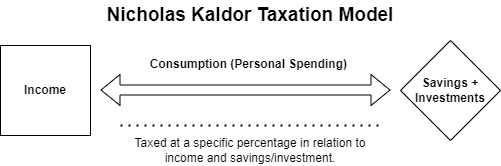
Nineteenth-century economist Henry George developed another alternative form of taxation called land value tax. George argued that taxing land value is the most logical source of public revenue because the supply of land is fixed, and public infrastructure improvements would be reflected in (and paid for) by increased land values. 10 Land value tax helps tie finance to the real economy by discouraging speculation on land. Compared to property tax, it does not discourage the development, maintenance, or repair of existing structures because there are no taxes on improving what sits on the land. It is considered more equitable 11 than present schemes and doesn’t discourage economic activity. The few landholders are the ones responsible for paying the tax. It places a tremendous burden on the rent seeker, a core component of the hierarchical model of society.
Taxation also provides a vehicle to greatly diminish the benefits associated with birth lottery in favor of organizing society around systemic actualization. Taxing inherited wealth is perhaps one of the most contested forms of taxation. We have long been conditioned to believe that building generational wealth is the pinnacle of the human experience. It is a narrative supporting competition as a primary form of human interaction that shirks our responsibilities to others. Dynastic wealth transfer strongly supports birth lottery as the decisive factor of access and agency in the world and stands in stark contrast to the values we adopt in alignment with the single truth and the relational universe. In a society primarily organized around competition and hierarchy, hereditary wealth transfers only further entrench powerful interests and networks. Via a similar methodology used in the Kaldor tax, we apply a variety of scales of taxation based on total assets. Those on the bottom of the economic hierarchy pay nothing, the middle a small bit, and at the very top we apply similar uncapped amounts. Consider also that land is often transferred from parent to child after death, ensuring that Earth’s most valuable resource remains in the hands of the few. In a systemically actualized society, the transfer of inherited wealth plays no role in the individual’s ability to survive. There is no legitimate argument for an individual “deserving” billions because their parents died, especially when the cost is the denial of expansive public works for the many. Hereditary transfer of wealth is one of the greatest sources of inequity in modern society, one that reinforces the specific form of humanity that has led us to the crisis.
There is a popular consensus that taxation is theft. That responsibility to the other is not their burden to bear. This idea is and always has been a fantasy. Humanity has always coexisted. Together, our oneness with the relational universe bonds us as one within the totality of the moment. Taxation is the contribution toward the progress of collective society. So long as we hate taxation, we deny ourselves access to the resources necessary to build what must be built. The idea that humanity would be better served through the elimination of the state misconceptualizes the state. It is a political technology used to infuse a specific form of meaning and value into being. It is no secret that the present political class is corporatist and public monies are spent poorly, but that doesn’t negate the technology itself. We cannot go back to the era of extreme disconnectivity that humanity used to inhabit, and no amount of pretending will make that so. The future is within the decentralized microcommunity, and taxes play a vital role in organizing groups in specific directions. Raising the collective floor is our most direct path toward individual and collective freedom. Taxation as it exists today is ineffective, mismanaged, and ill-aligned with its purpose of serving the public well-being. But this doesn’t exclude it from being a vehicle for significant progress under the appropriate frameworks. Alternatives exist today that could more equitably facilitate the transfer of wealth into the public domain. We just need to implement them, and we cannot do so within the present frameworks of meaning and value or the political, economic, and legal frameworks built upon them. So, we must create new ones in higher alignment with the single truth.
The Eight Dignities
The grand spiritual project of self-actualization through the merging of individual and system into a single self begins with a question we ask ourselves many times. What is necessary to provide every individual access and agency within the world? We define access as the ability to leverage the resources necessary to individually actualize. Agency is the ability to direct our divinity in the moment, unimpeded by systems we had no say in crafting. An individual with access and agency is secure in their being independent of any specific system or network. We always consider this question from the perspective of the immediate present, understanding that the answer will vary over time. The difficult journey toward individual and systemic actualization is further complicated by an omnidirectional crisis looming on the horizon. Considering the gravity of the moment, there are no acceptable alternatives but to imagine boldly. To this end, we will explore the eight dignities, a framework for reimagining the human system experience so as to empower self-actualization in the age of crisis.
The eight dignities are food and water, housing, health, education, information, communication, transportation, and energy. Together they make up the core components of systemic actualization. The eight dignities are a path to infusing our core values into the universe so as to align ourselves with the single truth. When the individual has access to these resources and the agency to use them, their capacity to direct their focus and energy within the time experience is limited only by their imagination. They are free to create in the directions and images of their own choosing, secure and able to develop themselves and others through their commitments. The eight dignities ensure that each is born into a vision of humanity that prioritizes life, providing the opportunity for all to live unburdened by the fear of death. They are in no way complete and should be expanded by and for the collective when the moment arrives. In our immediate present, they provide us with a set of systemic rights necessary to transcend the crisis. They represent a promise to ourselves and others that every human deserves dignity by default.
The intent of our exploration of the eight dignities isn’t to develop a structural blueprint. Plenty already exist. Instead, we focus on the frameworks necessary to guide us toward their realization. The crisis of information, truth, and trust ensures that we must be as vigilant about spreading the message of systemic actualization as we will be in creating it. The work toward collective transcendence can only ever begin now, only ever happen through the individual’s choice. The eight dignities are not utopian in their nature or promise; they are simply more advanced legal, economic, and organizational technologies than we presently possess the power to create. At the root of the age of crisis is a failure of imagination, a consequence of the systems surrounding us reinforcing a single form of being, and our crisis of elected misrepresentation. The present institutions provide no alternative to the crisis, but we demand more. The eight dignities are a network of systems encouraging a more expansive humanity for all.
Incorporating systems into spiritual philosophy may create confusion surrounding the relationship between spirit and state. Popularized by enlightenment philosophers such as John Locke, the separation of church and state is a foundation to empower the secular state, a vehicle for supporting human grouping around specific ways of life unimpeded by the dictation of norms and practice of a particular spiritual philosophy. Protecting others from the enforcement of spiritual beliefs and practices they do not choose is vitally important to the self-actualizer. The single truth requires no believers; it just is. Individuals who embrace it are messengers but bear no personal responsibility for or accountability to others embracing it. At the same time, we recognize that everything is political. Politics is the governing of relationships between individuals. The eight dignities are new frameworks for governing our relationships with each other that better support our revised core values. There has never been a moment in human history where the systems of meaning and value of the powerful few have not been projected onto the collective. Our spiritual journey toward the unification of individual and system into a harmonious self is rooted in the development of real-world structural change. Our efforts to shift eight verticals of global society into the public domain will be met with resistance and conflict, primarily by small groups of private owners, politicos, and leaders of outmoded historical religions whose power rests in the maintenance of the present hierarchical global orders. Critics will claim that imposition of our spiritual philosophy conflicts with their definitions of prosperity and responsibilities to others.
It is accurate to claim that there is an inherent conflict between the maintenance of existing order and the transformational journey of systemic actualization. Our embrace of the single truth and the relational universe is as much an understanding of being as it is a responsibility to the other. Self-actualization in the age of crisis is a process of diminishing the stranglehold that hierarchical spiritual philosophies and organizations possess over us. It is inaccurate to claim that any spiritual, political, or economic philosophy that prioritizes birth lottery and the preservation of individual power at the expense of the dignity of others bears any legitimacy in the face of the crisis. We will not march into oblivion quietly; we demand more for ourselves and others. We will realize the eight dignities as we do all else: by directing our focus and energy within the moment.
Creating the eight dignities requires us to overcome our fears regarding the public control of social verticals. For some, it is an attempt to avoid the responsibilities to the other we inherit by inhabiting a relational universe. For others, it is a knee-jerk response drawing from a lifetime of indoctrination. In reality, the socialization of economic verticals has been a common and prosperous path for many nations, including the United States. In the early 1900s, private railroad companies of the time acted like many companies today, prioritizing shareholder earnings over the well-being of their stakeholders. Given that rail transport was vital to war efforts, the US federal government founded the Railway War Board to increase cooperation between the independent organizations.
The private companies resisted cooperation. In response, President Woodrow Wilson signed an executive order taking control of all railroads (except local city lines) under the authority given to him by the Army Appropriations Act of 1916. The action would have also been legal under the Commerce Clause of the Constitution. A few months later, Congress passed legislation affirming the nationalization of the railroads and operation guidelines and setting out how the railroads would be operated. The legislation also allowed for the railroads to remain under federal control for up to twenty-one months after a peace treaty was signed but ultimately put the transfer back to private ownership at the president’s discretion.
At the time of their nationalization, railroads accounted for about one-twelfth of the entire US economy. By contrast, taking over the twenty-five largest publicly traded oil and gas energy companies in the United States as well as all the remaining coal companies (at their current, inflated valuations of around $1.5 trillion total) would be approximately one-fourteenth of the present-day US economy. 16 Railroads were just the tip of the iceberg. World War I also saw the nationalization of communications industries, radio, enameling, and arms industries. 17,18 World War II shares a similar story of public capture of specific private verticals to serve the collective good and remains the most productive era in the history of the United States. Our past illustrates how quickly the laws governing our productive verticals may change when necessary. With a stroke of a pen, the United States assumed state control of the means of production only to gradually return it to the hands of private interests after the wars ended. These examples illustrate that our challenge is not one of technical knowledge or methods of execution. It is a matter of courage and will, which is why the eight dignities are central to journeys toward self-actualization in the age of crisis
The mobilization of the wartime economy has proven to be one of the most successful catalysts for transformation. Innovative fervency couples with a shared vision of bigness beyond any single individual empowered by a culture of cooperation. Systemic actualization seeks to channel the same intensity of directed focus and energy as a wartime economy, without the threat of war and violence. It is an act of decoupling our transformative potential from perpetual crisis. Accomplishing this will require mass adoption of new frameworks of meaning and value outside of hierarchical philosophies presently dominating our social organization. Part of our role in embracing self-actualizing in the age of crisis is to spread this vision of expansive humanity to others. By intertwining the individual and system as a greater self, we lay a foundation for scaled organization.
The wartime economy also provides insights into what will be the most common rebuttal against the eight dignities. How will we pay for them? The question lacks a basis in the actual economics of currency-producing nation-states. As previously explored, capital is presently created at the point of contract. We need only to decide to move toward a direction to generate the capital to fund and support it. Investments in public works spending often return economic outcomes in multiples of initial funds. All DAOs are stakeholder driven, so each of the eight dignities might come to be through the combination of individual, group, and state funding to seed the initial work.
The intention is that each provides goods and services that can generate surpluses. The purpose of a public works program is not to cut costs, corners, and customer satisfaction in the name of creating slightly more profit as is common in the private sector. The difference is all surpluses are funneled back into the community, facilitating the expansion and depth of the DAOs purpose and functions. Our development of the eight dignities begins with a specific focus, building a membership base around that intention until expansion becomes an option. Our exploration is boldly imagined but does not discount the incrementalism of progress. It challenges our conventional notion of the degrees of intensity progress can take within these increments. Our realization of the eight dignities begins with an emergent expression of divinity within the moment. We embrace a new vision and direction for humanity and immediately begin the work toward this expansion of ourselves and our systems.
Our present legal, economic, and political systems will resist the eight dignities. They are designed to further and maintain the hierarchical order of meaning and value that has invited the crisis to our doorstep. We reject our historical inheritance entirely and instead focus on creating new networks of shared systems that will extend far beyond personal expirations. The eight dignities are not socialism, communism, capitalism, anarchism, or any other form of political and economic technology that the critic may hate without context. No presently available state or governmental philosophy offers an ideal path toward enacting the eight dignities because they are stateless in nature. The systems we develop to materialize the eight dignities must lay beyond any single state or syndicate; they are collectively owned by humanity.
The eight dignities are structured as global public works DAOs. The work toward the eight dignities has already begun. DAOs focusing on the public good are an active and growing group of changemakers. What they lack is a coherent philosophy of meaning and value that can intertwine similar groups focusing on shared visions of the good, a base from which to draw talent and treasure. Self-actualization in the age of crisis is as much a responsibility toward the other as it is a journey in individual transcendence. We must be willing to direct our focus and energy toward furthering the eight dignities while we still have time. The only requirement for individual access to the eight dignities is to be alive. They are a form of social inheritance that recognizes our oneness with the relational universe, freeing the individual and collective from the binds of birth lottery to express a form of organization that empowers them to align themselves with the single truth.
Transportation
Of the eight dignities, transportation may seem the most out of place. But consider the following. Money and things move freely around the world. People are trapped. Security is the most often cited reason, but if that was our primary concern, would the United States still export hundreds of billions of dollars of weapons every year? The idea that people must be restricted from travel because they could be dangerous is propaganda. We know this because once the individual crosses a certain threshold of wealth, they become cosmopolitan, operating without allegiance to the nation or government and unburdened by laws and restrictions applied to the majority. Freedom of movement should not be restricted to our creations. Transportation as one of the eight dignities is an effort to ensure that the most advanced planetary and space transportation networks reside in public control.
Transportation DAO serves many purposes, from local community networks to global and interplanetary logistics. Accessing transportation is vital to being able to individually actualize in society today. It empowers the expression of our core value of enthusiasm and harnesses our imagination through exploration. No matter how far technology advances, humans will find strength in numbers. Our journey toward individual actualization will be wasted if the individual cannot access the systems necessary to move about the world. We spoke of the freedom goods possess to move across the globe, but even they remain confined to the extractive schemes of profiteers. Shipping networks define access to basic and luxury material goods around the world yet remain in private control. Space travel is making significant progress each year and will play an outsized role in the collective advancement of our species. When we think about the future of transportation, we approach it from the perspective of cooperation and collaboration. How do these networks serve us today, what can we do to improve them, and what are the barriers of private control that must be overcome?
The movement of material goods worldwide is handled primarily by ocean transport. Today the thirty largest shipping companies are privately owned by various international organizations, with the exception being China’s state ownership of the largest collective fleet. Over 100,000 ships move goods around the planet, operating within independent frameworks of objectives and rules. Thirty independent operators moving goods across the world is inefficient and wasteful. Independent for-profit networks ensure that shipping costs will remain stable to generate profits, adding layers of capital extraction that directly contribute to higher prices for the goods. Logistical redundancies such as duplicating routes that could be combined and not maximizing the capacity of each cargo ship are unavoidable within our present organization. It is an industry with little innovation and deeply entrenched players, and the high cost of entry means that there is little incentive to experiment and innovate. The result is a stagnant system of organization and operation, existing for the sole purpose of profit generation without any need or obligation to improve.
Cargo ships are also immense sources of pollution that contribute significantly to the crisis of extinction. It is expected that pollution outputs from cargo ships will worsen in the near future. 46 Most cargo ships use heavy oil fuel, a low-cost alternative to diesel with higher sulfur levels understood to be one of the most toxic and polluting fuels available. 47 Studies also demonstrate that private cargo ships are also the largest source of oceanic waste, with an estimated 73 percent of the garbage in the Atlantic Ocean originating from Chinese merchant vessels. 48
As the arctic ice caps melt, polluting ships are quickly carving out routes in the poorly regulated waters to ship profitable fossil fuel energy resources. Their efforts are accelerating the progress of the climate crisis and creating the potential for disasters that will be incredibly difficult to manage and devastating to wildlife in the area. Functioning in a material world will always require us to move goods and resources, and so long as we inhabit Earth the ocean will be one of the most direct routes. How we do that and under what frameworks are subject to change. So long as global shipping remains under private control, it will be difficult if not impossible to overcome the environmental harm contributing to the crisis of extinction because of a general lack of accountability.
When we approach global ocean transportation through the lens of systemic actualization, we can imagine alternatives that create efficiency, low costs, focused technology advancement, and dramatic reductions in pollution. Our objective isn’t to eliminate all private ocean travel and goods movement, but the significant majority of it will fall under public ownership so that we may create a system of organization where information, goods, and people flow seamlessly around the world.
First and foremost would be consolidation, merging the existing shipping companies and freighters under a single global public infrastructure, ideally the formal transportation DAO. Existing companies and the people who help operate them can remain in place. What changes is ownership, resource distribution, and a shift to a highly collaborative operational model. The transition to a public vertical opens up several opportunities for improvement that can never be realized under our current system of total private ownership. Ultimately, we work toward developing predictive logistics software that receives all incoming shipment requests and determines what ships need to go where.
As the consolidation process begins, we can audit and analyze all existing shipping routes, cargo, and costs over past years. Our objective is to find overlaps. For example, where could the efforts of these various independent companies be combined into one? What are the most common routes, and how might they be made more efficient if the ships operated as cooperative units rather than independent competitors? Are there trends in the amounts and types of cargo transport that might be better organized for fuel consumption and delivery speeds? These are just a handful of questions that could be answered by bringing global cargo transport under public domain, each of which would provide opportunities for dramatic improvement.
Systemic actualization is about becoming more, and under this framework we can instill stricter regulations for ship operations that better align with our core values. Consider the act of throwing trash overboard while sailing in the ocean. Presently, no binding agreement or organization acts to stop this extremely harmful practice. Bringing trash back to port is cumbersome, creates additional labor, comes with financial costs, and is a more complicated process than just tossing it overboard. Organizations like the International Maritime Organization, a United Nations organization, attempt to regulate but are generally unable to enforce the rules they create. There may also be productive costs to keeping trash on board, such as slowing shipments down or being able to carry slightly less cargo. These problems create impossible dilemmas in a private transport model because no profit-seeking entity will risk losing time and money to do the right thing. Public ownership incentivizes the collective good over the profits of a few. It provides pathways to ensure that the individual operator and the larger networked collective agree on priorities. A global transportation DAO would ensure that no one would risk their individual security or well-being for doing the right thing. Systemic actualization creates new frameworks for addressing obstacles that are otherwise insurmountable within our current frameworks of organization.
Surpluses generated within the transportation DAO will funnel into the perpetual advancement of transportation technologies. Our previous examples highlight significant and immediate areas for improvement, many of which have presently available alternatives. For example, nuclear marine propulsion has been used in aircraft carriers and submarines since 1955. Small nuclear reactors have exceptional safety records, create a fraction of the waste of traditional fuel sources, and can travel up to 50 percent faster than their fossil fuel counterparts. These advancements in speed and efficiency have been demonstrated to offset the associated costs of upgrading. 49 As a public vertical, we might first work to convert all oil-burning ships to nuclear, setting strict deadlines for ships in accordance with the availability of skilled technicians. Taking any ship out of commission will have economic impacts. Goods won’t be delivered according to their regular schedules, and there will most certainly be opposition from the impacted parties.
Some delays are unavoidable, but this is a necessary cost of transitioning off of these harmful fuels. Because the majority of cargo ships would fall under the public domain, reorganizing delivery schedules and utilizing the full capacity of our global fleets can help mitigate any frustrations caused during the transition. An alternative to nuclear power that may be available at the time of implementation would be to incorporate green energy sources such as solar, wind, and tidal energies into ship power generation. These technologies already exist and can be adapted and experimented with to determine the best route for ocean transport. Our objective is to create a ship that can perpetually power itself, radically reducing the environmental harm and capital costs of moving goods across the ocean. By using the surplus capital generated by these operations, we can create large research and development projects to dramatically speed up innovation and disseminate the results among all organizations.
Ocean transport as a public vertical makes sense because there is no benefit from keeping it privatized. It is a necessary service in the present moment, actively expanding the crisis of extinction. Public ownership provides pathways to advancement currently unachievable within our current system, progress that is funded and shared among all participants. We can make a similar argument for transitioning airplane manufacturing and transport to a global public network. There are thousands of independent airline operators, but even the consolidation of the top ten global firms (five of which operate out of the United States) could radically shift the efficiency and advancement of these verticals. Using data aggregation to determine routes and travel trends and streamlining procurement can build more effective and efficient systems that better serve collective humanity.
Traveling by plane is one of the most convenient ways to travel. It’s fast, direct, and allows people to experience places and people that would be otherwise unavailable to them. Unfortunately, personal air transport in the United States has been struggling for some time. As prices rise, patrons receive less and less. Reduced carry-ons, tighter spaces, and inadequate safety precautions are implemented in an effort to reclaim profits in an era of declining use, the result of which is an increasingly negative experience. Airlines dispel the popular myth that privatization encourages competitive innovation because privately controlled systems always mature toward financialization as their primary objective. The transportation DAO offers a pathway for removing vital global systems from the hands of a small group of rent seekers and placing them under the control and guidance of collective humanity.
In its infancy, the transportation DAO might focus on the creation of driverless electric vehicle fleets to transport people in urban areas. One of the primary challenges with driverless technologies in the present is that they are always subject to the behaviors of irrational human drivers. Therefore, it might be a citywide project, establishing community networks of fleets that integrate with the roads and other vehicles. This might occur in a new community of self-actualizers or an existing city with forward-thinking leadership. We want to personalize transportation but eliminate the need for private vehicle ownership. In the similar context of human movement, the engineering of carbon-neutral continental high-speed rail could fall under certain guilds within the transportation DAO. Given the scope of many transportation projects, the DAO would want to partner with the state or nation to coordinate, facilitate, and resource these developments.
Consider also the emerging field of space technologies and how the most advanced work today is being done by private corporations. When we consider historical public works, we can easily identify why this shift occurred. Whereas the private corporation is free to experiment, fail, and try again, the public agency is subject to intense scrutiny and immense bureaucratic barriers. Political actors are quick to pounce when experiments go wrong, especially if it means denying collective progress for minor fiscal benefits for the extremely wealthy. Space holds material resources and wealth far beyond our presently available options. The future of space mining presently sits in a wild west scenario of first come first serve, with nations gearing up to militarize their efforts and reignite squabbles past.
The idea that we would allow a private corporation to possess full and unlimited rights to space resources is beyond absurd. Still, it accurately reflects our global political climate under the influence of hierarchical systems of meaning and value. Given the extreme abundance available to us in space, the most logical solution is also one with the greatest potential for success: a globalized effort toward the advancement of space-age technologies and resource collection, where the rewards of said investments belong to collective humanity and serve our shared needs. The transportation DAO might prioritize a global space cooperative first because it is the least tainted of all other alternatives. It would also set the stage for deep international cooperation yet unknown to the people of Earth.
Beyond the material and environmental efficiencies that public ownership offers transportation verticals, there is a distinctly more human need for our embrace of transportation as a dignity. Our journey toward self-actualization in the age of crisis through the alignment of individual and system is, at its core, a process of freeing humanity from a past we had no say in choosing. Transportation is one of the most direct and accessible forms of escape for the individual subject to an oppressive birth lottery. Public ownership, access, and agency within our transportation verticals empower the individual to let go of circumstances no longer serving them and begin anew. Transportation as a public good also empowers a great reorganizing of our communities. If we are serious about our commitment to the development of personal divinity, we want to empower the individual to group with those aligned with their visions of the good. The internet has taught billions of people that although they may feel alone and out of alignment with their circumstance, others exist who share their values and aspirations. Today, they possess no alternative other than distanced interactions, no agency in their ability to redirect the course of their lives toward communities that resonate with them.
The public ownership of transportation alongside our dignities of food and water, housing, health care, and education combine to create a borderless individual, one who can group as they see fit and is free to direct their focus and energy toward creative pursuits of their choosing. It is a profound freedom that the vast majority alive today do not know, but one that is within our grasp. Transportation fills a vital gap in the average person’s ability to be secure in their person. It empowers the individual to escape the inheritance of birth lottery and develop their divinity in the directions of their choosing.
These ideas only scratch the surface of how transportation can be integrated into the life of the individual and collective. They are intended to illustrate why transportation is a vital component of the eight dignities. Planetary systems directly impact each of us even when we are not engaging directly with them. Our inhabiting a relational universe of material needs and wants ensures that transportation will continue to be a crucial component of our lives—one that plays a vital role in accelerating us toward or redirecting us away from the crisis. We choose to organize ourselves in alignment with the single truth and therefore claim that every individual has a right to be a stakeholder in the development and direction of our transportation systems.
Why Reform Is Necessary
Consider the development of the existing education systems in the United States. Today, most youth still learn within educational frameworks designed during and for the industrial era. It was an era of technological progress that created a need for people who were smart enough to operate the machines but lacked the skills and scope necessary to climb the proverbial ladder. A scope of public education intended to funnel labor into the industries of the day. Limited by technologies available, the majority of our population had few alternatives regarding productivity and participation. Creativity and the development of the individual capacity to reason was a secondary concern to prioritizing a specific form of human capacity able to support the productive agenda of an era. It is a form of education that binds the individual to the past instead of equipping them with the capacity to transcend it. The relatively slow pace of past progress allowed a generation or two to achieve material success. No longer. Today’s education systems develop youth for a universe that doesn’t exist.
Consider the hierarchical structure of primary education. The teacher teaches, students memorize and regurgitate, and tests determine rank, which expands or limits access. Students who struggle to fit the mold suffer the consequences for the entirety of their academic career instead of being directed toward alternatives to maximize their strengths and interests. This style of teaching is inadequate because it fails to capture the totality of potential lying dormant in every child, instead demanding that they become a particular kind of human being. It is a way of thinking and learning frozen in a time experience no longer accessible, one that continues influencing our behaviors well after our full-time academic careers are complete. In the immediate present, memorizing a wide array of facts is not relevant to the work and thought patterns necessary to succeed. This is especially accurate in the most advanced sectors of productivity but applicable to all verticals.
Many knowledge economy professionals today share a vital skill: a strong ability to research and learn quickly. Remember math teachers who used to proclaim that we wouldn’t always have a calculator with us? It is illogical to structure education in a way that denies our present and future circumstances. Beyond knowledge, the most significant focus of our present learning systems is obedience. Do it this way, or else. Students failing to adapt to the available frameworks of learning are penalized, further distancing them from an engaging and productive educational atmosphere. The obedience reinforced in our primary education seeps deep into the fibers of our being, encouraging subservience to others and our systems.
Albert Einstein wrote, “Everybody is a genius. But if you judge a fish by its ability to climb a tree, it will live its whole life believing it is stupid.” The diversity and richness of humanity are observable in nearly every imaginable direction. Genius comes in many forms, but within our present educational institutions, grades are the currency by which all progress is measured. They make education competitive and manipulatable, encouraging success at all costs while failing to encourage the core objective of developing analytical capability. For the student who excels, grades become a reason not to challenge themselves. Why take on a risky or challenging project or class when the result could diminish your GPA and directly impact your ability to get into an elite higher education institution? Instead, just game the system. For the middle-of-the-road student, the importance of grades makes cheating a direct path toward progress. The risk is minimal considering how a GPA drop might impact their continuing education or employment opportunities. For the student struggling with existing education formats, grades become a deterrent. Why try when the situation is already hopeless?
The problem with the competitive education model is that it doesn’t reflect the most advanced forms of work available today. Competitive learning environments prioritize individualism over cooperation and collaboration, a perplexing arrangement given our understanding of the single truth and the relational universe. Although personal autonomy is a positive trait and a core aspect of individual actualization, systems that make it the central theme of a child’s worldview fail that individual. Now more than ever, human beings are an interconnected matrix. We need an education agenda that reflects that.
Our system of grading is also a burden on the educator. The focus of teaching becomes divided, with learning and test prepping competing against each other in the classroom. Instead of being used to gauge student progress, subject matter tests combine to form performance reviews for the teacher. To further complicate matters, many educational institutions expect their students to fall on a bell curve. If a professor teaches an excellent class and their students excel, they are met with suspicion; why aren’t more of your students performing poorly? When too many students perform poorly, there is pressure to pass them. It becomes especially difficult for those educators without the career security of tenure, who risk the most by refusing to conform to institutional standards. Systemic actualization requires educators with the passion and freedom to teach dynamic groups of students without the burden of persistent measurements, free to explore and evaluate the controversial, question the sacred, and push the boundaries of discussion and debate amongst students without fear of risking their careers.
Perhaps the most significant burden of the United States education systems is standardized testing—not because some standard measure of progress is bad, but because it has been delegated to conglomerates who leverage their monopoly to extract absurd amounts of wealth. The idea behind a standard test is that they are an objective and analytic way of comparing knowledge across a wide range of students. Many students and teachers know them to be stressful time wasters that take the focus off of learning and redirect it to teaching the tests. What really makes standardized testing a net negative for society is that they are political; they are often used to supply or deny funds to schools. It is a formula that often harms historically disadvantaged communities.
Unsurprisingly, the companies who produce the tests and the textbooks used to prepare and execute standardized tests funnel millions into political donations. These companies continually promote new “standards” so schools must repurchase materials and consistently order new tests. The capitalization of education in the United States is the root cause of its consistent decrease in international rankings. Simply put, our education systems prioritize the continuation of revenue streams for private companies over developing capable human beings.
The organization of funding for public schooling is another reason that education requires reform. Today, education across the United States is funded through local municipal (property) taxes. Children who live in towns with high wealth concentrations gain access to more materials, smaller classrooms, better facilities, and the benefit of a safer and more secure atmosphere to learn in. Those born into poverty attend schools that are overcrowded and chronically underfunded. On average, students in school districts with the highest rates of poverty receive about one thousand dollars less per student. 44 These gaps in support compound throughout their educational career, ensuring that birth lottery is the most important factor in determining the quality of education the individual receives.
There is an ongoing conflict in the United States surrounding charter and private religious schools. These independent organizations are selective in their admission but often receive some form of public funding. The concept behind these schools is that students will perform better through unique teaching and lesson structures. In theory, it’s a great idea—we want experimental education programs to exist worldwide. In reality, multiple studies have confirmed that our existing charter schools do not perform as advertised. A 2017 National Assessment of Educational Progress (NAEP) study of grades four and eight demonstrated no measurable differences in average reading and mathematics scores between students in public traditional and public charter schools. 45 Additionally, as of 2015, 76 percent of the 5.8 million private school students in the United States are attending religious school, 46 and in 2020 the US Supreme Court ruled the state of Montana could not exclude religious schools from inclusion in a publicly funded private school scholarship. This blurring of the lines seems to reject the fundamental principle of the separation of church and state, which is intended to protect individuals against coercion. Many religious schools intend to sacrifice scientific accuracy for theological correctness, tying their students to a spiritual past they had no say in crafting at the expense of a genuine understanding of the universe. Supporters of charter and religious schools will claim that good and bad charter schools exist, just like public schools, but if there is no discernible difference, why would we split public funding?
Supporters may argue that, given their average performance, private educational institutions specialize in customization. There are merits to this. When I ran for New Jersey State Assembly in 2018, I had the opportunity to speak with thousands of residents in my community. One evening I had a conversation with a parent whose son with disabilities struggled at the local public school due to a lack of accommodations. A local charter school did have the necessary facilities, so their perspective was firmly rooted in the idea that charter schools were necessary. Situations like these beg the question of why the public system was unable to accommodate the student. In this specific example, there were eight private schools within a fifteen-mile radius of her home, leading to the inevitable lack of funding and resources. Under a more unified school system, these custom needs can be met within the existing institutions. The existing models of two categories of education dilute that possibility, focusing on benefits that, according to the data, simply do not exist.
When we consider education through the lens of systemic actualization, it’s not a matter of denying custom solutions. Even under an ideal funding model, certain educational institutions will likely be better catered to meet specific needs. What must be revised about our current approach is how experimental educations subtract resources from the existing institutions serving the majority. Unfortunately, our present trajectory is moving in the opposite direction. In 2020, the US Supreme Court ruled against the state of Montana in a case that reinforced the requiring of states to give religious schools the same access to public funding that other private schools receive. It leaves states two possibilities: fund no private education with public monies or fund all of it. Considering that the transformation of education must occur within the immediate present, it presents the self-actualizer with a difficult choice. Ideally, we would seek to eliminate public funding for all private educational institutions, instead providing ample pathways for experimentation within our public schools. This way, when alternative needs arise, they can be met with the full attention necessary without sacrificing the quality of service to those unaffected.
Alternatively, we might seek to leverage these laws for our advantage as the hierarchical religions do, setting up our own religious schools in communities forced to subsidize them. We build better schools that develop more capable human beings while encouraging vigorous debate about the merits of the models we take advantage of. Private religious schools spreading a hierarchical vision of the universe and human divinity are incompatible with self-actualization in the age of crisis. They reinforce a static worldview and shape perspectives ill-equipped to embrace the true nature of the universe as guided by the single truth. Harmful to students and communities alike, the private religious schools’ primary purpose is to reinforce the parents’ ideologies onto an unsuspecting generation. We reject them in all forms while also recognizing that their tactics may be used against them.
Consider also the expenses of running a school. Our present educational financing schemes prevent the streamlining of procurement and process, failing to take advantage of our advanced analytical capabilities. When we view education as a single institution, we immediately increase our bargaining power by orders of magnitude. An alternative approach of funding schools beyond municipality taxes streamlines administrative costs, resource distribution, and educator collaboration, encouraging a customizable public experience without sacrificing the educational well-being of the student.
A more robust public education system untethered to localized funding presents a variety of ways to ensure that our youth are better resourced in their educational journeys. Funding alternatives also allow us to address the abysmal compensation we provide educators. Schools and educators make easy political targets, always under the threat of budget cuts and abuse. The reimagination of education as an essential human dignity frees it from the whims of the political actor who would diminish the capacity of their constituents to win an election. The development of a more expansive humanity begins early in the individual’s life. So long as the institutions guiding education are subject to the whims of political actors, public finance, and spiritual institutions, there is a great risk that we may fail the child.
Our reimagination of education as a sacred dignity doesn’t stop after primary schooling and university. We develop the infrastructure to support deep learning throughout the individual’s lifetime. The exponential trends of progress we observe suggest the technological disruption we have seen to date will be insignificant compared to what is coming. If we do not choose an alternative to our present forms of organization, the significant majority will suffer. Systemic actualization requires that we develop educational systems that empower any person at any stage in life to reenter the educational and training process, overcoming the existing barriers of high-cost colleges and non-standardized alternatives. It recognizes the individual in extreme alignment with the single truth. We must respect the dignity of an ever-changing entity by ensuring that they possess the access and agency necessary to redirect themselves and the course of their lives at any moment.